
Baby-Led Weaning First Foods — What to Serve, How to Start, and What to Skip

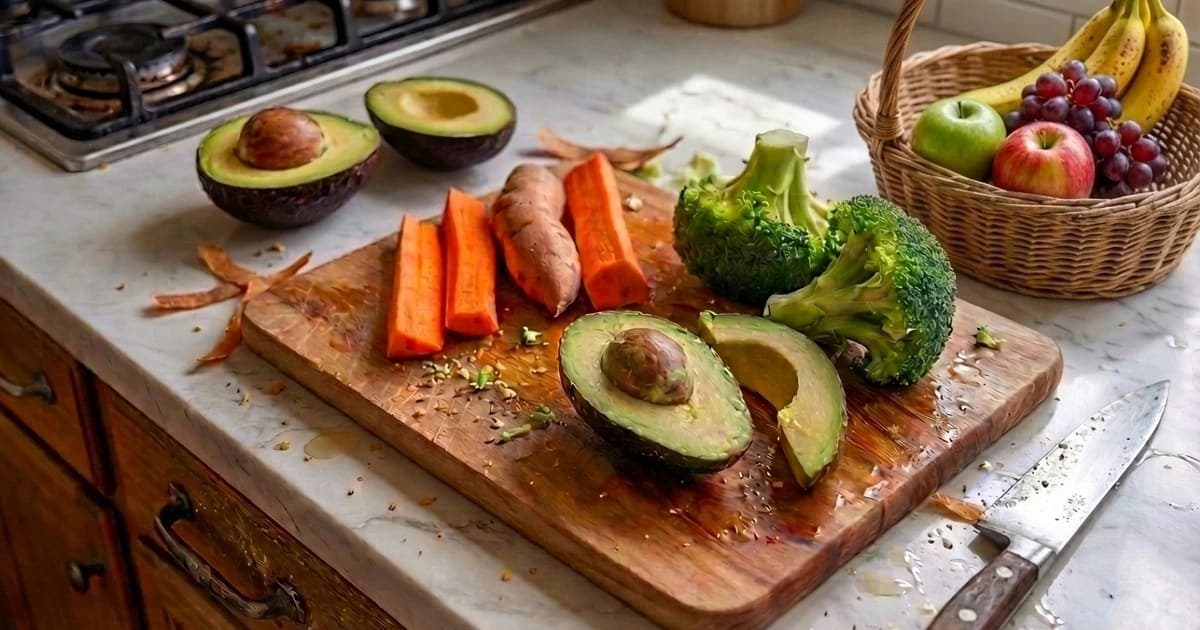
You've probably heard the term thrown around in parenting groups, maybe seen some Instagram reels of babies gnawing on broccoli florets the size of their fist, and thought — "Wait. Can they actually do that?"
If your baby is around six months old and you're trying to figure out how to start solids without losing your mind, you're in the right place. Baby-led weaning sounds like a big concept, but the core idea is pretty simple: you skip the spoon-fed purees and let your baby feed themselves real food from the beginning.
Sounds terrifying? Stick with me. By the end of this guide, you'll know exactly what to put on that highchair tray, what to keep far away from it, and — maybe most importantly — how to sit there calmly while your baby gags on a piece of banana for the first time.
So What Is Baby-Led Weaning, Exactly?
Baby-led weaning (BLW) means offering your baby soft, grabbable pieces of food and letting them pick it up, explore it, and eat it on their own terms. No airplane spoon. No "here comes the choo-choo train." Instead, your baby sits with you at the table, grabs food with their hands, and figures out how to get it into their mouth.
The concept was popularised by Gill Rapley, a UK midwife and health visitor, back in 2008. And since then, paediatric research has shown some real benefits: babies who self-feed tend to develop better hand-eye coordination earlier, show stronger self-regulation around food (they stop eating when they're full, not when the bowl is empty), and are exposed to more textures from the start.
But here's what nobody tells you upfront — most families don't do strict BLW. They combine it. Some meals are finger foods, some meals involve a loaded spoon with yoghurt or porridge, and honestly? That's perfectly fine. The AAP, NHS, and WHO all agree: there's no single "correct" method. What matters is that the food is safe, nutrient-dense, and introduced at the right time.
Is Your Baby Actually Ready? (Four Signs That Matter)
Age alone doesn't cut it. Your baby might be six months on the calendar but not ready for solids yet — and that's normal. The CDC and AAP recommend watching for these developmental readiness signs:
The Four Readiness Signals
- Sitting upright with minimal support — not propped up with cushions. Genuinely holding their own trunk steady. This protects the airway while eating.
- Stable head control — no wobbling. They can turn their head side to side and hold it upright consistently.
- Loss of the tongue-thrust reflex — younger babies automatically push solid objects out of their mouth. When this fades, they're ready to move food backward and learn to swallow.
- Genuine curiosity about food — staring at your plate, reaching for your fork, opening their mouth when they see you eating.
If your baby isn't checking all four boxes, wait a week or two and reassess. There is no race. Breast milk or formula stays the primary nutrition source until 12 months regardless.
Why Iron Should Be First — Not Avocado
Here's something that surprised me when I first researched it. Most BLW blogs lead with avocado, banana, or sweet potato. And sure, those are great starter foods. But the AAP specifically recommends that iron-rich foods come first.
Why? Because babies are born with iron stores they built up during the third trimester. By about six months, those stores start running low. The recommended daily intake jumps to 11 mg per day for babies aged 6–12 months — which is actually higher than what an adult man needs.
If your baby is exclusively breastfed, this matters even more. Breast milk is incredible, but it's low in iron. Formula is typically fortified, so formula-fed babies have a buffer. If you followed a careful pregnancy nutrition plan, your baby likely has solid stores — but they still need replenishing now.
Pair iron-rich foods with something high in vitamin C — a few steamed broccoli florets, a slice of strawberry, or some mashed orange segments. Vitamin C dramatically increases iron absorption from plant sources.
The Best First Foods for Baby-Led Weaning — A Complete Chart
Once you've nailed down the iron basics, here's a broader list of starter foods. Everything on this list passes the "squish test" — if you can mash it between your thumb and forefinger without effort, it's soft enough for a baby with no teeth.
How to cut them: At 6 months, babies grab with their whole fist (palmar grasp). So food needs to be longer than their hand — roughly the length and width of an adult pinky finger. They eat what sticks out above the fist.
Fruits
| Food | How to Serve |
|---|---|
| Banana | Cut in half lengthwise. Leave part of the peel on for grip |
| Avocado | Thick slices. Roll in crushed cereal or hemp seeds so it's less slippery |
| Mango | Long spears, ripe enough to mash easily |
| Steamed apple | Peel, cut into thick wedges, steam until fork-tender. Raw apple is a choking hazard |
| Peach or pear | Ripe slices, skin on for grip |
| Watermelon | Thick wedges, seeds removed |
Vegetables
| Food | How to Serve |
|---|---|
| Sweet potato | Roasted wedges or steamed sticks. Skin on works well |
| Broccoli | Steamed florets — the "tree" shape makes a natural handle |
| Carrots | Steamed until very soft. Never raw — raw carrot is a top choking hazard |
| Zucchini | Steamed sticks or roasted spears |
| Butternut squash | Roasted thick wedges |
Proteins
| Food | How to Serve |
|---|---|
| Eggs | Scrambled strips, omelette fingers, or hard-boiled quarters |
| Chicken | Drumstick (with cartilage/loose bits removed) or shredded dark meat |
| Beef or lamb | Slow-cooked until it falls apart, served in strips |
| Salmon | Flaked into large pieces, bones removed carefully |
| Beans / lentils | Smashed onto a pre-loaded spoon, or mashed into patties |
| Tofu | Thick strips, pan-fried for a firmer outside texture |
Grains & Other
| Food | How to Serve |
|---|---|
| Toast | Strips — lightly spread with thin nut butter or mashed avocado |
| Pasta | Large spirals or rigatoni, well-cooked. Easier to grab than thin noodles |
| Oatmeal | Thick consistency on a pre-loaded spoon |
| Pancakes | Plain or banana pancakes cut into strips. Skip the syrup |
Your Baby's First Week — Keep It Simple
Your baby's first week of solids is not about nutrition. It's about exposure. Mess. Texture. Learning that food exists and goes in the mouth. Most of what you serve will end up on the floor, in their hair, and sometimes up their nose. That is the point.
The approach: One meal per day. Pick a time when your baby is rested and slightly hungry — not starving, not full. Mid-morning works well for most families.
| Day | What to Offer | Why This Works |
|---|---|---|
| Day 1–2 | Steamed sweet potato sticks | Soft, easy to grip, mild flavour |
| Day 3 | Ripe avocado slices (rolled in crushed cereal) | Healthy fats, easy to mash with gums |
| Day 4 | Steamed broccoli florets | Built-in handle, surprisingly popular |
| Day 5 | Scrambled egg strips | Iron and protein from the start |
| Day 6 | Banana (halved lengthwise, leave some peel) | Sweet, familiar, and easy to grip |
| Day 7 | Strips of slow-cooked meat | High bioavailable iron — yes, even without teeth |
Offer breast milk or formula before the meal, not after. This sounds backwards, but at this stage, milk is still the main event. Solids are the warm-up act. Feeding milk first keeps your baby calm enough to explore without getting frustrated from hunger.
Gagging vs Choking — You Need to Know the Difference
This is the section every parent dreads. And the reason a lot of parents hesitate to try baby-led weaning at all.
Here's the reality: gagging is normal. Gagging is actually a safety feature. Your baby's gag reflex sits much further forward on their tongue than yours does. So food triggers it earlier, which gives them more time to push it forward and spit it out. The gag reflex literally exists to prevent choking.
- Loud — coughing, retching, sputtering
- Face turns red, eyes water
- Baby can still breathe and cry
- Resolves on its own in seconds
- Your response: Stay calm, don't intervene
- Silent — no cough, no cry
- Lips or face turn blue/grey
- Wide-eyed, panicked, or goes limp
- Cannot breathe or make sound
- Your response: 5 back blows + 5 chest thrusts, call 911
What NOT to do when your baby gags: Don't stick your finger in their mouth. Don't gasp. Don't grab their food. Reaching into their mouth can actually push food backward and turn a harmless gag into real choking. The hardest part of BLW is sitting on your hands while your baby's face goes red. Practice your poker face. Seriously.
One non-negotiable: Take an infant CPR course before you start BLW. The Red Cross and many local hospitals offer them. Knowing what to do in an actual emergency changes everything about your confidence level at the highchair.
Foods to Skip Before 12 Months
Not everything is fair game. Some foods are dangerous, some are nutritionally pointless, and some are both.
Choking Hazards (Modify or Avoid)
- Whole grapes, cherry tomatoes — cut lengthwise into quarters
- Raw carrots, raw apple — always cook until soft
- Whole nuts — grind or serve as thin butter
- Popcorn — avoid completely
- Chunks or globs of nut butter — thin it out or spread very lightly on toast
- Hot dogs, sausages — cut lengthwise, then into small pieces
Health Risks
- Honey — never before 12 months. Risk of infant botulism. No exceptions, including honey in baked goods
- Cow's milk as a drink — not until 12 months. Small amounts in cooking are fine
- Added salt or sugar — baby kidneys can't process excess sodium
- High-mercury fish — shark, swordfish, king mackerel, tilefish. Choose salmon, cod, or sardines instead
- Unpasteurised dairy — risk of listeria and salmonella
- Raw or undercooked eggs, meat, or shellfish
Introducing Allergens — Earlier Is Better
This one caught a lot of parents off guard when the guidelines changed. The old advice was to delay common allergens — peanuts, eggs, fish, dairy — until age 1 or even later. That's been reversed.
Current AAP guidance, backed by the landmark LEAP and EAT studies, recommends introducing major allergens early — within the first few weeks of starting solids — and keeping them in rotation regularly. Research shows that early, repeated exposure actually reduces the chance of developing an allergy.
How to Introduce Allergens Safely
- One new allergen at a time
- Try it in the morning, so you have the full day to watch for reactions
- Start small — a thin smear of smooth peanut butter on toast, a well-cooked egg strip, a piece of flaked fish
- Watch for two hours afterward: hives, rash, swelling, vomiting, or unusual fussiness
- If tolerated, keep that food in the diet 2–3 times per week to maintain tolerance
If your baby has severe eczema or a family history of food allergies, talk to your paediatrician before introducing allergens at home. Some babies benefit from supervised introduction in a clinical setting.
Five Mistakes That Trip Up Most Parents
- Starting with only fruit — skipping the iron gap
- Offering a mountain of food options at once
- Expecting them to actually eat on Day 1
- Gasping or hovering every time they gag
- Giving up on a food after one rejection
- Mix in protein and iron-rich foods from Week 1
- Two or three items on the tray is plenty
- Licking, squishing, and dropping all counts as learning
- Keep your face neutral — smile when they recover
- Offer rejected foods again — it takes 10–15 exposures
The Bottom Line
Baby-led weaning doesn't need to be complicated. One meal a day. One or two foods on the tray. No pressure to eat. Breast milk or formula is still doing the heavy lifting nutritionally — solids are just practice for the first few months.
Start with iron. Add variety slowly. Learn the difference between gagging and choking. Cut food into pinky-finger strips. And remind yourself on the messy, chaotic, confusing days — your baby has been eating for exactly zero years. Give them time. Give yourself grace.
They'll get there. One sticky, smashed, half-chewed banana at a time.
If you're still in the pregnancy stage and planning ahead, our pregnancy nutrition guide covers the building blocks that set your baby up for a healthy start. Wondering when your little one will arrive? Our due date calculator can help you map it out. And if you're curious about what's ahead as they grow, our child height predictor gives you an estimate of how tall they might eventually be.
Sources
- AAP — Starting Solid Foods (HealthyChildren.org)
- CDC — When, What, and How to Introduce Solid Foods
- WHO — Complementary Feeding
- Solid Starts — How to Introduce Solids
- AAP — Iron Deficiency and Iron Deficiency Anemia in Children
- Stanford Children's Health — Choking Prevention
- NHS — Your Baby's First Solid Foods
This article is for informational purposes and does not replace medical advice. Talk to your paediatrician before starting solids, especially if you have concerns about allergies or your baby's development.
From ovulation tracking and due dates to baby names and growth charts. Everything you need for your journey.
Share this post
Frequently Asked Questions
Related Topics
Contents
About the Author
Medically Reviewed By

Browse our curated baby name collection
Get the latest parenting tips and updates delivered to your inbox.
Read Next
How to Introduce Peanut Butter to Your Baby — Exact Amounts, Prep, and Safety
How to introduce peanut butter to your baby safely — with exact measurements, step-by-step prep, allergy signs by severity, and risk-based timing from the NIAID guidelines.
Read Article
Baby Eczema Treatment: Causes, Remedies & Complete Parent's Guide
Is your baby squirming and scratching raw, dry patches of skin? Rebuild their delicate skin shield with this dermatologist-approved guide to baby eczema treatment.
Read Article
Baby Constipation: Signs to Watch, Home Remedies That Work, and When to Call the Doctor
Hard stools, crying during bowel movements, or days without a dirty diaper — here's how to spot real constipation in babies, which home remedies actually help & when it's time for a doctor's call.
Read Article
How to Increase Breast Milk Supply: 11 Things That Actually Work (And 3 That Don't)
Struggling with low milk supply? 11 proven ways to boost breast milk production naturally — plus 3 common myths debunked. Includes a power pumping schedule and signs your supply is actually fine.
Read Article
Gagging vs. Choking: What Every Parent Starting Solids Needs to Know
That retching sound is terrifying — but is it gagging or choking? Learn the difference instantly, step-by-step infant first aid, safe food shapes, and how to manage mealtime anxiety.
Read Article
Baby Growth Spurts: Ages, Signs, Feeding Frenzies & When to Worry
Baby feeding nonstop, fussing, or waking more than usual? Learn the common growth spurt ages, signs, duration, and red flags that mean it is time to call the doctor.
Read Article