
Potty Training Regression: Why It Happens at Every Age and How to Fix It

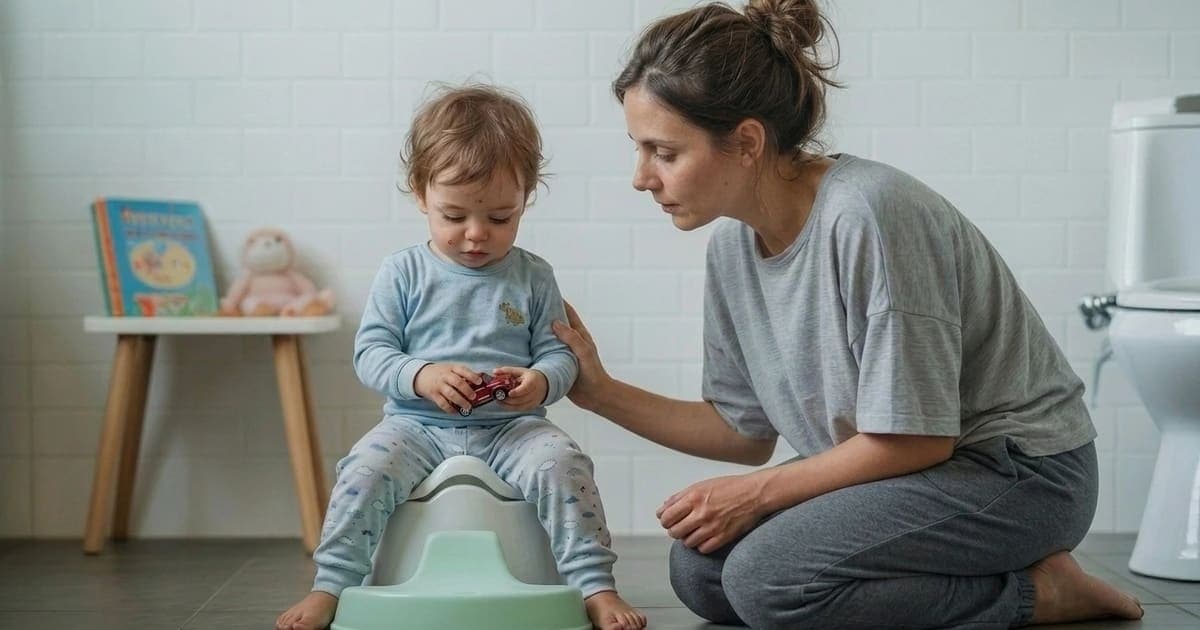
Last Tuesday, your kid marched to the bathroom, pulled down their pants, used the potty, flushed, and washed their hands. You almost cried. On Wednesday, they pooped in their underwear behind the couch and looked you dead in the eye. Welcome to potty training regression — the stage nobody warns you about because everyone assumes toilet training is a one-way street. It's not.
If your toddler was doing great and suddenly started having accidents again, you're not alone, and you didn't break anything. Potty training regression happens to the majority of kids between ages 2 and 5. The American Academy of Pediatrics treats it as a normal and expected part of development — not a sign of failure on anyone's part.
This guide covers why it happens (the real reasons, not the vague ones), what it looks like at different ages, how to tell pee regression from poop regression, and a step-by-step plan that actually works. No shaming. No gimmicks. Just the stuff that pediatricians and child psychologists keep telling parents in appointments — written down so you have it at 2 a.m. when the third pair of pants is in the wash.
The Short Version
- Potty training regression is normal — it happens to most kids and doesn't mean training failed.
- It usually lasts a few days to 3 weeks. If it goes past 4–6 weeks, talk to your pediatrician.
- Constipation is the #1 hidden cause — especially when kids will pee on the potty but refuse to poop.
- Punishment makes it worse. Every time. Stay calm, stay boring, stay consistent.
What Is Potty Training Regression, Exactly?
A one-off accident is a Tuesday. Regression is a pattern. Your child was consistently using the toilet — dry through naps, telling you when they needed to go, maybe even handling it solo — and then, over a period of days or weeks, that progress slides backward. More accidents. Refusal to sit on the potty. Asking for diapers again. Sometimes hiding to poop in their pants.
That's regression. It's not your kid forgetting how to use the toilet. They still know. Something else is getting in the way — and figuring out what that something is makes all the difference.
Why Does Potty Training Regression Happen?
There's rarely one single cause. But after talking to enough parents (and enough pediatricians), the same four triggers come up over and over.
The Constipation–Fear Cycle (The Big One)
This is the trigger that gets missed the most — and it's responsible for the majority of cases where a toddler will pee on the potty but flat-out refuse to poop on it.
Here's how it works: your child has one hard, painful bowel movement. It hurts. Maybe there's a small tear. Now they associate sitting on the potty with that pain. So they start holding it in — clenching, resisting, waiting until they physically can't anymore. But holding stool makes it harder and bigger. The next one hurts worse. Which makes them hold longer. And now you're stuck in a loop that feeds itself.
Cleveland Clinic estimates that constipation is involved in a significant portion of toilet training difficulties. If your child is grunting, crossing their legs, or going 3+ days without a bowel movement, start here. If you've dealt with constipation in younger babies, you'll recognise some of this from our guide to baby constipation — the emotional layer just gets more complex at toddler age.
Big Life Changes
New baby at home. Starting daycare or preschool. A move. Parents separating. A new caregiver. Even something that seems small to you — a grandparent visiting for a week, switching bedrooms — can rattle a toddler's sense of routine. And when their world feels unstable, they often retreat to what's familiar. Diapers feel familiar. The potty feels like one more thing to manage.
They Weren't Fully Ready
This one stings, but it's worth hearing. Some kids can perform the physical steps of potty training — pulling down pants, sitting, going — before they're emotionally or cognitively ready to own the process. They were capable, but not independent. When the novelty wore off or the rewards stopped working, they lost interest. That's not regression in the strict sense — it's the training outpacing the readiness. And the fix is the same: back off the pressure, give it time.
The Control Battle
Two- and three-year-olds are wired for independence. They want to pick their shoes, their cup, their show, their snack. And pooping? That's the one thing no adult can physically control for them. If potty training has turned into a power struggle — and you'll know because it feels like negotiating with a tiny dictator — your child may be using refusal as a way to exercise the only real autonomy they have. The more you push, the harder they resist. If this dynamic sounds familiar, our gentle parenting guide covers how to defuse these standoffs without escalating them.
What Potty Training Regression Looks Like by Age
Different ages, different triggers, different patterns. Here's what parents typically report — and what pediatricians say to expect.
| Age | Common Triggers | What You Might See | How Long It Lasts |
|---|---|---|---|
| 2 year old | Not fully ready, new sibling, routine disruption | Refusing the potty entirely, accidents during play | Days to 2 weeks |
| 3 year old | Preschool start, constipation, independence push | Pees on potty but refuses to poop, hiding to go | 1–3 weeks |
| 3.5 year old | Social awareness, bathroom anxiety at school | Asks for a diaper to poop, fine everywhere else | 1–4 weeks |
| 4 year old | School transition, new fears, sensory discomfort | Withholding, nighttime accidents return | 1–3 weeks |
| 5 year old | School stress, chronic constipation | Daytime leaking, soiling without awareness | Weeks — see doctor if beyond 1 month |
These are patterns, not rules. Your 2-year-old might show the behaviour listed under "4 year old" and vice versa. Use the table as a starting point for figuring out what might be going on — then look at your child's specific situation.
Pee Regression vs Poop Regression — They're Not the Same
This gets lumped together in most articles, but parents dealing with these two problems need very different advice. Here's how they break down.
| Factor | Pee Regression | Poop Regression |
|---|---|---|
| Most common cause | Distraction, schedule change, possible UTI | Constipation, fear, control battle |
| Typical behaviour | Wetting pants during play, nighttime bed-wetting | Hiding to poop, asking for a diaper, holding it for days |
| Emotional driver | Usually mild — stress or just being busy | Often anxiety — fear of pain or the toilet itself |
| Fix timeline | Usually resolves in days with gentle reminders | May take weeks — the pain–fear cycle has to break first |
| When to worry | Pain or burning when peeing (rule out UTI) | No bowel movement for 3+ days with visible distress |
If your child pees on the potty fine but absolutely refuses to poop on it — that's almost always about constipation or fear. Treat the poop issue separately. It's a different problem with a different solution.
How to Handle Potty Training Regression (Step by Step)
Here's the thing most parents don't hear: you can't rush your way out of this. The fix is a slow, boring, consistent process — and that's exactly why it works.
Step 1: Rule Out the Physical Stuff First
Before you change anything about your approach, check for medical causes. Constipation is the obvious one — hard stools, straining, blood streaks, bloated belly. But also watch for signs of a urinary tract infection: frequent tiny accidents, burning or crying during urination, fever. If either seems likely, call your pediatrician before doing anything else. A behaviour plan won't fix a physical problem.
Step 2: Drop the Pressure — All of It
No punishing. No frustrated sighs. No "you know how to do this" guilt trips. No comparing them to their cousin who trained at 18 months. Your energy around the toilet directly shapes your child's anxiety about it. If they sense that using the potty is a performance — and that failure disappoints you — they'll either freeze up or dig in harder.
When accidents happen, clean up calmly. "Oops, your pants are wet. Let's change." That's it. Boring is the goal. The less emotional weight you attach to the potty, the less emotional weight your child attaches to it too.
Step 3: Rebuild the Routine
Schedule potty sits after meals — breakfast and dinner are the best windows because the gastrocolic reflex (the body's natural urge to go after eating) works in your favour. Keep sits short — 5 to 10 minutes max. Bring a book. Let them pick a toy to hold. If nothing happens, that's fine. "Good try. We'll come back later."
And this detail gets overlooked constantly: make sure their feet are flat on a step stool. Dangling legs tighten the pelvic floor and make it physically harder to push. Feet flat, knees slightly above hips. That's the position that helps bowel movements happen without straining.
Step 4: Keep Praise Low-Key
Praise the attempt, not just the result. "You sat on the potty and tried — that's great." Not "OH WOW YOU POOPED! LET'S CALL GRANDMA!" That level of excitement can backfire — it makes the potty feel like a stage, and some kids don't want an audience.
Sticker charts work for some kids. For others, they lasted exactly two days before becoming coaster decorations. If rewards helped before but stopped working, your child may have moved past needing external motivation — or they may need the pressure of "earning" something to go away entirely. Read the room.
Step 5: Fix the Constipation (If That's the Root)
If hard stools are part of the picture, none of the behavioural stuff above will stick until you soften them. Your child isn't going to use the potty willingly if every poop feels like passing a rock.
- High-fibre foods: Pears, prunes, berries, oatmeal, beans, peas. Cut back on cheese, white bread, and bananas.
- Water throughout the day — not just at meals. Dehydration hardens stool faster than anything.
- Movement: Active play helps the gut keep things moving. Seriously — running around matters.
- Stool softeners: Only with your pediatrician's say-so. But if they recommend one, use it for the full course — not just until the first soft poop arrives.
We covered infant constipation remedies in detail in our baby constipation guide. The dietary principles are the same for toddlers — just with bigger portions and more food variety to work with.
- Stay calm and boring when accidents happen
- Use a step stool so their feet are flat and supported
- Offer choices — "red potty or white potty?"
- Let them see you use the bathroom (normalise it)
- Talk about poop matter-of-factly — no shame language
- Punish, yell, or show visible frustration
- Force them to sit until they "produce"
- Take away privileges as a consequence
- Compare them to siblings or other kids
- Say "you're too old for this" or "big kids don't do that"
When to Call the Pediatrician
Most regressions sort themselves out within a few weeks with patience and a calm approach. But some situations need professional input. Call your doctor if:
- No bowel movement for 3+ days and your child seems uncomfortable or distressed
- Blood in stool or urine — even small streaks
- Pain or burning during urination — could be a UTI
- Regression lasting more than 4–6 weeks with no improvement despite consistent, calm handling
- Your child soils their underwear without seeming aware — this may be encopresis, where chronic constipation causes involuntary leaking
- Significant emotional distress — extreme anxiety, tantrums, or behavioural changes that go beyond normal frustration
If your child is regularly soiling their underwear and doesn't seem to notice or control it — especially at age 4 or older — this could be encopresis. It's not defiance. It's usually the result of chronic constipation stretching the rectum, which dulls the nerves that signal "time to go." Liquid stool leaks around the hard blockage. It's a medical condition, not a behaviour problem, and it needs your pediatrician's help to resolve.
The Part Nobody Talks About — How This Feels for You
There's plenty of advice out there about how to help your child through regression. Almost none of it mentions what it does to you.
It's exhausting. Scrubbing underwear at 7 a.m. before work. Carrying extra clothes everywhere again. Fielding questions from daycare about whether your child is "really trained." And somewhere in the back of your mind, a nagging thought: did I start too early? Did I do this wrong?
You didn't. Regression happens to kids who trained at 2 and kids who trained at 4. It happens after three-day bootcamps and after six-month gradual approaches. The method didn't cause this. A developmental hiccup did — or a physical one. And it will pass.
If you're at the end of your rope, give yourself permission to step back. Put them in pull-ups for a week. Nobody's handing out trophies for unbroken toilet streaks. Your relationship with your child matters more than the timeline. And they will get there — every healthy child does.
Curious about how your little one is growing overall? Our Child Height Predictor is a fun way to see what's ahead — because one day this small human who's currently negotiating poop logistics will tower over you.
Toddler Sleep Regression at 18 Months and 2 Years: What Helps
Toddler Hitting and Biting: Why It Happens and How to Stop It
Sources
- AAP HealthyChildren.org — Toilet Training
- Cleveland Clinic — Constipation in Children
- Mayo Clinic — Potty Training: How to Get the Job Done
- KidsHealth (Nemours) — Encopresis
- Nationwide Children's Hospital — Constipation in Children
This article is for informational purposes and does not replace medical advice. If your child's regression persists or you notice signs of pain, constipation, or emotional distress, consult your pediatrician.
From ovulation tracking and due dates to baby names and growth charts. Everything you need for your journey.
Share this post
Frequently Asked Questions
Contents
About the Author
Medically Reviewed By

Browse our curated baby name collection
Get the latest parenting tips and updates delivered to your inbox.
Read Next
Toddler Hitting and Biting: Why It Happens & How to Stop It Without Shaming
Toddler hitting and biting can be normal, but it still needs a firm response. Learn why it happens, what to say, and when to call the doctor.
Read Article
Toddler Sleep Regression at 18 Months and 2 Years: What’s Real and What Helps
Your toddler was sleeping through the night — now they’re not. What’s behind the 18-month and 2-year sleep regressions, how long they last, and the strategies that actually work.
Read Article
Baby Constipation: Signs to Watch, Home Remedies That Work, and When to Call the Doctor
Hard stools, crying during bowel movements, or days without a dirty diaper — here's how to spot real constipation in babies, which home remedies actually help & when it's time for a doctor's call.
Read Article
How to Discipline a Toddler Without Yelling — 10 Gentle Parenting Strategies That Actually Work
Tantrums, hitting, meltdowns — 10 gentle parenting strategies that replace yelling with connection. Includes real scripts, a 'what to say instead' table, and the brain science behind why it works.
Read Article
2-Year-Old Speech Red Flags: When to Worry (And When Not To)
Worried your 2-year-old isn't talking enough? Real red flags, normal variations, the late talker myth, and 5 daily habits that actually help — from a parent who's been in your shoes.
Read Article
Screen Time for Kids by Age: What the AAP Actually Recommends (And a Family Plan That Works)
How much screen time is too much? AAP and WHO guidelines broken down by age, a family media plan you'll actually use, and the warning signs most parents miss.
Read Article