
When Do Babies Start Teething? Signs, Timeline, and Remedies That Actually Work

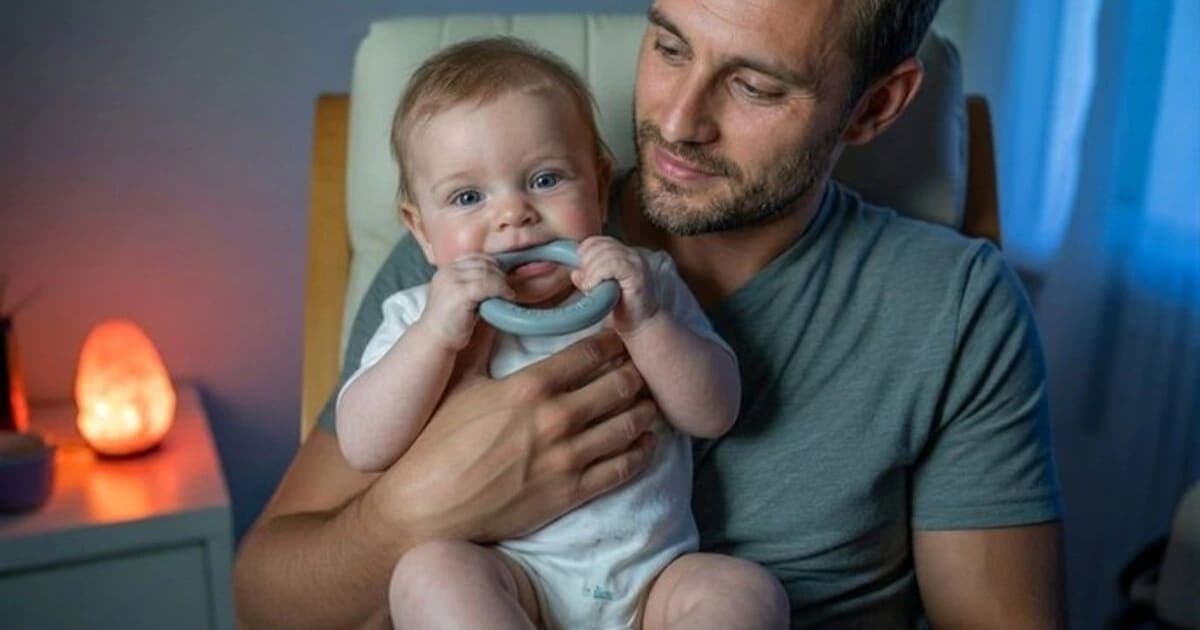
Your baby is soaking through bibs, gnawing on their own fist like it personally wronged them, and losing it at 2am for reasons you can't figure out. You're half-asleep, Googling "when do babies start teething" with one eye shut. Been there.
Most babies cut their first tooth somewhere between 4 and 7 months. Some start earlier (yes, even at 3 months), and some don't get that first tooth until after their first birthday. All of it is normal. What isn't normal is spending hours reading articles that bury the actual answer behind 17 paragraphs of filler.
This guide gives you the straightforward version: real teething signs, a month-by-month chart of which teeth show up when, remedies that are safe (and the ones the FDA says aren't), and how to tell whether your baby is teething or getting sick. If teething is wrecking sleep in your house, our 4-month sleep regression guide covers that overlap.
The Quick Version
- Teething usually starts between 4 and 7 months (range: 3 to 12 months). Lower front teeth almost always come first.
- Normal teething signs: drooling, fussiness, chewing on everything, mild gum swelling.
- NOT teething: high fever (100.4°F+), diarrhea, body rash, persistent cough. These need a doctor.
- Safe remedies: cold washcloth, clean-finger gum massage, firm rubber teether. Skip benzocaine gels, amber necklaces, and homeopathic tablets.
When Do Babies Start Teething?
Six months. That's the average. But averages hide a pretty wide range, and your baby might be well ahead of or behind that number.
Most babies get their first tooth between 4 and 7 months. The lower front teeth (bottom central incisors) almost always show up first. You'll see them pushing through the gum line as two tiny white ridges that feel sharp if your baby chomps on your finger.
Some babies start teething at 3 months. That catches parents off guard because most guides say "6 months" like it's a rule. It isn't. If your 3-month-old is suddenly drooling nonstop and cramming their hands into their mouth, early teething is a real possibility. The biggest factor in when teeth come in? Genetics. If you or your partner teethed early, your baby probably will too.
On the other end, some babies don't get a tooth until 12 or even 14 months. Also totally within the normal window. The only benchmark that warrants a call to a pediatric dentist: no teeth at all by 18 months.
Your baby's teething timeline is their own. The order matters more than the exact age. And speaking of order, here's what to expect.
Baby Teething Chart: Which Teeth Come In and When
Teeth follow a fairly predictable pattern, even when the timing varies baby to baby. Lower teeth tend to come in before the matching upper ones, and front teeth come before molars. Here's the standard eruption chart, based on data from the American Academy of Pediatric Dentistry:
| Tooth | Typical Age |
|---|---|
| Lower central incisors | 6–10 months |
| Upper central incisors | 8–12 months |
| Upper lateral incisors | 9–13 months |
| Lower lateral incisors | 10–16 months |
| Upper first molars | 13–19 months |
| Lower first molars | 14–18 months |
| Upper canines (cuspids) | 16–22 months |
| Lower canines (cuspids) | 17–23 months |
| Lower second molars | 23–31 months |
| Upper second molars | 25–33 months |
Teeth usually come in pairs (both lower central incisors within a few weeks of each other). The order can vary, and your baby won't necessarily follow this chart exactly. By age 3, most kids have all 20 baby teeth in place.
If you're tracking your baby's growth milestones alongside teething, our Child Height Predictor can give you a projection based on parental heights.
How to Tell If Your Baby Is Teething
Teething looks different in every baby. Some sail through each tooth with barely a whimper. Others turn into tiny rage monsters for a week straight. Here are the signs that point to teething:
- Drooling. A lot of drooling. Enough to soak through a bib in an hour. The constant moisture can cause a red, raw rash around the chin and mouth.
- Swollen or puffy gums. Run a clean finger along the gum line. If you feel a hard lump or see redness where a tooth is pushing through, that's the spot. Normal baby gums are smooth and pink. Teething gums look swollen, sometimes with a bluish tint.
- Chewing and gnawing on everything. Fists, toys, your shoulder, the edge of the crib. Counter-pressure on the gums helps when a tooth is pushing through.
- Fussiness that peaks in the late afternoon and evening. Gum swelling tends to get worse as the day goes on. Mornings are usually calmer.
- Disrupted sleep. Teething discomfort doesn't take nights off. If your baby was sleeping well and suddenly isn't, a new tooth might be the reason.
- Ear pulling or cheek rubbing. The jaw, ears, and cheeks share nerve pathways. Gum pain can radiate outward, making babies tug at their ears or rub their face.
- Slight temperature rise (but not a real fever). Teething can bump the temp slightly, but anything at or above 100.4°F (38°C) is likely an illness, not a tooth.
- Eating less than usual. Sucking and chewing put pressure on sore gums, so some babies refuse the breast or bottle. If your baby is breastfed, you might notice biting during nursing.
- Head shaking. Some babies shake their head side to side when their gums hurt. It looks weird, but it's usually harmless. Mention it to your pediatrician if it continues after the tooth breaks through.
- Extra sleepiness. Some babies sleep more during active teething. Their body is working hard, and the extra rest isn't a bad sign.
Is My Baby Teething or Sick?
This is the question every parent lands on at 3am. And it's worth getting right, because the answer changes what you do next.
Teething starts around the same age that babies lose the passive immunity they got from their mother during pregnancy. Those maternal antibodies start fading around 6 months, which means babies suddenly catch more colds, viruses, and ear infections right when teeth start coming in. The timing is not a coincidence. It's why so many parents (and even some older pediatric textbooks) blame fevers and diarrhea on teething, when the real cause is usually an unrelated illness showing up at the same time.
| Symptom | Teething | Likely Illness |
|---|---|---|
| Temperature | Slight rise (below 100.4°F) | True fever (100.4°F or higher) |
| Drooling | Heavy, constant | Normal levels |
| Runny nose | No | Yes |
| Diarrhea | No (timing coincidence) | Yes |
| Cough | No | Yes |
| Rash | Chin/face only (drool rash) | Body rash |
| Duration | Few days per tooth | Longer, may worsen |
| Behavior | Fussy but consolable | Lethargic, inconsolable |
Bottom line: if your baby has a temperature at or above 100.4°F, diarrhea, a body rash, or a cough, treat it as an illness. Don't chalk it up to teething. The AAP is clear on this.
If your baby's fussiness is paired with digestive changes, our baby constipation guide covers what's normal and what warrants a call to the doctor.
Safe Teething Remedies That Work
You don't need expensive products. The most effective teething remedies are simple, cheap, and probably already in your kitchen.
- A cold, wet washcloth. Soak it, wring it out, chill it in the fridge for about 15 minutes. The cold and the texture both soothe sore gums. Don't freeze it (too hard on tender tissue).
- Gum massage with a clean finger. Wash your hands, then rub the sore spot with gentle, firm pressure. This works better than most parents expect.
- A firm rubber teething ring. Not liquid-filled (those can leak or burst). Not frozen solid (too hard). Chilled in the fridge is the sweet spot.
- A cold spoon from the fridge. Metal holds the cold well. Let your baby gnaw on the rounded back of a small spoon.
- For babies 6+ months who've started solids: chilled cucumber spears or cold applesauce in a mesh feeder give them something to work on while soothing the gums. If your baby is starting solids, our baby-led weaning first foods guide covers safe options by age.
What Helps at Night
Teething at night is the worst part. The house is quiet, the distractions are gone, and the gum pain has your baby's full attention. Here's what helps:
- Stick to the normal bedtime routine. Consistency matters more than ever when everything else feels off.
- Gentle gum massage right before laying your baby down. Two minutes of pressure on the sore spot can buy you a longer stretch of sleep.
- Keep the room cool and dark. Heat makes swelling worse. A slightly cooler room helps.
- If the pain is clearly bad: a weight-appropriate dose of infant acetaminophen (Tylenol). Talk to your pediatrician about dosing, especially for babies under 6 months.
- For babies 6 months and older: infant ibuprofen (Motrin/Advil) is another option and lasts longer than acetaminophen. Same rule: ask your pediatrician before using it.
Infant Tylenol (acetaminophen) dosing is weight-based, not age-based. Your pediatrician or pharmacist can tell you the right amount. Never give aspirin to any child under 18, and never give ibuprofen to a baby under 6 months old.
What to Avoid: The Stuff That's Actually Dangerous
Some of the most popular teething "remedies" on the market are flat-out dangerous for babies. This isn't about being alarmist. It's about knowing what the FDA and AAP have said, in writing, with data behind it.
Benzocaine Gels (Orajel and Similar Products)
Benzocaine is a topical numbing agent found in the original Orajel. The FDA issued a formal warning: benzocaine can cause methemoglobinemia, a condition that reduces the amount of oxygen your blood can carry. It can be fatal. Benzocaine oral products are now banned for use in children under 2.
The current "Orajel Baby" products on shelves are benzocaine-free, but always flip the box over and check the active ingredients before buying anything.
Amber Teething Necklaces
There is zero scientific evidence that amber necklaces relieve teething pain. The claim that body heat releases succinic acid from the beads has been debunked. What isn't debunked: the choking and strangulation risk. The AAP recommends no jewelry of any kind on infants. The FDA has received reports of infant deaths linked to these necklaces.
Homeopathic Teething Tablets
In 2017, Hyland's voluntarily recalled its baby teething tablets after the FDA found inconsistent levels of belladonna (a toxic plant) across batches. The FDA reported adverse events including seizures and breathing difficulties. "Natural" does not mean safe.
When to Call Your Pediatrician
Most teething passes without needing a doctor. But some symptoms don't belong to teething at all, and those need attention.
- Fever at or above 100.4°F (38°C), especially in a baby under 3 months
- Diarrhea, vomiting, or a rash that spreads beyond the chin
- Crying that won't stop for hours, and nothing helps (our newborn crying guide covers other possible reasons)
- Refusing to drink any fluids for more than a day
- No teeth at all by 18 months
- Gums that are bleeding heavily
When in doubt, call. Your pediatrician has heard every version of "I think my baby is teething but I'm not sure" and they'd rather you ask than wait.
The Part Worth Remembering
Teething is rough, but it's temporary. Each tooth takes about a week of fussiness to break through, and then your baby goes back to normal until the next one starts pushing. By age 3, all 20 teeth are in and this whole chapter is behind you.
In the meantime, a cold washcloth, a clean finger, and a lot of patience will get you through most of it. Save the worry for the stuff that actually matters: the fever that won't break, the rash that spreads, the baby who won't drink. That's when you pick up the phone. Everything else? You've got this.
Sources
- AAP HealthyChildren.org — Baby Teething and Tooth Care
- Mayo Clinic — Teething: Tips for Soothing Sore Gums
- Cleveland Clinic — Teething in Babies
- FDA — Safely Soothing Teething Pain
- American Academy of Pediatric Dentistry — Tooth Eruption Charts
This article is for informational purposes and does not replace medical advice. If you're concerned about your baby's teething symptoms or development, consult your pediatrician.
From ovulation tracking and due dates to baby names and growth charts. Everything you need for your journey.
Share this post
Frequently Asked Questions
Related Topics
Contents
About the Author
Browse our curated baby name collection
Get the latest parenting tips and updates delivered to your inbox.
Read Next

Baby Fever: When to Worry, What to Do, and When to Call
Is your baby hot, flushed, and fussy? Learn when baby fever requires the ER, when to call the doctor, and how to safely treat a fever at home.
Read Article
Baby Wake Windows by Age: The Complete Sleep Schedule Guide (0–12 Months)
Struggling with baby sleep? Learn how to calculate wake windows by age, spot sleepy cues before meltdowns, and structure your baby's sleep schedule.
Read Article
The 4-Month Sleep Regression: Why It Happens and an Exact Survival Plan
Your baby's sleep fell apart overnight? Here's why the 4-month sleep regression happens, how long it really lasts, signs to watch for, and what to do — without losing your mind.
Read Article
Baby Constipation: Signs to Watch, Home Remedies That Work, and When to Call the Doctor
Hard stools, crying during bowel movements, or days without a dirty diaper — here's how to spot real constipation in babies, which home remedies actually help & when it's time for a doctor's call.
Read Article
Baby-Led Weaning First Foods — What to Serve, How to Start, and What to Skip
Your no-stress guide to baby-led weaning first foods at 6 months. Best starter foods by category, a simple first-week plan, gagging vs choking explained, and foods to skip.
Read Article
Newborn Won't Stop Crying? 12 Real Reasons + a Cry Decoder That Works
It's 2 a.m. and the crying won't stop. Decode your baby's cry with our quick-reference table, 12 real causes, and soothing combos that work.
Read Article