
Clogged Duct or Mastitis? How to Tell, and What to Do


You found the lump in the shower. It is tender, a little hard, and now you are standing there doing the math: is this just a clogged duct, or is it turning into mastitis? The difference is not academic when you are the one in pain and watching for a fever. One usually clears with rest and normal feeding. The other can put you in bed with chills and, sometimes, on antibiotics.
Here is the quick version: a clogged duct is a tender, localized lump with no fever or only a mild one, and you otherwise feel fine. Mastitis adds whole-body illness — a fever of 101°F (38.3°C) or higher, chills, body aches, and a red, warm, wedge-shaped patch on the breast. That systemic-versus-local distinction is the fastest way to tell a clogged duct from mastitis.
The 30-second read
- Sore lump, no fever, you feel okay overall → likely a clogged duct.
- Fever, chills, flu-like aches, red hot patch → treat it as mastitis.
- The 2022 guidance flipped: use cold, not heat, and go gentle — hard massage makes it worse.
- Keep breastfeeding. Your milk is safe, and moving milk is part of getting better.
Clogged Duct vs. Mastitis: The 10-Second Difference
Most of the clogged duct vs mastitis confusion comes from the fact that they share the same starting point — a sore spot where milk is not moving well. What separates them is how sick you feel. A clog is a local plumbing problem. Mastitis is your whole body sounding an alarm. This table is the one thing worth screenshotting before you read anything else.
| What you notice | Clogged Duct | Mastitis |
|---|---|---|
| Fever | None, or under 101°F | 101°F (38.3°C) or higher |
| How you feel overall | Basically fine, just a sore breast | Flu-like — chills, aches, wiped out |
| The lump | Tender, movable, one clear spot | Sore area with spreading redness |
| Skin | Normal, maybe slightly pink | Red, hot, often wedge-shaped |
| Onset | Gradual over hours | Fast — can hit hard within hours |
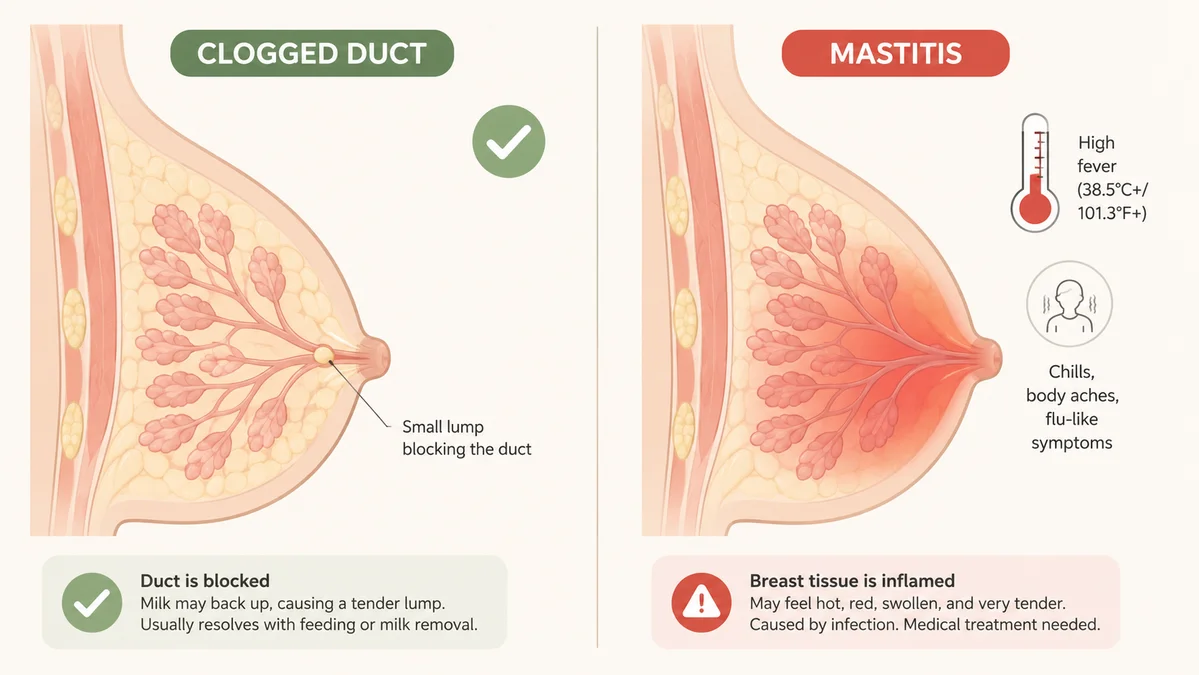
A clogged duct is one localized lump. Mastitis spreads into a red, hot wedge — and makes your whole body feel sick.
What a “Clogged” Duct Actually Is (the word is a little misleading)
Almost everyone pictures a solid plug of milk stuck in a tube, like a hair in a drain. That mental image is why so much old advice tells you to push, squeeze, and force it out. But that is not really what is happening. The Academy of Breastfeeding Medicine's 2022 Mastitis Spectrum protocol describes a clogged milk duct as an area of narrowing and inflammation, where the duct walls swell and milk backs up behind them. The milk is not a cork. The tissue around it is puffy and irritated.
Why does this matter at 11pm when you just want the lump gone? Because it changes the whole game plan. You cannot squeeze away swelling — you can only make it angrier. That single reframe is the reason the current advice looks so different from what your own mother was probably told.
Early signs of a clogged milk duct
Caught early, a clog is very manageable. Watch for:
- A tender, pea-to-marble-sized lump you can feel and usually move slightly.
- A small ache or fullness in one section of one breast.
- Slightly slower flow or a feeling that one area is not draining well.
- Sometimes a tiny white dot on the nipple (a bleb) at the duct opening.
- No fever, and you feel completely like yourself otherwise.
Mastitis Symptoms: When It Has Crossed the Line
Mastitis is inflammation of the breast that can involve infection, and the tell is that it makes you feel genuinely unwell — not just sore. Many parents describe it as getting hit by the flu out of nowhere. According to Mayo Clinic, the classic mastitis symptoms include:
- Fever of 101°F (38.3°C) or higher.
- Chills and flu-like body aches.
- A breast that is red, swollen, and warm to the touch.
- A wedge or streak of redness rather than one small spot.
- Burning pain that can be constant or worse during feeds.
- Feeling exhausted and run-down out of proportion to a sore breast.
How do I know if a clogged duct turned into mastitis?
Watch the fever and the way you feel, not the lump itself. If a sore spot you have had for a day suddenly comes with a temperature over 101°F, chills, spreading redness, and that bone-deep flu feeling, the clog has tipped into mastitis. A clog that is clearing goes the other way — the lump softens, the ache eases, and you never feel sick. When in doubt, the fever is your deciding vote.
What Actually Helps — the 2022 Update That Changed the Advice
If you have read older articles, forums, or a well-meaning group chat, you have probably been told to crank up the heat, massage the lump hard, and pump the breast bone-dry. Please do not. Here is the current, evidence-based approach — and it is close to the opposite of the old playbook.
The Academy of Breastfeeding Medicine rewrote the standard advice in its 2022 protocol, and the core change is genuinely counterintuitive: you stop trying to force the lump out. For years parents were told to massage aggressively, apply heat, and pump to empty — moves the protocol now warns can bruise tissue, worsen swelling, and even signal your body to make more milk. The updated approach is nearly the reverse: cold packs, ibuprofen, feeding on your baby's normal schedule, and only a light lymphatic sweep toward your armpit instead of deep massage.

The modern first-line kit: cold, an anti-inflammatory, water, and rest — not heat and hard massage.
Do this
- Feed or pump on your normal schedule. Offer the sore side, but do not add extra sessions to “drain” it.
- Use cold packs between feeds to bring down swelling and pain (10–15 minutes, with a cloth barrier).
- Take ibuprofen and/or acetaminophen as directed — both are compatible with breastfeeding and reduce inflammation and fever.
- Rest and hydrate like you would with the flu. Recovery is a real thing here, not a luxury.
- Sweep gently. A feather-light stroke from the lump toward your armpit moves fluid; it should never hurt.
- Deep or aggressive massage. The protocol is blunt that squeezing to extrude a “plug” is ineffective and causes tissue trauma.
- Heat before feeds. Heat increases blood flow and swelling; a randomized trial found warm showers did not improve outcomes.
- Pumping to empty. Extra pumping tells your body to make more milk, which feeds the cycle.
- Dangle feeding and partner “suck it out” tricks. No evidence, and awkward positioning can strain your baby's neck.
Should I massage a clogged duct?
Only gently. Firm, deep massage is now discouraged because it bruises already-inflamed tissue and adds swelling — the exact opposite of what you want. A light lymphatic stroke, moving from the sore area toward your armpit with barely any pressure, is the current recommendation. If a poor latch keeps causing clogs, working on positioning matters more than any massage technique; our breastfeeding positions guide walks through holds that help milk move evenly. And if you pump, an over-aggressive routine can quietly drive this — our exclusive pumping guide covers settings and schedules that protect your tissue.
Call Your Doctor Now If…
Home care handles most clogs and plenty of early mastitis. But breast infections can escalate, and a few signs mean it is time to be seen — today, not next week.
Get medical care if you have
- Symptoms that are not clearly improving after about 24 hours of proper home care.
- A fever that keeps climbing, or symptoms that are getting worse fast.
- A hard, very painful lump that is growing or feels like a fluid-filled pocket (a possible abscess).
- Pus or blood in your milk, or a cracked nipple that looks infected.
- Red streaks spreading, a racing heart, or you feel frighteningly unwell — these need urgent care.
Antibiotics are for bacterial mastitis, not every red, sore breast. That distinction matters because reaching for them too early can disrupt the breast's normal bacteria and, per the ABM protocol, actually raise the odds that simple inflammation tips into a true infection. The practical rule most clinicians use: if a fever and flu-like symptoms are not clearly easing after roughly 24 hours of cold, rest, anti-inflammatories, and normal feeding, that is the point to be evaluated. The NHS uses the same 24-hour benchmark for seeking care.
Cabbage Leaves, Warm Oil, and “Don't Waste the Milk”
If you grew up in a South Asian, Arab, or other immigrant household, you are getting a second stream of advice right now — from your mother, your aunt, the family WhatsApp group. Some of it is gold. Some of it quietly clashes with the current guidance, and it helps to know which is which, without dismissing the people who love you.

Family remedies carry real comfort — the goal is to keep the ones that help and gently update the ones that don't.
- Chilled cabbage leaves: genuinely fine, and they line up with the cold-not-heat rule. They will not “cure” an infection, but tucked in your bra, cold, they ease swelling and pain. Use them for comfort, not as a substitute for care.
- Warm mustard-oil or ghee massage: this is the one to rethink. The warmth plus firm rubbing is exactly the heat-and-deep-massage combination the 2022 guidance moved away from. The love behind it is real; the technique can add swelling.
- “Don't waste the milk — pump it all out”: understandable, but pumping to empty tends to make oversupply and clogs worse, not better. Feeding your baby normally is enough.
- “Push through the pain, it will pass”: fine for a clog; risky for mastitis. A rising fever is not something to tough out at home.
One more worry that comes up in these families more than most: whether antibiotics mean you have to stop nursing. You almost never do. The CDC is clear that you can and should keep breastfeeding through mastitis, and the antibiotics your doctor prescribes for it are chosen to be safe while you nurse.
Lowering the Odds of the Next One
You cannot bulletproof yourself against every clog, but a handful of habits cut the risk noticeably:
- Feed to your baby's rhythm, not the clock. Long, forced gaps and marathon “emptying” sessions both invite trouble. If cluster feeding has your schedule scrambled, our cluster feeding guide explains what is normal.
- Watch for oversupply. Making far more milk than your baby needs is a leading driver of repeat clogs. Managing it deliberately helps — see our notes on balancing milk supply so you are not overproducing.
- Fix the latch and check your gear. A shallow latch, a too-tight bra, or a badly fitted pump flange can all pinch a duct. Small adjustments prevent a lot of lumps.
- Ask about sunflower lecithin if clogs keep recurring. Some parents and clinicians find it helps milk flow more smoothly. It is worth raising with your provider rather than starting blind.
If you take one thing from all of this, make it the reframe: you are not trying to force anything out. You are calming an inflamed, overworked patch of tissue — with cold, rest, gentle handling, and normal feeding — while keeping one eye on your temperature. That mindset gets most parents through a clog in a day or two, and tells you clearly when it is time to hand things to a doctor.
Sources & Further Reading
- Academy of Breastfeeding Medicine — Clinical Protocol #36: The Mastitis Spectrum (2022)
- Mayo Clinic — Mastitis: Symptoms & Causes
- CDC — Breastfeeding and Mastitis
- NHS — Mastitis
This article is for information only and does not replace medical care. If you have a high fever, worsening pain, or symptoms that are not improving, contact your doctor, midwife, or an International Board Certified Lactation Consultant (IBCLC) promptly.
From ovulation tracking and due dates to baby names and growth charts. Everything you need for your journey.
Share this post
Frequently Asked Questions
Related Topics
Contents
About the Author
Medically Reviewed By

Browse our curated baby name collection
Get the latest parenting tips and updates delivered to your inbox.
Read Next
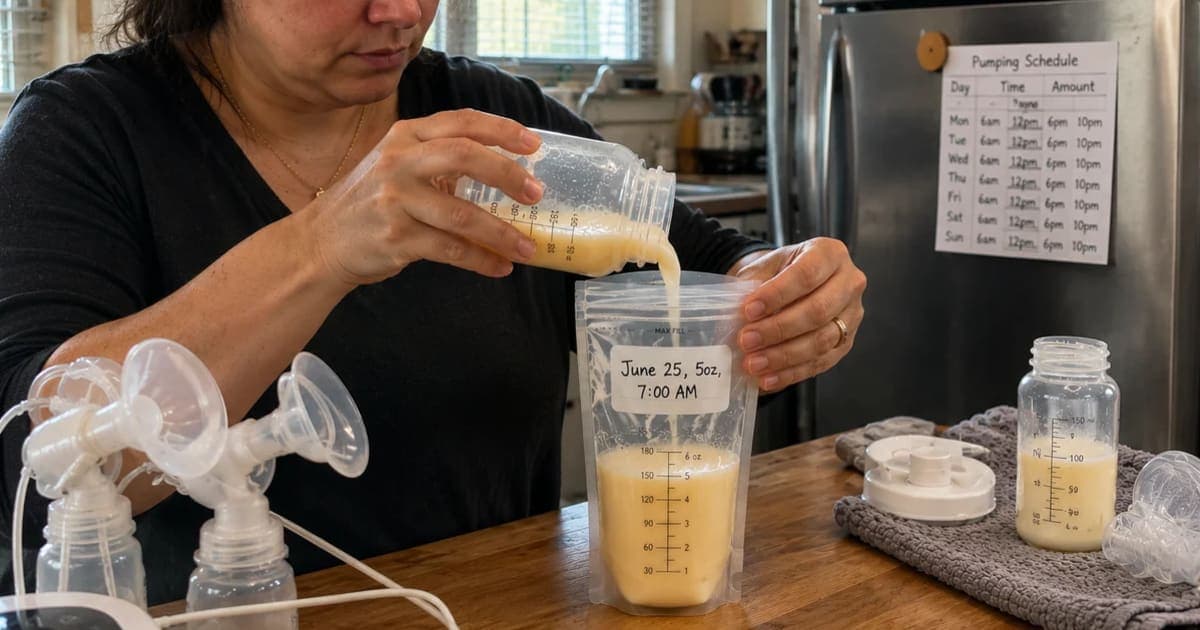
Exclusive Pumping: Schedules, Supply Tips & What No One Tells You
Month-by-month pumping schedules, supply tips backed by evidence, equipment that matters, and the honest emotional advice no exclusive pumping guide gives you.
Read Article
Combo Feeding Your Newborn: How to Mix Breast Milk and Formula Safely
How to combo feed your newborn safely — with sample schedules by age, milk supply protection tips, mixing guidance, and honest answers to every question new parents ask.
Read Article
Breastfeeding Positions: 7 Holds for a Pain-Free, Deep Latch
Struggling with a painful latch? Discover 7 safe breastfeeding positions (like side-lying and football holds) that make nursing comfortable. Backed by lactation experts.
Read Article
Cluster Feeding: Why Your Newborn Feeds Nonstop and What to Do About It
Your newborn wants to nurse every 30 minutes and you're running on empty. Here's what cluster feeding actually is, how long it lasts by age, and the real strategies to survive it.
Read Article
How to Increase Breast Milk Supply: 11 Things That Actually Work (And 3 That Don't)
Struggling with low milk supply? 11 proven ways to boost breast milk production naturally — plus 3 common myths debunked. Includes a power pumping schedule and signs your supply is actually fine.
Read Article
Your Postpartum Recovery Timeline: What's Really Happening to Your Body Week by Week
Your body just did something extraordinary. Here's exactly what happens during postpartum recovery — from the first 24 hours through 6 months — for both vaginal and C-section births.
Read Article