
Your Postpartum Recovery Timeline: What's Really Happening to Your Body Week by Week


Nobody handed you a manual in the delivery room. You got a baby, a stack of hospital discharge papers, and maybe a peri-bottle you weren't entirely sure how to use. And now you're home, bleeding into what feels like a diaper for adults, wondering whether the cramping is normal or something's wrong — while simultaneously keeping a tiny human alive on no sleep.
Sound about right? Then you're in the thick of postpartum recovery, and everything you're feeling probably has a perfectly reasonable explanation.
Here's what most pregnancy books gloss over: recovery after giving birth isn't a single event. It's a slow, uneven process that stretches across months — not weeks. The American College of Obstetricians and Gynecologists (ACOG) has actually moved away from treating the "6-week checkup" as a finish line. They now call the entire first 12 weeks the fourth trimester — and recommend ongoing care through that whole stretch.
So let's walk through what's actually happening to your body — not in vague terms, but week by week, from the first 24 hours through six months. Whether you had a vaginal delivery or a C-section, this is the roadmap nobody gave you.
The 5-5-5 Rule Worth Knowing
This simple framework has been circulating among midwives and doulas for years, and it's gained traction recently for good reason:
- 5 days in the bed — rest, feed the baby, let people bring things to you.
- 5 days on the bed — gentle movement, sitting up more, short walks to the bathroom and kitchen.
- 5 days around the bed — light activity in the house, maybe a slow walk outside if you feel up to it.
It's not a medical prescription — it's a permission slip to actually rest. And for most new parents, that permission is the hardest part.
Your Week-by-Week Postpartum Recovery Timeline
The First 24 Hours — The Immediate Aftermath
Your body shifts gears fast. Within minutes of delivering the placenta, your uterus starts contracting to close off the blood vessels where it was attached. These contractions — called afterpains — feel like period cramps, and they hit harder if this isn't your first baby. Breastfeeding intensifies them because nursing triggers oxytocin, the same hormone that causes contractions.
Expect heavy bleeding. Bright red, pad-soaking bleeding. This is lochia, and it's completely normal — your uterus is shedding the lining that supported your pregnancy. Nurses will check your fundus (pressing on your belly to make sure the uterus is firming up), which is uncomfortable but necessary.
If you had a vaginal birth: You'll feel soreness in your perineum, especially if you tore or had an episiotomy. Ice packs and a peri-bottle will become your closest friends. Standing up for the first time can make you lightheaded — go slow, hold onto someone.
If you had a C-section: You're recovering from major abdominal surgery. The anesthesia wears off gradually. You'll have a catheter, and your first attempt at standing will feel like every muscle in your core has gone on strike. That's because they were literally cut through. Moving is important but painful — a nurse will help.
One thing that catches almost everyone off guard: the shaking. Many women tremble uncontrollably after delivery. It looks alarming, but it's a normal response to hormonal shifts and adrenaline dropping. It passes within a few hours.
Week 1 — The Hardest Part
If postpartum recovery had a peak difficulty setting, this is it. Everything hurts. You're sleep-deprived. Your hormones are in free fall. And you're simultaneously trying to figure out how to feed a baby who seems to want milk every ninety minutes.
Bleeding is still heavy — you'll go through thick maternity pads frequently. Never use tampons during postpartum bleeding. Your cervix is still open, and tampons increase the risk of infection. Small blood clots (grape-sized or smaller) are normal. Anything bigger than a golf ball needs a call to your doctor.
Your breasts will likely become engorged around days 3–5 as your milk transitions from colostrum to mature milk. Whether you're breastfeeding or not, this happens. Hard, hot, tender — it's temporary but intense. If you're nursing and struggling, our guide on boosting milk supply walks through what actually helps.
Swollen feet and ankles are common — your body retained extra fluid during pregnancy, and it takes time to flush it out. Elevating your legs when you can actually speeds this up.
And then there's the first bowel movement. Nobody warns you enough about this. It's intimidating, especially with stitches. A stool softener (your doctor will likely recommend one) makes a genuine difference. Don't push. Don't rush. It'll happen when it happens.
Night sweats hit many women hard this week. You might wake up drenched — sheets soaked, hair wet. It's your body dumping excess pregnancy fluids and adjusting to the progesterone crash. Keep a towel on your pillow and wear light, breathable layers.
Weeks 2–3 — Settling In (But Still Healing)
Bleeding typically shifts from bright red to a pinkish-brown colour. Still there, but lighter. If you notice it getting heavier again — especially after you've been more active — that's your body telling you to slow down. Listen to it.
Stitches (perineal or C-section) start dissolving. They itch. That itching actually means healing is happening, which is maddening but reassuring. Resist the urge to scratch — a warm sitz bath helps.
Emotionally, this is where many women hit a wall. The initial adrenaline and visitor excitement have faded. You're exhausted. The hormonal crash that started at delivery is still playing out — estrogen and progesterone have plummeted, and your mood can swing wildly. Crying over a cereal commercial? Snapping at your partner for breathing too loudly? Feeling furious and then sobbing ten minutes later? That's the hormones. It's miserable, and it's temporary.
The "baby blues" affect up to 80% of new mothers and usually resolve within two weeks. If sadness, anxiety, or dark thoughts persist beyond that — or if you feel disconnected from your baby, unable to eat or sleep even when the baby is sleeping, or scared of being alone with your child — that's not "normal adjustment." That's a medical condition that responds well to treatment. Tell someone. Your OB, your midwife, your partner, anyone. You're not failing. Your brain chemistry needs help.
Weeks 4–6 — Turning a Corner
The bleeding tapers to a light yellowish-white discharge called lochia alba. Many women feel like a fog is slowly lifting. Energy doesn't return all at once — it creeps in. One afternoon you'll realize you actually feel somewhat human, and that's a win worth acknowledging.
Your uterus has nearly returned to its pre-pregnancy size. If you press on your lower abdomen, it should feel firm and much smaller than it did two weeks ago. C-section incisions are typically well-sealed on the surface by now, though the deeper tissue layers are still knitting together internally.
The 6-week checkup is a significant milestone. Your provider will assess your physical healing, screen for postpartum depression, discuss contraception, and — if everything looks good — may clear you for exercise and sexual activity. A few things worth knowing about that clearance:
- "Cleared for exercise" means gentle, progressive exercise — not a boot camp. Walking, swimming, light yoga. Build from there.
- "Cleared for sex" doesn't mean you have to want it. Many women aren't ready for months beyond the six-week mark, and there's nothing wrong with that. Pain during sex after giving birth is common and worth discussing with your doctor.
- If you're thinking about getting pregnant again, ask about birth spacing. Most guidelines recommend waiting at least 18 months between pregnancies. Track your cycle with an Ovulation Calculator once your period returns.
Months 2–3 — The Slow Rebuild
Around the three-month mark, many women notice their hair starts falling out. Not thinning gradually — clumps in the shower drain, strands on every pillow. It looks alarming, but it's called telogen effluvium, and here's why it happens: during pregnancy, elevated estrogen kept your hair in its growth phase longer than usual. Once those hormones drop, all that "extra" hair sheds at once. It's temporary and usually resolves within 6–12 months.
Your core and pelvic floor are still rebuilding. If you leak urine when you sneeze, laugh, or jump — that's pelvic floor weakness, and it's worth addressing now rather than "just living with it." Pelvic floor physical therapy is genuinely life-changing for many women, and your OB can refer you. Start with gentle Kegels: contract the muscles you'd use to stop urinating, hold for 5 seconds, release fully. Repeat throughout your day.
Hormones are still running the show behind the scenes. You might feel more like yourself some days and completely unlike yourself on others. Your appetite, libido, and sleep patterns are all still adjusting. If you're breastfeeding, prolactin remains elevated, which can suppress your period and keep estrogen lower than pre-pregnancy levels.
Months 4–6 — Finding Your New Normal
If you're not breastfeeding, your period will likely return somewhere in this window — sometimes earlier. That first period after giving birth can be heavier, longer, or more painful than what you were used to. Irregular cycles for the first few months back are completely normal. If you're formula-feeding or weaning, your body starts producing less prolactin, which signals your ovaries to wake back up.
Weight is a loaded topic postpartum, and I'll be direct: there is no timeline for "getting your body back." Your body didn't go anywhere — it's right here, doing extraordinary things. That said, if you're curious whether your pregnancy weight gain was within a healthy range, our Pregnancy Weight Gain Calculator can give you context, but please don't treat it as a report card.
By six months, most acute physical symptoms have resolved. But some things might linger — episodic back pain, mild incontinence, a scar that feels tight, or anxiety that doesn't quite go away. These deserve attention. Talk to your provider about anything that's still bothering you.
Vaginal Birth vs C-Section Recovery — Side by Side
Recovery looks different depending on how your baby arrived. Here's how the two paths compare:
| Factor | Vaginal Delivery | C-Section |
|---|---|---|
| Hospital stay | 24–48 hours | 2–4 days |
| Primary pain area | Perineum, pelvic floor | Abdominal incision, gas pain |
| Lifting restriction | Avoid heavy lifting for 2–4 weeks | Nothing heavier than your baby for 4–6 weeks |
| Driving | Usually OK after 1–2 weeks | Typically 4–6 weeks (when you can brake without pain) |
| Exercise clearance | 6 weeks (gentle, progressive) | 6–8 weeks (with provider approval) |
| Full recovery range | 6 weeks to 6 months | 8 weeks to 12 months |
Both paths involve lochia, afterpains, breast changes, hormonal shifts, and emotional adjustment. The main difference is that a C-section adds surgical recovery on top of everything else. Neither is "easier." They're just different.
Lochia Explained — The Three Stages of Postpartum Bleeding
How long do you bleed after giving birth? For most women, postpartum bleeding lasts 4–6 weeks and follows three distinct stages:
| Stage | Timing | What It Looks Like |
|---|---|---|
| Lochia Rubra | Days 1–4 | Heavy, bright or dark red bleeding. Small clots are normal. |
| Lochia Serosa | Days 4–10 | Pinkish-brown, thinner flow. Decreasing volume. |
| Lochia Alba | Days 10 – 6 weeks | Yellowish-white, light or intermittent. May come and go. |
If your bleeding gets heavier after it had already started tapering off, you've probably overdone it physically. Rest more. If you're soaking through a pad in an hour or passing clots bigger than a plum, call your doctor immediately.
Postpartum Recovery Tips That Actually Help
Forget "bounce back." Here's what genuinely moves the needle:
- Build your recovery station. Before the baby arrives (or now, if you're reading this postpartum): peri-bottle, thick pads, stool softener, a water bottle with a straw, high-protein snacks you can eat one-handed, and your phone charger within arm's reach. Everything in one spot.
- Accept help with specifics. When someone says "let me know if you need anything," tell them exactly what you need: a hot meal, 30 minutes to shower alone, someone to hold the baby while you nap. Vague offers produce vague results.
- Walk before you run. Gentle movement — a slow walk around the block, stretching in bed — supports circulation and mood. But don't push into exercise until your provider says it's safe. Your pelvic floor needs time to recover before it handles impact.
- Eat for healing, not restriction. Your body is rebuilding tissue, producing milk (if breastfeeding), and running on minimal sleep. It needs fuel. Iron-rich foods help replenish blood loss. Fibre prevents the constipation that makes everything worse. If you planned meals during pregnancy using our pregnancy nutrition guide, many of the same principles still apply.
- Talk about how you're feeling. Not just "I'm tired." The real stuff. The resentment, the anxiety, the moments where you wonder if you made a mistake. These feelings are staggeringly common and don't make you a bad parent. They make you a human one.
When Something's Not Right — Red Flags After Birth
Most postpartum symptoms are uncomfortable but harmless. A few, however, require urgent medical attention. Call your doctor or go to the emergency room if you experience:
- Bleeding that soaks through a pad in an hour or large blood clots
- Fever above 100.4°F (38°C) — could signal an infection
- Foul-smelling vaginal discharge
- Redness, swelling, or oozing at a C-section incision site
- Severe headache that doesn't respond to pain relief, or vision changes (possible postpartum preeclampsia)
- Chest pain or difficulty breathing
- Calf pain or swelling in one leg (possible blood clot)
- Thoughts of harming yourself or your baby
Trust your instincts. If something feels wrong, it's always worth a call. Medical staff would rather hear from you unnecessarily than miss something serious.
Pregnancy Week by Week: What's Happening to Your Body and Baby
Sources
- ACOG — Optimizing Postpartum Care
- Mayo Clinic — Postpartum Complications
- Cleveland Clinic — Lochia (Postpartum Bleeding)
- March of Dimes — Your Body After Baby
- NIH — Pelvic Floor Recovery After Childbirth
This article is for informational purposes and does not replace medical advice. Consult your healthcare provider with specific concerns about your postpartum recovery.
From ovulation tracking and due dates to baby names and growth charts. Everything you need for your journey.
Share this post
Frequently Asked Questions
Related Topics
Contents
About the Author
Medically Reviewed By

Browse our curated baby name collection
Get the latest parenting tips and updates delivered to your inbox.
Read Next

How to Bathe a Newborn: Sponge Bath to Tub, Step by Step
Sponge bath or tub? Here's how to bathe a newborn step by step — when to start, safe water temperature, how often, and the one safety rule that never bends.
Read Article
C-Section Recovery Week by Week: What Really Happens Inside and Out
Your C-section recovery timeline week by week. Learn when pain peaks, how your body heals inside, sleeping positions and the honest recovery tips your discharge papers skipped.
Read Article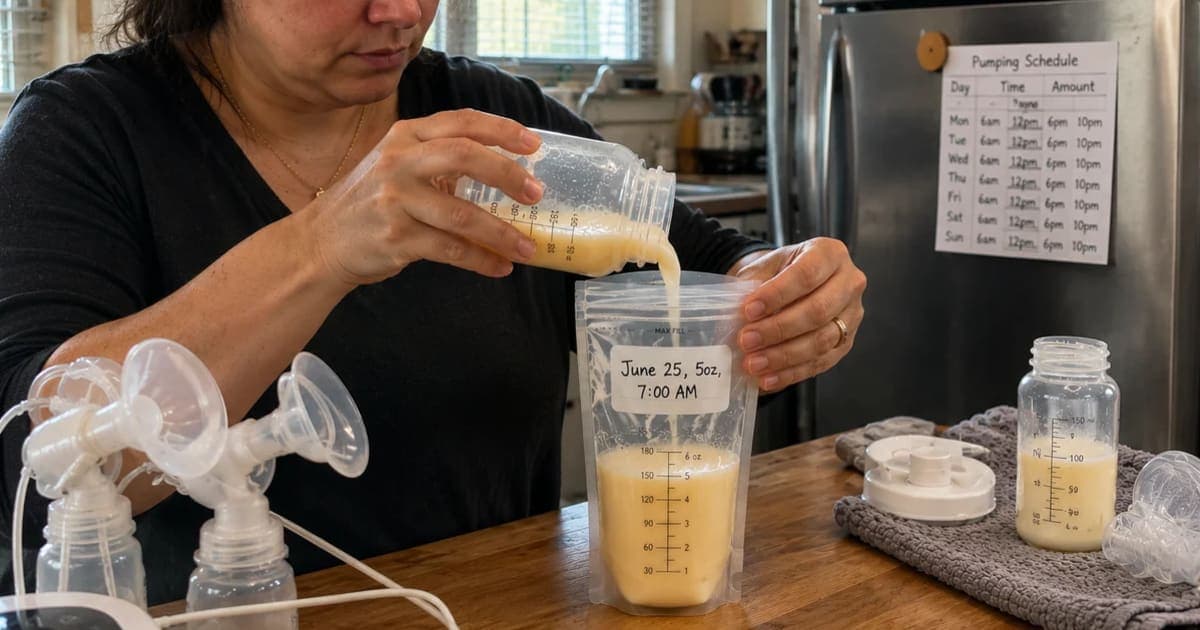
Exclusive Pumping: Schedules, Supply Tips & What No One Tells You
Month-by-month pumping schedules, supply tips backed by evidence, equipment that matters, and the honest emotional advice no exclusive pumping guide gives you.
Read Article
Breastfeeding Positions: 7 Holds for a Pain-Free, Deep Latch
Struggling with a painful latch? Discover 7 safe breastfeeding positions (like side-lying and football holds) that make nursing comfortable. Backed by lactation experts.
Read Article
Postpartum Depression vs. Baby Blues: How to Tell the Difference
Baby blues or postpartum depression? Here's how to tell the difference — real symptoms, a side-by-side comparison, when to call your doctor, and what treatment actually looks like.
Read Article
Clogged Duct or Mastitis? How to Tell, and What to Do
How to tell a clogged milk duct from mastitis, what the 2022 guidance says to do (ice, not heat), when to call your doctor, and honest takes on cabbage leaves and home remedies.
Read Article