
How to Introduce Peanut Butter to Your Baby — Exact Amounts, Prep, and Safety

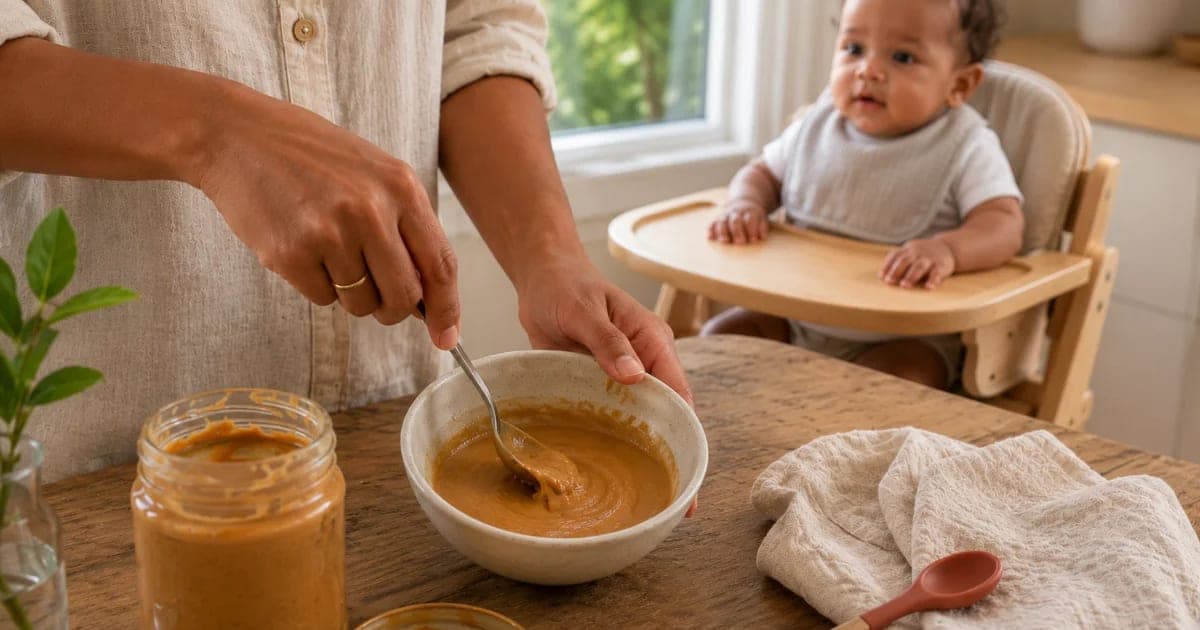
Ten years ago, pediatricians told parents to keep peanuts away from babies until age three. That advice did not reduce peanut allergies. It made them worse. The guidelines reversed completely, and now the evidence points in one direction: introducing peanut butter early — around six months — is one of the most effective things you can do to protect your child from developing a peanut allergy. The catch is that most parents have heard this but have no idea how much to give, how to prepare it safely, or what counts as a reaction versus a normal first-food response.
Why Early Peanut Introduction Matters
The evidence behind this shift is not ambiguous. The LEAP study, published in the New England Journal of Medicine in 2015, enrolled 640 infants at high risk for peanut allergy and randomly assigned half to eat peanut products regularly from infancy. By age five, the group that ate peanut had an 81% lower rate of peanut allergy than the group that avoided it.
That alone would have been enough to change policy. But the follow-up clinched it. The LEAP-Trio study, published in NEJM Evidence in 2024, tracked 508 of the original participants to age 13. The protection held — a 71% reduction in peanut allergy among teenagers who had been introduced early as infants, even years after many had stopped eating peanut products regularly. The American Academy of Pediatrics and the NIAID both updated their guidelines based on this evidence.
When to Introduce Peanut Butter — By Your Baby's Risk Level
Not every baby starts on the same timeline. The NIAID's 2017 Addendum Guidelines created a three-tier framework based on allergy risk, and the AAP endorses it. Here is how it applies to your baby:
| Risk Level | Your Baby's Profile | When to Start | Testing First? |
|---|---|---|---|
| High Risk | Severe eczema, egg allergy, or both | 4–6 months | Yes — consult allergist; skin prick or blood test likely |
| Moderate Risk | Mild to moderate eczema | ~6 months | No — introduce at home |
| Low Risk | No eczema, no food allergies | ~6 months | No — introduce freely |
One detail that trips parents up: peanut should not be the very first solid food your baby tries. Introduce a few other single-ingredient foods first — an iron-fortified cereal, a pureed vegetable, a mashed fruit — so you have a baseline and can isolate any reaction. Once your baby tolerates two or three foods, peanut goes next.
How to Give Peanut Butter to a Baby for the First Time
What Peanut Butter to Buy
Read the ingredient list. The only ingredient should be peanuts — or peanuts and salt. Skip anything with added sugar, palm oil, or hydrogenated oils. Most "natural" or "single-ingredient" peanut butters at the grocery store qualify. Always use smooth, never crunchy — the nut pieces in chunky peanut butter are a choking hazard for babies.
Step-by-Step Preparation
- Measure 2 teaspoons of smooth peanut butter into a small bowl.
- Add 2–3 teaspoons of warm water, breast milk, or formula. Stir until the mixture is thin, runny, and has no clumps. It should drip off a spoon — not stick to it.
- Offer a small taste first. Put about ¼ teaspoon on the tip of a baby spoon. Let your baby take it. Wait 10 minutes.
- If no reaction appears, feed the rest. Offer the remaining mixture over the next 10–15 minutes.
- Monitor for two full hours. Stay with your baby and watch for any signs of allergic reaction — skin changes, vomiting, behavioral shifts.
You can also mix the thinned peanut butter into a food your baby already likes — warm infant cereal, mashed banana, or plain yogurt. This works well for babies who resist unfamiliar tastes. The important thing is that the peanut protein gets into their system, not the delivery method.
What to Do If Your Baby Has a Reaction to Peanut Butter
Most babies tolerate peanut without any issue. But you are introducing a top allergen, so knowing the signs matters. Reactions typically appear within minutes to two hours.
Mild Reactions (Call Your Pediatrician)
- A few hives around the mouth, chin, or cheeks
- Slight redness or rash where the food touched the skin
- Mild fussiness or a single episode of vomiting
Severe Reactions (Call 911 Immediately)
- Widespread hives or swelling beyond the face — especially lips, tongue, or throat
- Difficulty breathing, wheezing, repetitive coughing
- Repeated vomiting or sudden limpness
- Pale or bluish skin color
Important Distinction
A small red patch directly where peanut butter touched your baby's skin is usually a contact irritation, not an allergy. The Cleveland Clinic notes that true allergic reactions involve symptoms beyond the contact area — hives on the chest, swelling of the eyes, or respiratory symptoms. If the redness is only at the point of skin contact and clears within 30 minutes, mention it to your pediatrician at your next visit rather than treating it as an emergency.
After the First Feed — Keeping Peanut in the Diet
Introduction is only half the job. The LEAP study showed that regular, ongoing exposure is what builds and maintains tolerance. Aim for two to three servings of peanut-containing food per week. One successful first taste followed by weeks of nothing does not provide the same protection.
Serving Ideas by Age
- 6 months: Thinned peanut butter mixed into infant cereal, mashed banana, or pureed sweet potato
- 8 months: Peanut butter stirred into warm oatmeal porridge, or a thin smear on a soft toast strip for self-feeding
- 12 months+: Peanut butter and banana on toast fingers, peanut satay dipping sauce with soft-cooked vegetables, Bamba-style peanut puffs as a snack
If your family already uses groundnut or peanut in cooking — sattu blended into porridge, groundnut chutney thinned with water, or peanut flour stirred into dal — those are perfectly valid ways to maintain exposure. The medical recommendation and the traditional practice line up here. What matters is that peanut protein reaches your baby's immune system consistently, not the specific recipe it arrives in.
Frequently Asked Questions
Can I give my 4-month-old peanut butter?
Only if your pediatrician specifically recommends it. The NIAID guidelines allow peanut introduction as early as 4 months for high-risk infants — those with severe eczema or egg allergy — but only after medical evaluation and usually allergy testing. For most babies, 6 months is the standard starting point.
Does peanut butter trigger eczema?
The relationship runs the other direction. Babies with existing eczema are at higher risk of developing peanut allergy, which is why the NIAID recommends introducing peanut earlier for these infants. Peanut butter does not cause eczema.
How often should I give my baby peanut butter after the first time?
Two to three times per week. The LEAP study demonstrated that regular, ongoing exposure maintains tolerance. A single successful introduction followed by weeks of avoidance does not provide the same protective benefit.
Can I use crunchy peanut butter for my baby?
No. Use only smooth, unsweetened peanut butter — ideally with the single ingredient "peanuts" on the label. Crunchy peanut butter contains nut pieces that are a choking hazard. If the only peanut butter in your kitchen is crunchy, buy a smooth jar before your baby's first allergen introduction.
The shift from "avoid peanuts" to "introduce them early" felt counterintuitive when the guidelines first changed. For many parents, it still does. But the data behind this recommendation is among the strongest in pediatric nutrition — a randomized controlled trial, replicated in follow-up, with protection lasting over a decade. Your baby's first taste of peanut butter is a small moment with a measurable, long-term payoff. If you are tracking your baby's growth and development through these early months, Nurturepedia's Child Height Predictor can give you a broader perspective on the milestones ahead.
Sources
- American Academy of Pediatrics — Food Allergy Prevention and Early Introduction Guidelines
- NIAID — Addendum Guidelines for the Prevention of Peanut Allergy (2017)
- LEAP Study — Learning Early About Peanut Allergy (King's College London)
- NIH — LEAP-Trio Study: Early Peanut Consumption Linked to Long-Lasting Allergy Prevention (2024)
- Cleveland Clinic — Food Allergies in Children: Symptoms, Diagnosis, and Management
- CDC — When, What, and How to Introduce Solid Foods
This article is for informational purposes and does not replace medical advice. If your baby has severe eczema, a known egg allergy, or any history of allergic reactions, consult your pediatrician or an allergist before introducing peanut products at home.
From ovulation tracking and due dates to baby names and growth charts. Everything you need for your journey.
Share this post
Frequently Asked Questions
Contents
About the Author
Browse our curated baby name collection
Get the latest parenting tips and updates delivered to your inbox.
Read Next

Combo Feeding Your Newborn: How to Mix Breast Milk and Formula Safely
How to combo feed your newborn safely — with sample schedules by age, milk supply protection tips, mixing guidance, and honest answers to every question new parents ask.
Read Article
Baby Reflux: Normal Spit-Up, Silent Reflux Signs, and When to Worry
Baby reflux is common, but GERD needs care. Learn normal spit-up vs reflux, silent reflux signs, safe remedies, sleep rules, and when to call your pediatrician.
Read Article
When Do Babies Start Teething? Signs, Timeline, and Remedies That Actually Work
When do babies start teething, and how do you tell if it's teething or something else? A month-by-month eruption chart, real symptoms to watch, safe remedies, and the FDA warnings most sites skip.
Read Article
Baby Constipation: Signs to Watch, Home Remedies That Work, and When to Call the Doctor
Hard stools, crying during bowel movements, or days without a dirty diaper — here's how to spot real constipation in babies, which home remedies actually help & when it's time for a doctor's call.
Read Article
Baby-Led Weaning First Foods — What to Serve, How to Start, and What to Skip
Your no-stress guide to baby-led weaning first foods at 6 months. Best starter foods by category, a simple first-week plan, gagging vs choking explained, and foods to skip.
Read Article
Gagging vs. Choking: What Every Parent Starting Solids Needs to Know
That retching sound is terrifying — but is it gagging or choking? Learn the difference instantly, step-by-step infant first aid, safe food shapes, and how to manage mealtime anxiety.
Read Article