
How to Discipline a Toddler Without Yelling — 10 Gentle Parenting Strategies That Actually Work

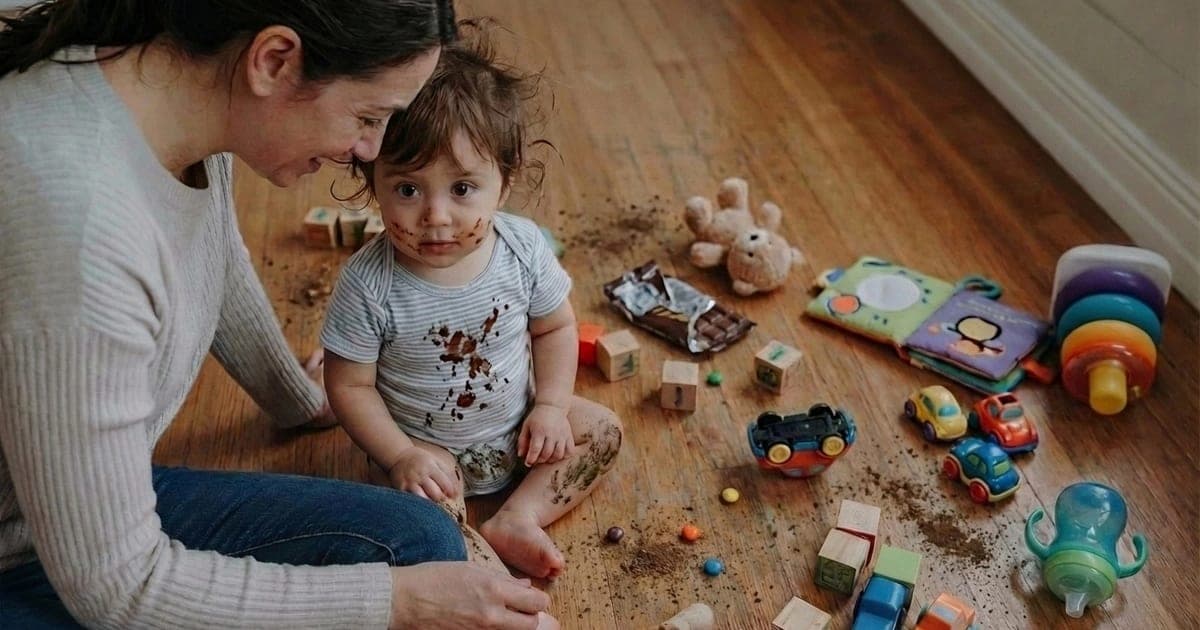
Picture this. You're standing in the cereal aisle at 5:47 p.m. Your toddler is flat on the floor, shoes kicked off, screaming because you put the blue box back on the shelf. Everyone's staring. You feel your jaw tighten. The urge to yell is right there — hot and instant and almost impossible to swallow. You've been here before. And the worst part? You know yelling won't fix anything. You've tried it. It just makes both of you feel terrible afterward.
If you're reading this at midnight after one of those days, I want you to hear something first: you are not a bad parent. You're a tired one. And you're looking for a better way. That already puts you ahead.
This guide walks through 10 gentle parenting strategies for disciplining your toddler without yelling — real techniques with real scripts you can use mid-meltdown. Not theory. Not "just stay calm" advice without telling you how. Actual words, actual scenarios, and the brain science behind why this approach works better than raising your voice ever could.
Why Yelling Backfires (What Happens Inside a Toddler's Brain)
Here's something that changed the way I think about discipline: a toddler's prefrontal cortex — the part of the brain responsible for impulse control, reasoning, and emotional regulation — is barely online. It won't fully mature until their mid-twenties. When your two-year-old throws a block at your head, they are not being defiant. They literally do not have the hardware to stop themselves yet.
When you yell, their brain doesn't process the lesson. It processes the threat. The amygdala — their internal alarm system — takes over. Heart rate spikes. Cortisol floods their body. They go into fight, flight, or freeze. Learning shuts down completely. The American Academy of Pediatrics states this clearly: harsh verbal discipline does not teach children self-control. It teaches them fear.
A 2021 study from the Université de Montréal used brain imaging on children who experienced repeated harsh parenting. The result? Measurable differences in prefrontal cortex and amygdala structure — areas that govern the exact skills we're trying to teach: emotional regulation, empathy, and decision-making.
None of this means you've ruined your child if you've raised your voice. It means chronic, repeated yelling as a discipline strategy works against the goal. So what actually works?
Gentle Parenting Isn't Permissive Parenting — Here's the Difference
Before we get into strategies, let's clear this up. Because the biggest criticism of gentle parenting is that it means letting kids run wild. It doesn't. Not even close.
Gentle parenting is built on three pillars: empathy, boundaries, and respect. You acknowledge the feeling. You hold the limit. You skip the shame. That's it. The word "gentle" describes how you deliver the discipline — not whether discipline exists. The Zero to Three framework puts it perfectly: discipline means teaching, not punishing.
| Permissive | Gentle | Authoritarian | |
|---|---|---|---|
| Boundaries | Few or inconsistent | Clear and consistent | Rigid and inflexible |
| During a tantrum | Gives in to stop the crying | Validates feeling, holds the limit | Punishes the behavior |
| Consequences | Rare or absent | Natural and logical | Imposed and often unrelated |
| Parent's role | Friend | Coach | Boss |
| Long-term result | Insecurity, poor self-regulation | Emotional intelligence, cooperation | Compliance driven by fear |
See the difference? Gentle parenting has teeth. It just doesn't bare them through yelling or shame.
10 Ways to Discipline Your Toddler Without Raising Your Voice
1. Get on Their Level — Physically
Kneel down. Get your eyes level with theirs. Touch their shoulder or knee. This sounds basic, but it changes everything. A toddler looking up at a looming adult who's talking fast and loud doesn't feel connected — they feel scared. Getting low says "I'm with you" before you even open your mouth.
Try this: "I can see you're really upset right now. I'm going to sit right here with you."
2. Name the Feeling Before You Name the Rule
Toddlers melt down because they feel something enormous and have zero vocabulary for it. When you label the emotion first, you give them language for their inner chaos. This is called emotion coaching, and developmental psychologists at the American Psychological Association consider it one of the most powerful tools in a parent's kit.
Try this: "You're mad because you wanted more screen time. I get that. Screen time is done for today." — Feeling acknowledged. Boundary held. No yelling required.
3. Say What You Want — Not What You Don't
Toddler brains struggle to process negatives. "Don't run" forces them to first picture running, then try to stop it. Just say what you actually want them to do instead. Flip the script. It works surprisingly fast.
| Instead of… | Try… |
|---|---|
| "Stop hitting!" | "Use gentle hands." |
| "Don't run!" | "Walking feet, please." |
| "Quit whining!" | "Can you use your regular voice?" |
| "No throwing food!" | "Food stays on the plate." |
| "Stop screaming!" | "Let's use our indoor voice." |
| "Don't touch that!" | "That's not for touching — here, try this." |
Save this table to your phone. Seriously. It's the kind of thing you need at 7 a.m. when your brain hasn't caught up with your coffee yet.
4. Offer Two Choices (Both Acceptable to You)
Toddlers crave autonomy. They want to feel like they're running the show — and you can let them think they are while staying firmly in charge. The trick is giving them two options that both work for you.
Try this: "Do you want to brush teeth first or put on pajamas first?" — They pick. They feel powerful. You still win. Bedtime happens.
5. Time-Ins Instead of Time-Outs
Traditional time-outs isolate a child at the exact moment they need connection most. Their brain is flooded, their nervous system is haywire, and we send them to sit alone in a corner? That doesn't teach self-regulation. It teaches them to stuff it down.
A time-in is the opposite. You stay with them. You sit on the floor of their room, or in a calm-down corner if you've set one up. You don't lecture. You just exist as a steady presence while their nervous system borrows your calm. This is called co-regulation, and it's how toddlers actually learn to handle big feelings — by practicing with a safe adult nearby.
Pick a quiet spot. Add a few soft pillows, a stuffed animal, maybe a jar of glitter they can shake and watch settle. No screens. The corner isn't punishment — it's a landing pad for when emotions get too big. Introduce it during a calm moment, not mid-tantrum. "This is where we go when our bodies feel wobbly."
6. Let Natural and Logical Consequences Do the Teaching
You don't need to invent punishments. Reality is a pretty effective teacher on its own.
Natural consequence: They refuse to wear shoes? Can't go to the park. You didn't impose that — physics did. Logical consequence: They keep throwing the truck after you've asked them to stop? The truck goes on the shelf for the afternoon. Not as revenge. Just cause and effect, delivered calmly: "I see you're choosing to keep throwing. The truck needs a break."
The key is keeping your voice neutral. Matter-of-fact. Like a weather report, not a court ruling.
7. Master the Pause (This One's for You, Not Them)
When your two-year-old dumps an entire bowl of oatmeal on the carpet for the second time today and then laughs — the rage that hits is real. And fast. That's your amygdala firing, same as theirs. You're not exempt from big feelings just because you're the adult in the room.
The pause is the most underrated discipline tool in existence. Step back. Breathe. Say out loud: "I need a moment to calm down." And then take it. Five seconds. Ten. Splash cold water on your face if you need to. Your child is watching you regulate in real time — and that is exactly how they learn to do it themselves.
8. Redirect Before the Meltdown Hits
Most tantrums have warning signs. The whine shifts pitch. They start rubbing their eyes. Their body gets floppy or clingy. These are neon signs flashing: I'm about to lose it. If you catch it early, you can often change course before anyone ends up on the floor.
Swap the activity. Change the room. Pull out a snack. Say, "Hey, want to help me find something in the kitchen?" — distraction isn't lazy parenting. With toddlers, it's strategic.
9. Hold the Boundary — Without the Lecture
When your toddler hits their sibling, you don't need a three-paragraph explanation about kindness. They're two. They can't absorb it. What they need is one calm, firm sentence — then redirection.
Try this: "I won't let you hit. Hitting hurts." Move them gently. Offer an alternative. Done. Repeat tomorrow. And the next day. And the one after that. Consistency teaches more than any single conversation ever will.
10. Repair After You Lose It (Because You Will)
Let's be honest. No parent gets through the toddler years without raising their voice. Some days, gentle parenting feels less like a lifestyle and more like a goal you missed by a mile. That's normal. What makes the difference isn't perfection — it's what you do after.
Go back. Get low. Say: "I'm sorry I yelled. That wasn't okay. I was frustrated, and I should have taken a breath first." This teaches your toddler something no amount of perfect discipline can: accountability. How to own a mistake. How to repair a relationship. Those lessons will outlast anything else on this list.
Quick Reference: The Gentle Discipline Loop
- Pause — Calm your own nervous system first.
- Connect — Get low, make eye contact, name the feeling.
- Set the limit — One sentence, calm and firm.
- Follow through — Natural or logical consequence.
- Repair if needed — Apologise when you get it wrong.
When Gentle Parenting Feels Like It's Failing
You'll hit a phase — probably around two-and-a-half — where your toddler seems to push harder than ever. The boundaries you've been holding? They test every single one like a lawyer poking holes in a contract. It's tempting to think this means gentle parenting doesn't work.
It doesn't mean that. It means it's working. Testing is how kids confirm the boundaries are real. If you yelled them into compliance, the testing would stop — but so would the learning. Research from the Canadian Paediatric Society shows that children raised with positive discipline develop stronger emotional regulation, better social skills, and fewer behavioral problems long-term. The results just take longer to show than punishment-based methods — think months, not days.
That said, if you're seeing persistent aggression, extreme tantrums that aren't improving after several months, or if your child isn't speaking much for their age, it's worth checking with your pediatrician. Sometimes communication delays drive behavior because kids can't express what they need. Our guide to speech red flags in 2-year-olds covers when typical toddler behavior crosses into something that deserves professional attention.
- Aggression that injures other children or themselves
- Tantrums lasting 30+ minutes multiple times daily
- Very limited speech for their age
- Loss of skills they previously had
- Tantrums are shorter in duration over time
- They start naming their own feelings unprompted
- They come to you when upset instead of hiding
- They occasionally self-correct ("gentle hands!")
Toddler Hitting and Biting: Why It Happens and How to Stop It
One Last Thing (The Part That Matters Most)
The internet makes gentle parenting look effortless. Calm mothers in linen outfits kneeling beside toddlers who quietly process their emotions after two sentences. That's not real life. Real life is oatmeal on the ceiling and a timer going off while someone screams about socks.
You don't have to do this perfectly. You just have to keep choosing connection over control, even when it's harder. Even when you mess up. Especially when you mess up — because repair is part of the method, not a failure of it.
Your toddler doesn't need a perfect parent. They need a parent who keeps showing up, keeps trying, and keeps loving them through the chaos. You're already that person. The fact that you're reading this proves it.
Curious about what to expect as your toddler grows? Our Child Height Predictor gives you a fun estimate of how tall they might be — because one day, this tiny tornado will be looking down at you.
Sources
- AAP / HealthyChildren.org — Effective Discipline to Raise Healthy Children
- Zero to Three — Toddlers and Self-Control: A Survival Guide
- Suffren et al. (2021) — Prefrontal Cortex and Amygdala Changes in Children Exposed to Harsh Parenting (Child Development)
- Canadian Paediatric Society — Positive Discipline Position Statement
- American Psychological Association — Parenting Resources
This article is for informational purposes and does not replace professional advice. If you have concerns about your child's behavior or development, consult your pediatrician.
From ovulation tracking and due dates to baby names and growth charts. Everything you need for your journey.
Share this post
Frequently Asked Questions
Related Topics
Contents
About the Author
Medically Reviewed By

Browse our curated baby name collection
Get the latest parenting tips and updates delivered to your inbox.
Read Next

Toddler Hitting and Biting: Why It Happens & How to Stop It Without Shaming
Toddler hitting and biting can be normal, but it still needs a firm response. Learn why it happens, what to say, and when to call the doctor.
Read Article
Toddler Sleep Regression at 18 Months and 2 Years: What’s Real and What Helps
Your toddler was sleeping through the night — now they’re not. What’s behind the 18-month and 2-year sleep regressions, how long they last, and the strategies that actually work.
Read Article
Potty Training Regression: Why It Happens at Every Age and How to Fix It
Your toddler was using the potty like a champ — then stopped. Here's what's behind potty training regression at every age, and the calm, step-by-step approach that gets things back on track.
Read Article
Screen Time for Kids by Age: What the AAP Actually Recommends (And a Family Plan That Works)
How much screen time is too much? AAP and WHO guidelines broken down by age, a family media plan you'll actually use, and the warning signs most parents miss.
Read Article
2-Year-Old Speech Red Flags: When to Worry (And When Not To)
Worried your 2-year-old isn't talking enough? Real red flags, normal variations, the late talker myth, and 5 daily habits that actually help — from a parent who's been in your shoes.
Read Article
Montessori at Home Without Expensive Toys: A Realistic Parent Guide
Start Montessori at home without expensive toys using real-life routines, simple shelf setup, safe activities, and age-by-age ideas.
Read Article