Montessori at Home Without Expensive Toys: Budget Guide
parentingToddler Parents6-12months, 1-2years, 3-5years8 min read
Montessori at Home Without Expensive Toys: A Realistic Parent Guide
Start Montessori at home without expensive toys using real-life routines, simple shelf setup, safe activities, and age-by-age ideas.
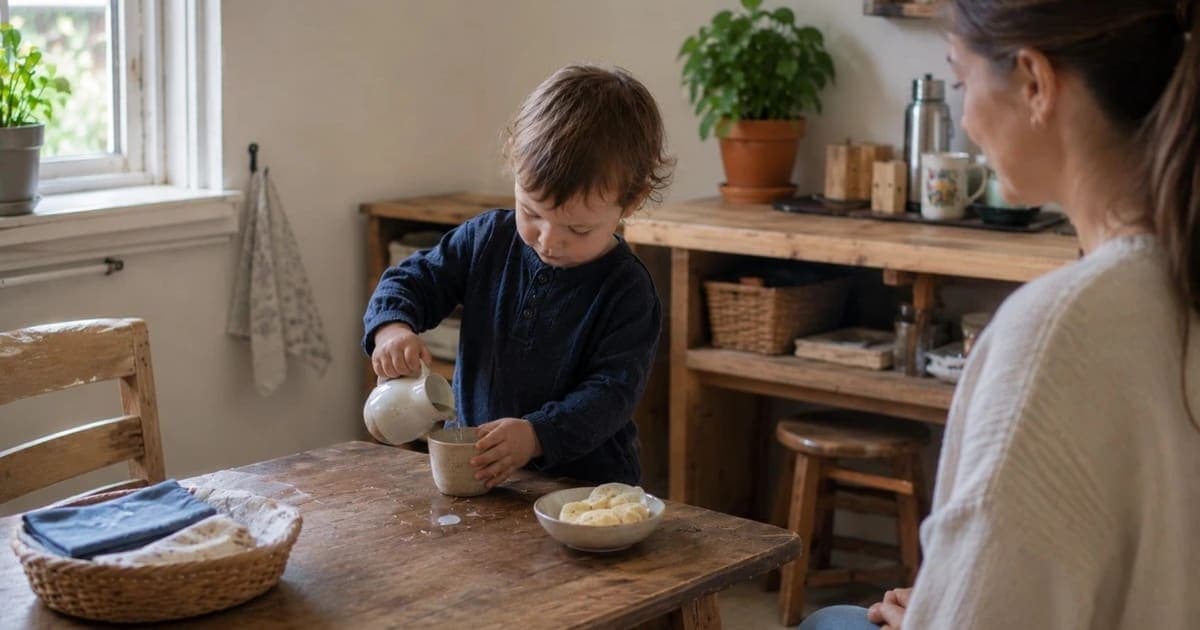
The internet has made Montessori look like a wooden toy catalog. Pretty shelves. Matching baskets. Tiny pitchers that somehow cost more than your own kitchen set. Real Montessori at home can be much simpler: a child wiping a spill, carrying socks to a drawer, pouring water, choosing one activity, and putting it back.
You can start with the things already in your house. A spoon. A bowl. A basket of clean cloths. A low drawer. A step stool. The method works best when the setup helps your child do real work with a little more independence than yesterday.
Pick one room, usually the kitchen, bathroom, or play area.
Set out 4 to 6 simple choices your child can reach and return.
Add one practical-life job: wiping, pouring, matching socks, watering a plant, or helping with snack.
Show the activity slowly, then step back.
Rotate only when interest drops or the skill gets too easy.
What Montessori at home means
AMI describes Montessori spaces as prepared environments, where furniture, materials, and routines fit the child's stage. At home, that idea becomes very practical. Can your child reach the towel? Can they pour from a small cup? Can they clean a little spill without waiting for you?
A Montessori home gives children real chances to practice. The work is small, slow, and repeated. That repetition is where the learning happens.
Start with the room that causes the most friction. If mornings are chaotic, prepare a getting-dressed spot. If snack time turns into a mess, build a tiny snack station. If your toddler wants to help in the bathroom, make the towel, stool, and laundry basket easy to reach.
The one-room setup
When parents search for how to set up Montessori at home, they usually picture a full playroom. A better first step is one usable corner. Keep it plain, low, and calm.
Area
Simple setup
What your child practices
Kitchen
Low drawer with cups, cloths, one small pitcher, and a snack bowl
Pouring, wiping, carrying, sorting, food prep
Bathroom
Stool, towel hook, toothbrush cup, comb, and laundry basket
Handwashing, brushing, dressing, self-care
Play shelf
4 to 6 activities in baskets or trays
Choice, focus, cleanup, order
Entryway
Low hooks, shoe basket, small bench, and weather bin
Coats, shoes, transitions, responsibility
Montessori activities at home using what you own
The best Montessori activities at home often come from normal life. Children want to do what we do. Give them a smaller version, a slower pace, and a setup that can handle mistakes.
Practical life: wipe a table, rinse fruit, peel a banana, water a plant, match socks, put napkins on the table, sweep crumbs into a taped square.
Fine motor: move cotton balls with tongs, drop buttons into a jar, thread large pasta, open and close containers, transfer dry beans with a spoon.
Language: name real objects, match socks by color, sort spoons and forks, read the same short book again, talk through a grocery bag as you unpack it.
Sensory: wash toy animals, sort smooth and rough items, squeeze a sponge, smell herbs, listen for loud and quiet household sounds.
Movement: carry a tray with 2 cups, walk on a tape line, climb safely, roll a ball, push a laundry basket with light towels.
For babies, floor time matters more than any toy. If your baby protests on the floor, try the positions in our tummy time alternatives guide.
Use age as a rough starting point. Your child's body, attention span, and temperament matter more than a chart. For shelf height and stool safety, watch what your child can reach today. If you enjoy growth tools, our child height predictor gives a long-range estimate, but the home setup should fit their current reach.
Infants: 0 to 12 months
Keep the space uncluttered. Offer a soft mat, a mirror placed safely at floor level, a few grasping objects, and songs with simple hand motions. The Harvard Center on the Developing Child explains serve-and-return interaction: your baby looks, reaches, babbles, or smiles, and you respond. That back-and-forth is real learning.
1-year-olds: walking, carrying, posting
Try a basket with 3 balls, a container with a wide slot, a drawer of safe kitchen items, chunky puzzles, a push toy, or a wet cloth for wiping. Toddlers this age love carrying things from one place to another. Give the carrying a purpose.
2-year-olds: practical life gets useful
This is a sweet spot for Montessori activities for 2 year olds at home. Let them pour water from a small pitcher, transfer pasta with a spoon, scrub potatoes, put clothes in a hamper, match lids to containers, or spread soft butter on toast with a child-safe knife.
3 to 5 years: longer work and real jobs
Preschoolers can handle longer sequences: wash a table, fold washcloths, sort laundry, prepare a snack, care for a plant, make a simple shopping list with pictures, or trace sandpaper-style letters made from cardboard and glue. CDC preschool guidance encourages simple chores and play that build confidence and movement.
What to buy, borrow, thrift, or skip
A budget Montessori home works because each item has a job. Pretty extras are where money disappears.
Choice
Good examples
Buy if useful
Stable step stool, small pitcher, child-sized broom, washable cloths, baskets
Borrow or thrift
Low shelf, trays, small table, dress-up clothes, puzzles, wooden blocks
Full classroom material sets, battery toys labeled Montessori, duplicates, tiny loose parts for toddlers
How to teach without taking over
Many parents searching how to teach Montessori at home are really asking how to show an activity. Use fewer words than you want to use. Children copy hands before they follow a lecture.
Set up the activity from left to right.
Do it slowly once. Pour slowly. Wipe slowly. Return each item slowly.
Hand it over with a simple line: "Your turn."
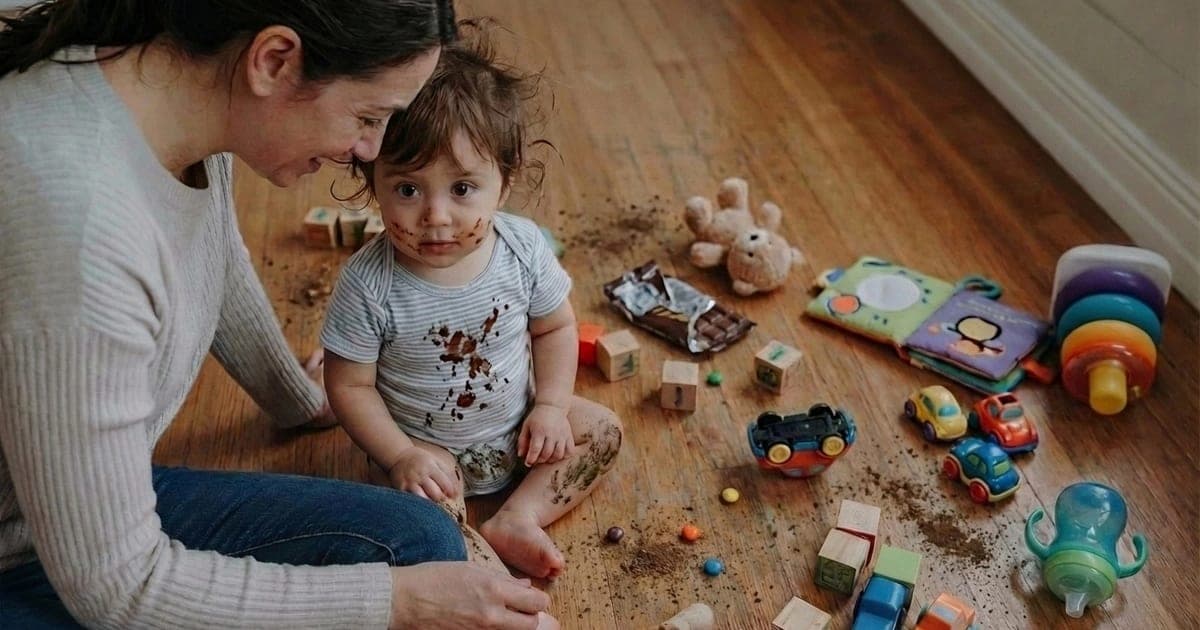
Let small mistakes happen. A spill is part of pouring practice.
Put the activity away together, then leave it available for repetition.
If you searched for a Montessori at home curriculum, start with a rhythm before buying lesson plans. A rhythm gives the day shape without turning your house into school.
Morning: dress, brush teeth, put pajamas in the hamper, help with breakfast.
Midmorning: 20 to 45 minutes near the shelf, depending on age and mood.
Outside time: walk, climb, collect leaves, carry a small bucket, dig, water plants.
Lunch: wash hands, set napkins, pour water, wipe the table.
Afternoon: one practical job, one book, one open-ended activity.
Evening: bath, pajamas, books, simple cleanup.
Some days your child will pour carefully. Some days they will dump rice on the floor and run away. That is normal. Reset the activity, make it easier, or put it away for a week. If power struggles are taking over the day, our toddler discipline without yelling guide pairs well with this approach.
Safety rules that matter
Montessori homes use real tools, scaled and supervised. Safety is part of the setup.
This article is for parenting education and does not replace guidance from your pediatrician, child development specialist, or certified Montessori educator. Always supervise young children around water, food, small parts, stools, and real tools.
Free Tools
Free Pregnancy & Parenting Tools
From ovulation tracking and due dates to baby names and growth charts. Everything you need for your journey.