
Safe Sleep for Babies — What the AAP Actually Recommends (and Why)

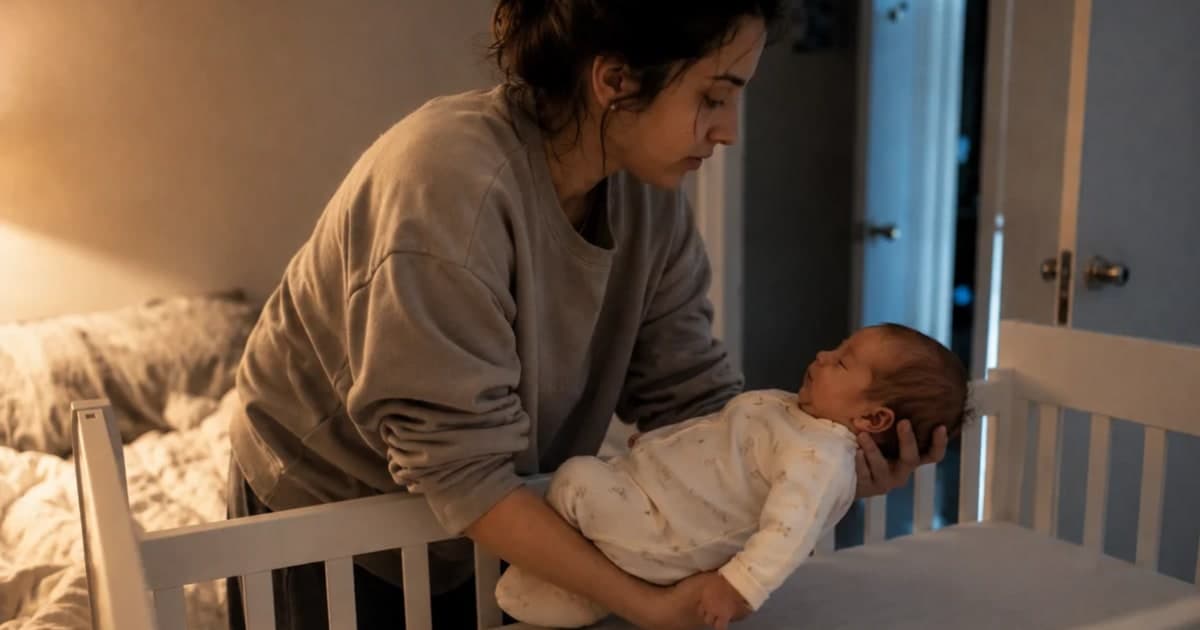
You've probably already read a dozen versions of the safe sleep rules. Back sleeping. Bare crib. No blankets. And if you're like most parents, you've also stared at your sleeping newborn at 2am wondering whether the room is too cold, whether that one loose thread on the fitted sheet counts as a hazard, and whether you're the only person on earth who finds these guidelines simultaneously obvious and anxiety-inducing. You're not.
Safe sleep for babies is one of those topics where the rules are straightforward on paper and complicated in a dark room at four in the morning. The American Academy of Pediatrics published its most recent safe sleep policy in 2022 — a document called "Sleep-Related Infant Deaths: Updated 2022 Recommendations" — and it remains the current standard. This article breaks down what those guidelines actually say, the evidence behind each one, and what to do when real life doesn't cooperate with the rulebook.
Key Points at a Glance
- The ABCs of safe sleep — Alone, Back, Crib — remain the foundation of the AAP's 2022 policy for reducing sleep-related infant deaths.
- Approximately 3,700 infants in the US died from sleep-related causes in 2022. Most of these deaths are linked to unsafe sleep environments, not unavoidable medical events.
- Breastfeeding, pacifier use at bedtime, and room-sharing (without bed-sharing) each independently reduce SIDS risk — and the evidence behind each is specific and well-documented.
- Weighted sleep sacks, inclined sleepers, crib bumpers, and baby loungers are explicitly warned against by the AAP. Some have been recalled after infant deaths.
- Once your baby can roll both ways on their own, you can let them settle into their preferred position — but always start on the back.
Why Safe Sleep Rules Exist — and Why They Keep Changing
In 1994, the National Institute of Child Health and Human Development launched the Back to Sleep campaign with one core message: put babies on their backs to sleep. Within a decade, SIDS rates in the United States dropped by more than 50%. That single intervention — changing the default sleep position — saved thousands of lives.
But the problem didn't disappear. SIDS rates leveled off around the year 2000. Other categories of sleep-related death — accidental suffocation, strangulation, entrapment in soft bedding — stopped declining too. In 2012, the campaign was renamed "Safe to Sleep" to reflect a broader scope: it was no longer just about sleep position. The sleep environment itself had become the central concern.
The AAP updated its safe sleep guidelines most recently in 2022. That update added specific warnings about weighted infant sleep products, clarified the position on bed-sharing, and reinforced the recommendation for a firm, flat, non-inclined surface. As of 2022, CDC data shows approximately 3,700 sudden unexpected infant deaths (SUID) per year in the US, including about 1,529 classified as SIDS. The guidelines keep changing because the research keeps refining what we know — and because the products marketed to parents keep changing too.
The ABCs of Safe Sleep for Babies
The ABCs of safe sleep stand for Alone, Back, and Crib. This mnemonic summarizes the AAP's core recommendation: babies should sleep alone on their back in a crib, bassinet, or play yard with a firm, flat mattress and a fitted sheet — nothing else. Every major safe sleep guideline from the AAP, CDC, and NIH reinforces these three rules as the foundation for reducing the risk of SIDS and other sleep-related infant deaths.
A — Alone
The AAP recommends that infants sleep in their own sleep space — no siblings, no pets, no parent in the same bed. Room-sharing (placing the crib or bassinet in the parents' bedroom) is recommended for at least the first 6 months and ideally the first year. Room-sharing cuts SIDS risk by as much as 50%, according to the AAP's 2022 evidence review. But room-sharing is not bed-sharing. The distinction matters: the baby sleeps near you, on their own surface.
B — Back
Every sleep. Every nap. Every time — until the first birthday. Side sleeping is not a safe alternative; babies placed on their sides can roll to a prone (face-down) position more easily than you'd expect.
One of the most common worries parents voice: won't my baby choke on spit-up while sleeping on their back? The anatomy says no. When a baby lies supine (face up), the trachea sits above the esophagus. Gravity actually helps keep regurgitated milk away from the airway — the opposite of what intuition suggests. Pediatric airway studies confirm that back-sleeping babies do not have higher rates of choking or aspiration, and the AAP addresses this directly in their guidelines. Babies with reflux are not an exception. The AAP's 2022 statement explicitly says back sleeping remains safest even for infants with gastroesophageal reflux.
C — Crib (Firm, Flat, Bare)
A crib, bassinet, or portable play yard that meets CPSC safety standards, with a firm mattress and one fitted sheet. That's the complete list. No bumpers. No blankets. No stuffed animals. No pillows. No positioning wedges. The reason is straightforward: soft items near an infant's face create suffocation risk. Most accidental suffocation deaths involve soft bedding, according to CDC case registry data.
Baby Wake Windows by Age — How Long Should Your Baby Stay Awake?
How Each Rule Reduces SIDS Risk — The Evidence
Knowing the rules is one thing. Knowing why they exist makes them easier to follow consistently, and easier to explain to a skeptical grandparent at 7am.
Breastfeeding and SIDS
Meta-analyses consistently show that breastfeeding is associated with approximately a 50% reduction in SIDS risk. The mechanism is specific: breastfed infants show increased arousability during sleep — they're more likely to wake in response to respiratory challenges. Human milk also provides immunological protection against minor infections, which sometimes precede SIDS events. The AAP's 2022 policy found that even partial breastfeeding for at least two months significantly lowers risk, which matters for families who combine breast and formula feeding.
Breastfeeding Positions and Holds — Finding What Works for You
Pacifiers at Sleep Time
This one surprises people. Case-control studies and meta-analyses report that pacifier use during the last sleep is associated with a 50 to 60% reduction in SIDS risk. The AAP recommends offering a pacifier at nap time and bedtime. If the pacifier falls out after the baby falls asleep, you don't need to put it back. For breastfed infants, the recommendation is to wait until breastfeeding is well established — usually around 3 to 4 weeks — before introducing a pacifier. Nobody is entirely sure why pacifiers are protective. The leading theories involve improved airway patency and increased arousal responses, but the association is strong enough that the recommendation stands even without a fully confirmed mechanism.
Room Temperature and Overheating
The recommended room temperature for infant sleep is 68 to 72°F (20 to 22°C). Overheating is an independent risk factor for SIDS — and one that's entirely within your control. Signs of overheating: sweating at the back of the neck or chest, flushed skin, rapid breathing, damp hair. A sleep sack (wearable blanket) is the AAP-approved alternative to a loose blanket. The rule of thumb most pediatricians give: dress the baby in one layer more than you'd comfortably wear in that room.
One study worth knowing about: a 2008 Kaiser Permanente study published in the Archives of Pediatrics & Adolescent Medicine found that fan use in the infant's room was associated with a 72% lower risk of SIDS. The likely mechanism is improved air circulation, which prevents pockets of exhaled carbon dioxide from collecting near the baby's face. It's a single study, and the AAP hasn't made fan use a formal recommendation — but it's specific, low-cost, and consistent with the broader principle that stagnant air near an infant's face increases risk.
What the Crib Should Actually Look Like
The number of baby sleep products on the market has exploded in the past decade. Not all of them are safe. The AAP's 2022 update was unusually direct about specific product categories. Here's what's approved and what's not:
| Product | Safe for Sleep? | AAP Position |
|---|---|---|
| Crib / Bassinet / Play Yard | ✅ Yes | Must meet CPSC standards, firm flat mattress, fitted sheet only |
| Sleep Sack (non-weighted) | ✅ Yes | Safe blanket alternative — no hoods, no weights |
| Inclined Sleepers | ❌ No | Recalled after 100+ deaths (e.g., Fisher-Price Rock 'n Play). Flat surface only. |
| Weighted Sleep Sacks / Swaddles | ❌ No | 2022 update: can compress chest, impair breathing |
| Crib Bumpers | ❌ No | Suffocation and entrapment risk; banned in multiple US states |
| Baby Loungers / Nests (DockATot, Snuggle Me) | ❌ No | Not designed for sleep; soft sides create suffocation risk |
| Car Seat (for routine sleep) | ❌ No | Safe for travel; not for unsupervised sleep — positional asphyxia risk |
| SIDS Monitors (Owlet, etc.) | ⚠️ Not recommended | No evidence they prevent SIDS; may create false sense of security |
The Fisher-Price Rock 'n Play is worth mentioning specifically because it changed the regulatory landscape. Linked to over 100 infant deaths before its 2019 recall, it was marketed as a safe overnight sleep solution despite its inclined design. The CPSC has since moved to ban inclined sleep products entirely. If you received a hand-me-down that inclines more than 10 degrees, it does not meet current safety standards — regardless of what the original packaging said.
When Your Baby Does Not Follow the Rules
Guidelines describe ideal conditions. Babies do not read guidelines. Here's what the AAP says about the situations parents actually encounter.
Baby Rolls Onto Their Stomach — Now What?
This is one of the most searched questions in infant sleep, and the answer is more reassuring than most parents expect. Once your baby can roll from back to stomach and from stomach to back on their own — which typically happens around 4 to 6 months — you can let them stay in whatever position they choose. Always place them down on their back. If they flip over during sleep, that's fine. The ability to roll demonstrates the motor control and strength needed to adjust their own position if breathing is compromised.
The critical timing note: stop swaddling the moment your baby shows signs of rolling. Arms need to be free to push up and reposition. A swaddled baby who rolls face-down is in a genuinely dangerous position. This transition usually lines up with moving from a swaddle to a sleep sack.
Baby With Reflux — Is Back Still Best?
Yes. I know that feels counterintuitive. But the AAP explicitly addresses this: inclined sleep surfaces do not reduce reflux episodes, and they introduce suffocation risk. The anatomy argument from the B section above applies here too — back-sleeping actually positions the airway above the esophagus, which reduces aspiration risk rather than increasing it.
What does help: holding the baby upright for 15 to 20 minutes after feeding, offering smaller and more frequent feeds, and talking to your pediatrician about whether medication is warranted. Propping the crib mattress at an angle is specifically advised against — babies can slide into positions that obstruct breathing.
Baby Falls Asleep in a Car Seat, Swing, or on Your Chest
Transfer them to a firm, flat surface as soon as you safely can. Car seats are engineered for car travel, not for unsupervised sleep — the semi-upright angle creates positional asphyxia risk, where the baby's chin drops to their chest and restricts the airway. Same principle applies to swings, bouncers, and rockers. If you fall asleep while feeding your baby in bed, which happens to nearly every parent at some point, move the baby to their own sleep space as soon as you wake. Honest acknowledgment: this situation is common enough that the AAP addresses it directly. Falling asleep with a baby on a sofa or armchair is the highest-risk scenario — far riskier than a firm bed with no soft bedding.
When Cultural Traditions and AAP Guidelines Disagree
This section exists because no other safe sleep article on the internet writes it, and millions of families need it.
If you grew up in a South Asian, Middle Eastern, African, or East Asian household, the idea that a baby should sleep alone — separate from the mother, in a crib in the corner — runs against everything your family practiced for generations. Co-sleeping isn't a fringe habit in these cultures. It's the default. It's what your grandmother did, what your mother did, and what your mother-in-law will insist on doing when she visits for the first forty days after birth. Telling her the AAP disagrees is a conversation most diaspora parents dread, and most parenting websites pretend doesn't exist.
The AAP's position is clear: they cannot recommend bed-sharing under any circumstances, based on the available evidence. And that evidence is real — bed-sharing does statistically increase risk, particularly when combined with soft bedding, parental smoking, alcohol use, or extreme fatigue. But the AAP's own researchers acknowledge that context matters. A firm mattress with no pillows, no blankets near the baby, no intoxication, and a breastfeeding mother who is not exhausted to the point of impairment carries a different risk profile than a couch with a throw blanket.
The safest recommendation is a separate sleep surface in the same room. If your family does co-sleep, specific risk-reduction steps matter: a firm mattress (not a sofa or armchair — ever), no alcohol or sedating medications, no smoking in the household, no soft bedding or pillows near the baby, no other children or pets in the bed, and baby dressed lightly to prevent overheating. This is not the AAP's recommendation — it is a harm-reduction framework for families making informed decisions within their cultural context.
There's also a practical conversation worth having with extended family who serve as overnight caregivers. Grandparents raised babies under different guidelines — in many countries, side sleeping was the standard medical advice until recently. Framing safe sleep as "what the doctors say now, based on new research" tends to land better than "you did it wrong." Print the rules. Post them near the crib. Have the conversation once, clearly, before the first overnight stay. It is awkward for about five minutes and protective for years.
Frequently Asked Questions
When can my baby sleep on their stomach?
Always place your baby on their back for sleep until their first birthday. Once they can roll in both directions independently — usually around 4 to 6 months — you can let them settle into their preferred position. But always start on the back, and stop swaddling as soon as rolling begins.
When can a baby sleep with a blanket?
The AAP recommends keeping the crib completely bare — no blankets, no pillows — for the entire first year. After 12 months, a thin blanket is generally considered acceptable. Before that, a wearable sleep sack is the safest way to keep your baby warm without any loose fabric near their face.
Are inclined sleepers safe?
No. The AAP and Consumer Product Safety Commission explicitly warn against inclined sleep products. The Fisher-Price Rock 'n Play was recalled in 2019 after being linked to over 100 infant deaths. Even for babies with reflux, the guidance is the same: sleep should happen on a firm, flat surface. Inclined positions do not reduce reflux episodes and they introduce suffocation risk.
How long is SIDS a risk?
SIDS risk peaks between 1 and 4 months of age and drops significantly after 6 months. About 90% of SIDS cases occur before the 6-month mark. The risk continues to decrease through the first year, which is why the AAP's safe sleep guidelines cover the full first 12 months — but the most critical window is the first half-year.
Sources
- American Academy of Pediatrics — Sleep-Related Infant Deaths: Updated 2022 Recommendations (Pediatrics, 2022)
- CDC — Data and Statistics for SUID and SIDS
- NIH — Safe to Sleep Campaign
- HealthyChildren.org (AAP) — A Parent's Guide to Safe Sleep
- Archives of Pediatrics & Adolescent Medicine — Fan Use and SIDS Risk (2008)
This article is for informational purposes and does not replace medical advice. Safe sleep guidelines apply to the first 12 months of life. Always consult your pediatrician with specific concerns about your baby's sleep environment, especially if your baby was born prematurely or has a diagnosed medical condition.
From ovulation tracking and due dates to baby names and growth charts. Everything you need for your journey.
Share this post
Frequently Asked Questions
Related Topics
Contents
About the Author
Browse our curated baby name collection
Get the latest parenting tips and updates delivered to your inbox.
Read Next
Toddler Sleep Regression at 18 Months and 2 Years: What’s Real and What Helps
Your toddler was sleeping through the night — now they’re not. What’s behind the 18-month and 2-year sleep regressions, how long they last, and the strategies that actually work.
Read Article
Baby Wake Windows by Age: The Complete Sleep Schedule Guide (0–12 Months)
Struggling with baby sleep? Learn how to calculate wake windows by age, spot sleepy cues before meltdowns, and structure your baby's sleep schedule.
Read Article
The 4-Month Sleep Regression: Why It Happens and an Exact Survival Plan
Your baby's sleep fell apart overnight? Here's why the 4-month sleep regression happens, how long it really lasts, signs to watch for, and what to do — without losing your mind.
Read Article
Newborn Won't Stop Crying? 12 Real Reasons + a Cry Decoder That Works
It's 2 a.m. and the crying won't stop. Decode your baby's cry with our quick-reference table, 12 real causes, and soothing combos that work.
Read Article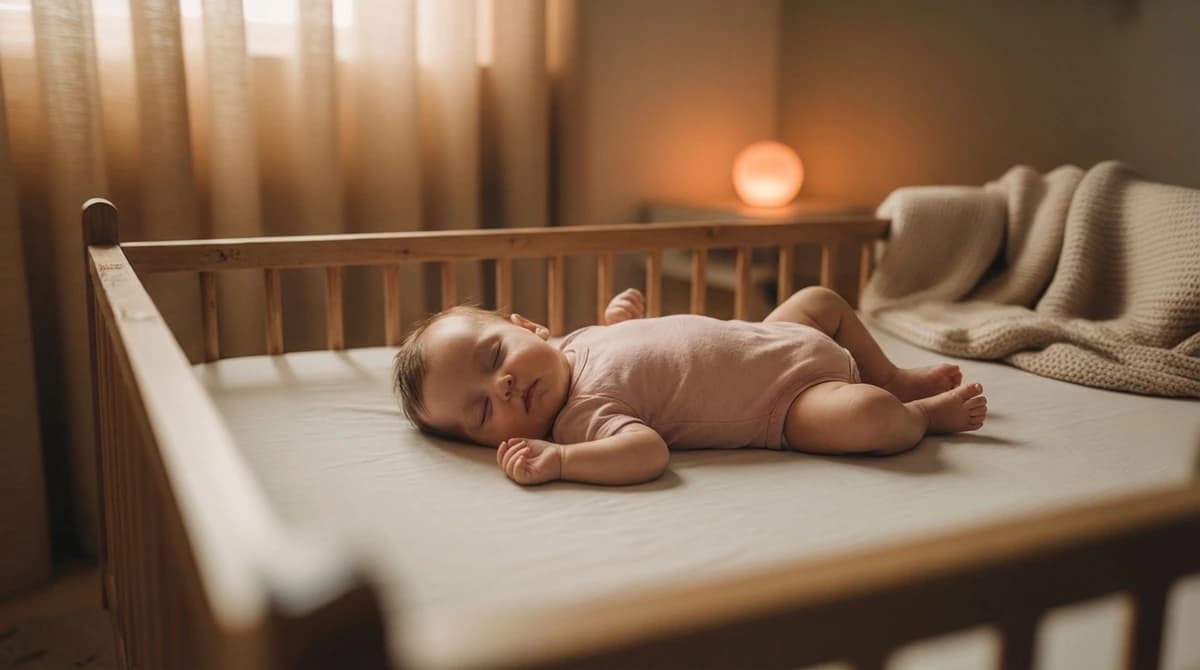
The Ultimate Guide to Sleep Training Your Newborn (2026 Edition)
Exhausted and Googling at 3 a.m.? This guide breaks down the Ferber method, Chair method, and gentle alternatives — plus age-by-age schedules and regression survival tips.
Read Article
Baby Hates Tummy Time? 8 Pediatric-Backed Alternatives (That Actually Work)
Does your baby scream through every tummy time session? Don't force it. Try these 8 pediatric-backed alternatives that build the exact same strength without the meltdown.
Read Article