
The Ultimate Guide to Sleep Training Your Newborn (2026 Edition)

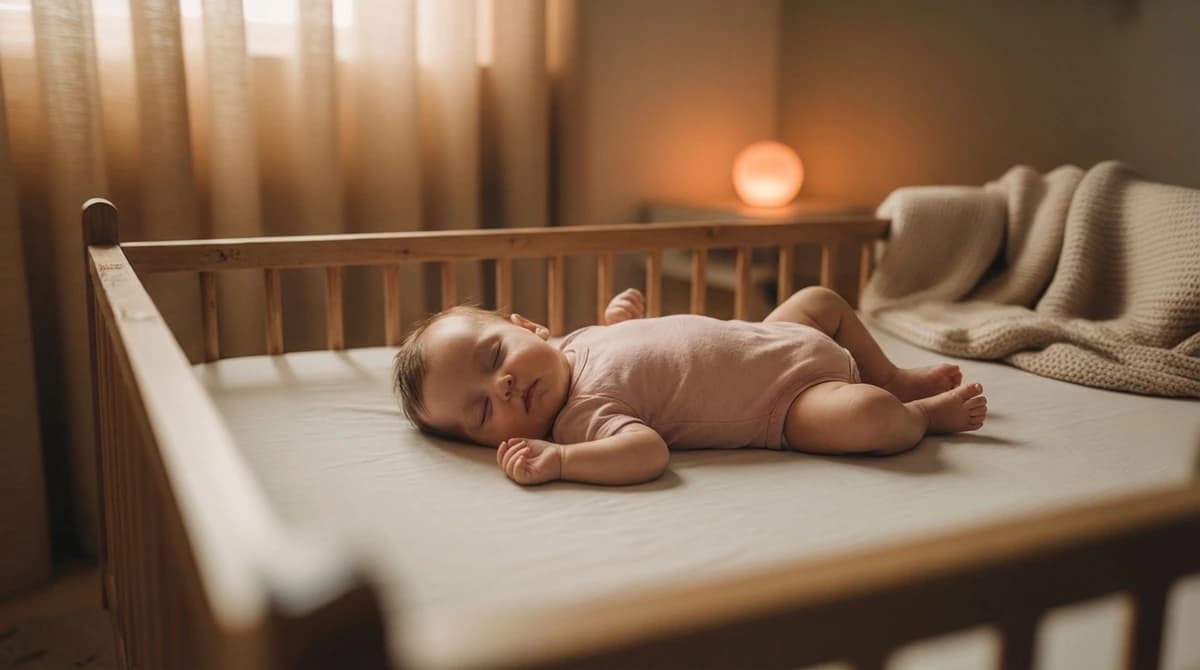
Let me paint you a picture. It's 3 a.m. You've been up since 1. The baby fell asleep on your chest forty minutes ago, and the moment — the actual second — you tried to lay them down, those eyes popped open and the crying started all over again. You're exhausted, frustrated, and Googling "sleep training" with one hand while rocking a screaming infant with the other. Sound about right?
You're not alone in this. Sleep training is one of the most searched and most debated parenting topics out there, and honestly? A lot of the information online makes it harder, not easier. Some sources tell you to let the baby cry. Others say that'll ruin your bond forever. The truth is somewhere in between — and it's a lot less dramatic than the internet makes it sound.
What the research actually shows, according to the American Academy of Pediatrics, is that building healthy sleep habits early is good for babies and parents. And around 43% of parents report severe sleep deprivation in that first year — which doesn't just affect your energy. It strains your patience, your relationship, and your mental health. The flip side? Consistent sleep training can help most babies sleep 2–3 hours longer per night within a single week.
- Timing matters: Most experts say 4–6 months is the sweet spot, once the circadian rhythm kicks in.
- Consistency beats method: Whatever approach you pick, sticking with it matters more than which one you choose.
- Gentle options work: "Cry It Out" isn't the only path. Methods like the Chair Method let you stay right there in the room.
The magic window is "drowsy but awake." Put your baby down when they're calm, blinking slowly, heavy-lidded — not fully knocked out. This teaches them the crib is a safe place to fall asleep on their own. It feels counterintuitive at first, but it's the single most effective habit you can build.
Understanding How Babies Sleep
Before you try any method, it helps to understand what's actually going on when your baby sleeps — because it's nothing like adult sleep.
Adults cycle through sleep stages roughly every 90 minutes. Newborns? Their cycles are only about 45–50 minutes long. That means they surface into lighter sleep much more often, which is why they wake up so frequently.
On top of that, babies spend a disproportionate amount of time in REM (rapid eye movement) sleep — the lightest, easiest-to-wake-from stage. Their brains are growing at a ridiculous pace, and REM is when a lot of that neural development happens.
By around 4–6 months (often coinciding with a growth spurt), their sleep architecture starts to mature. Sleep cycles lengthen, and the ratio of deep sleep increases. That's the window most experts recommend for training — because the biology is finally ready.
How Self-Soothing Actually Works
Here's the thing nobody explains well: self-soothing isn't something babies come with. It's a learned skill, like rolling over or holding a spoon. When a baby wakes between sleep cycles, their instinct is to cry for help.
Sleep training gives them the space to discover they can rub their blanket, find their thumb, or just wiggle back into a comfortable position without needing you to intervene. You're not teaching them to suffer in silence. You're teaching them they're capable of returning to sleep on their own.
How Much Sleep Do Babies Actually Need?
| Age | Total Sleep (24h) | Nighttime Sleep | Nap Hours |
|---|---|---|---|
| Newborn (0–3m) | 14–17 hours | 8–9 hours (broken) | 7–9 hours |
| Infant (4–11m) | 12–15 hours | 10–12 hours | 2–4 hours |
| Toddler (1–2y) | 11–14 hours | 11–12 hours | 1.5–3 hours |
"Sleep training will damage my bond with my baby."
Peer-reviewed studies consistently show no long-term negative effects on parent–child attachment. A well-rested parent is usually a more patient, more present parent.
When Should You Actually Start?
Most pediatricians will tell you to wait until your baby is at least 4 to 6 months old. By that age, the vast majority of babies are physically capable of going a longer stretch without night feeds, and their internal clock — the circadian rhythm — has matured enough to tell the difference between night and day.
Before that age, frequent waking is completely biologically normal. Your newborn isn't broken. They're just wired to wake up, eat, and fall back asleep in short bursts. If you're unsure whether your baby's ready, check our parenting tools to track important milestones.
Setting Up the Sleep Environment
This part isn't glamorous, but it matters more than any method you pick. Think of it as laying the groundwork — what sleep consultants call "sleep hygiene."
- Darkness: Total. Blackout curtains are your best friend. Even a thin strip of hallway light can trick a baby's brain into thinking it's morning.
- Sound: Continuous white noise — a steady "shhhhh" or fan sound. Not ocean waves or lullabies that change pitch. The consistency is what works.
- Temperature: Keep the room between 68–72°F (20–22°C). Babies sleep deeper when they're slightly cool.
- Safety: Flat, firm surface. No loose blankets, stuffed animals, or pillows. Just baby and a fitted sheet.
The 3 Most Trusted Sleep Training Methods
There's no perfect method. There's just the one that fits your family. Here are three that have stood the test of time, ranging from structured to very gentle.
1. The Ferber Method (Graduated Extinction)
This is the one most people think of when they hear "sleep training." You put your baby down awake, leave the room, and check on them at gradually increasing intervals. The idea isn't to ignore them — it's to reassure them you're still there, without doing the falling-asleep part for them.
- Night 1: Checks at 3, 5, and 10 minutes.
- Night 2: Checks at 5, 10, and 12 minutes.
- Night 3: Checks at 10, 12, and 15 minutes.
- During check-ins, keep them brief — 1–2 minutes max. Rub their back, speak softly, but don't pick them up.
Most families see real progress by night 3 or 4. It's not fun those first couple of evenings — I won't sugarcoat that. But the speed is what makes it popular.
2. The Chair Method (Camping Out)
Can't bring yourself to walk out the door? This one's for you. You sit in a chair next to the crib while your baby falls asleep. No picking up, no feeding — just being there.
Every 2–3 nights, you scoot the chair a little further away. After about two weeks, you're out of the room entirely. It takes longer than Ferber, but for parents who need to see their baby while they're learning, it can feel much more manageable.
3. Pick Up / Put Down
The gentlest option — and the most exhausting for you. When baby cries, you pick them up and soothe until they calm. The instant they stop crying, back in the crib they go. And you repeat.
You might repeat this 40, 50, or even 60 times in one night. It's best suited for younger babies (around 4–5 months) and parents who have the stamina. Results take longer, but there's virtually no sustained crying.
Pregnancy Week by Week: What's Happening to Your Body and Baby
Age-by-Age Sample Schedules
An overtired baby is sleep training's worst enemy. When they miss their sleep window, adrenaline kicks in, and suddenly you're fighting biology. Following an age-appropriate wake window schedule keeps "sleep pressure" in the right zone.
4 Months (4 Naps)
Wake Windows: 1.5 / 1.75 / 1.75 / 2 hours
- 7:00 AM — Wake & Feed
- 8:30 AM — Nap 1 (45–90 mins)
- 11:45 AM — Nap 2 (45–90 mins)
- 3:15 PM — Nap 3 (45 mins)
- 5:30 PM — Catnap (30 mins)
- 7:30 PM — Bedtime
6–8 Months (3 Naps)
Wake Windows: 2 / 2.25 / 2.5 / 2.5 hours
- 7:00 AM — Wake & Feed
- 9:00 AM — Nap 1 (1.5 hours)
- 1:30 PM — Nap 2 (1.5 hours)
- 5:00 PM — Catnap (30 mins)
- 7:30 PM — Bedtime
9–12 Months (2 Naps)
Wake Windows: 3 / 3 / 4 hours
- 7:00 AM — Wake & Feed
- 10:00 AM — Nap 1 (1–1.5 hours)
- 2:30 PM — Nap 2 (1–1.5 hours)
- 7:30 PM — Bedtime
12–18 Months (Transition to 1 Nap)
Wake Windows: 5 / 6 hours (once firmly on 1 nap)
Most toddlers drop to one nap between 13–15 months. The nap shifts to mid-day (around 12:30 PM) and lasts 2–3 hours.
Sleep Regressions — Why Everything Falls Apart (and What to Do)
You've finally cracked the code, the baby's sleeping through, and then — bam. It all unravels. Welcome to a sleep regression.
It usually means a developmental leap is happening, which is genuinely a good thing, even though it doesn't feel like one at 2 a.m.
The 4-Month Regression
This one's permanent — their sleep architecture is literally reorganising. They're waking more fully between cycles now.
What helps: This is actually the ideal moment to start sleep training. Focus everything on independent sleep initiation at bedtime. If they learn to fall asleep on their own when they first go down, they'll start connecting those cycles on their own overnight.
The 8–10 Month Regression
Separation anxiety hits hard here. Plus they've just learned to crawl, pull up, and stand — and they want to practice at midnight.
What helps: Give them loads of standing and sitting practice during the day so the novelty wears off. Stick to the schedule, but add extra cuddles to the bedtime routine. This one passes in 2–4 weeks.
The 18-Month Regression
The toddler rebellion. They've discovered the word "NO" and they're using it on everything, including sleep.
What helps: Boundaries. Firm, consistent, loving boundaries. Give them small choices during the routine — "Do you want the blue pyjamas or the green ones?" — but bedtime itself is non-negotiable. They'll push. Hold the line.
Should You Train Naps and Nights at the Same Time?
This is one of the most common questions, and experts land on different sides. But the general consensus? Tackle nights first. Sleep pressure is highest at bedtime because melatonin is flowing naturally when it's dark. Your baby is biologically primed to sleep longer at night, so the wins come faster and feel more rewarding.
Once nights are solid — usually within a week — move to naps. A popular technique is "Crib Hour": if baby wakes after 30 minutes, leave them in the crib for the full hour to see if they'll drift back. If they don't, the nap's over. Try again at the next sleep window. It builds the habit without pushing anyone past their limit.
Don't start sleep training if your baby is sick, cutting teeth aggressively, or going through a big transition like starting daycare. Wait until they're healthy and settled. You want every advantage on your side.
The Part You Need to Hear
Sleep training isn't a magical fix, and it isn't an act of cruelty. It's somewhere in the middle — a short-term investment of patience and consistency that pays off in full nights of rest for everyone in the house. Some nights will be rough. You'll question yourself. You'll want to quit. That's normal.
But here's what I keep coming back to: you're teaching your child a skill. The ability to fall asleep independently is something they'll carry for years. And a well-rested family — where parents are actually sleeping and babies are getting the deep rest their growing brains need — is a healthier, happier family by every measure.
Whether you're still choosing a name or you're deep in the trenches of early parenthood, trust your instincts. You know your baby better than any guide on the internet — including this one. Sweet dreams.
Sources
- American Academy of Pediatrics — Healthy Sleep Habits
- National Library of Medicine — Behavioral Sleep Interventions in Infancy
- Mayo Clinic — Baby Sleep: Helping Your Baby Through the Night
- Sleep Foundation — Baby Sleep
This article is for informational purposes and does not replace medical advice. Talk to your pediatrician about any specific concerns regarding your baby's sleep.
From ovulation tracking and due dates to baby names and growth charts. Everything you need for your journey.
Share this post
Frequently Asked Questions
Contents
About the Author
Medically Reviewed By

Browse our curated baby name collection
Get the latest parenting tips and updates delivered to your inbox.
Read Next
Toddler Sleep Regression at 18 Months and 2 Years: What’s Real and What Helps
Your toddler was sleeping through the night — now they’re not. What’s behind the 18-month and 2-year sleep regressions, how long they last, and the strategies that actually work.
Read Article
Baby Growth Spurts: Ages, Signs, Feeding Frenzies & When to Worry
Baby feeding nonstop, fussing, or waking more than usual? Learn the common growth spurt ages, signs, duration, and red flags that mean it is time to call the doctor.
Read Article
Baby Wake Windows by Age: The Complete Sleep Schedule Guide (0–12 Months)
Struggling with baby sleep? Learn how to calculate wake windows by age, spot sleepy cues before meltdowns, and structure your baby's sleep schedule.
Read Article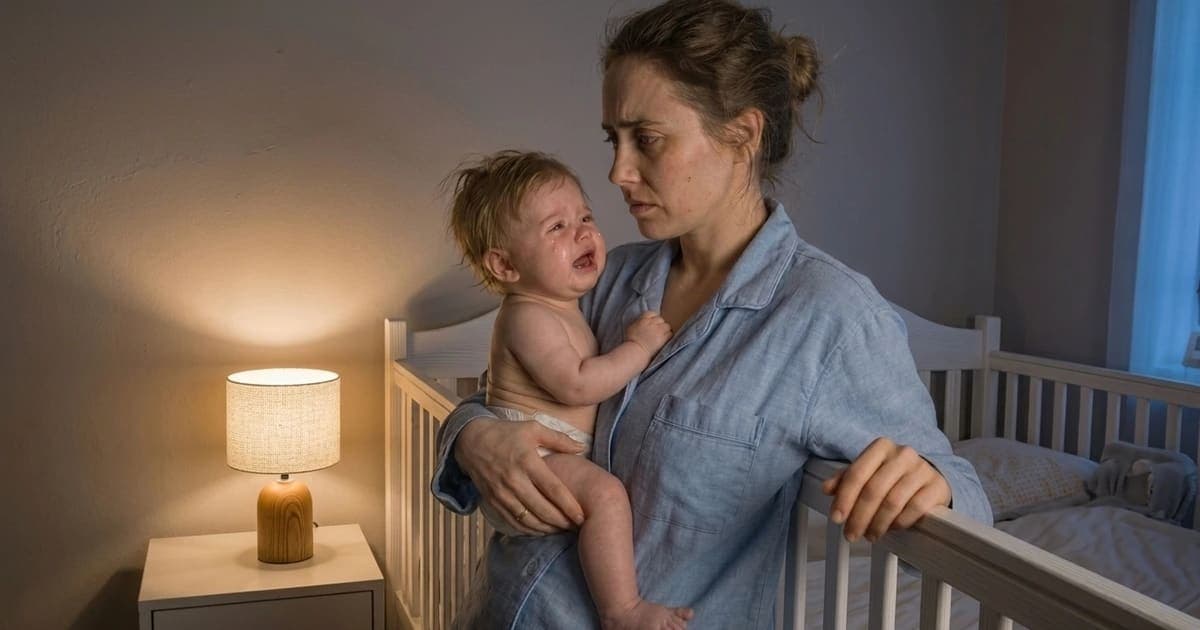
The 4-Month Sleep Regression: Why It Happens, How Long It Lasts & What Actually Helps
Your baby's sleep fell apart overnight? Here's why the 4-month sleep regression happens, how long it really lasts, signs to watch for, and what to do — without losing your mind.
Read Article
Newborn Won't Stop Crying? 12 Real Reasons + a Cry Decoder That Works
It's 2 a.m. and the crying won't stop. Decode your baby's cry with our quick-reference table, 12 real causes, and soothing combos that work.
Read Article
Cluster Feeding: Why Your Newborn Feeds Nonstop and What to Do About It
Your newborn wants to nurse every 30 minutes and you're running on empty. Here's what cluster feeding actually is, how long it lasts by age, and the real strategies to survive it.
Read Article