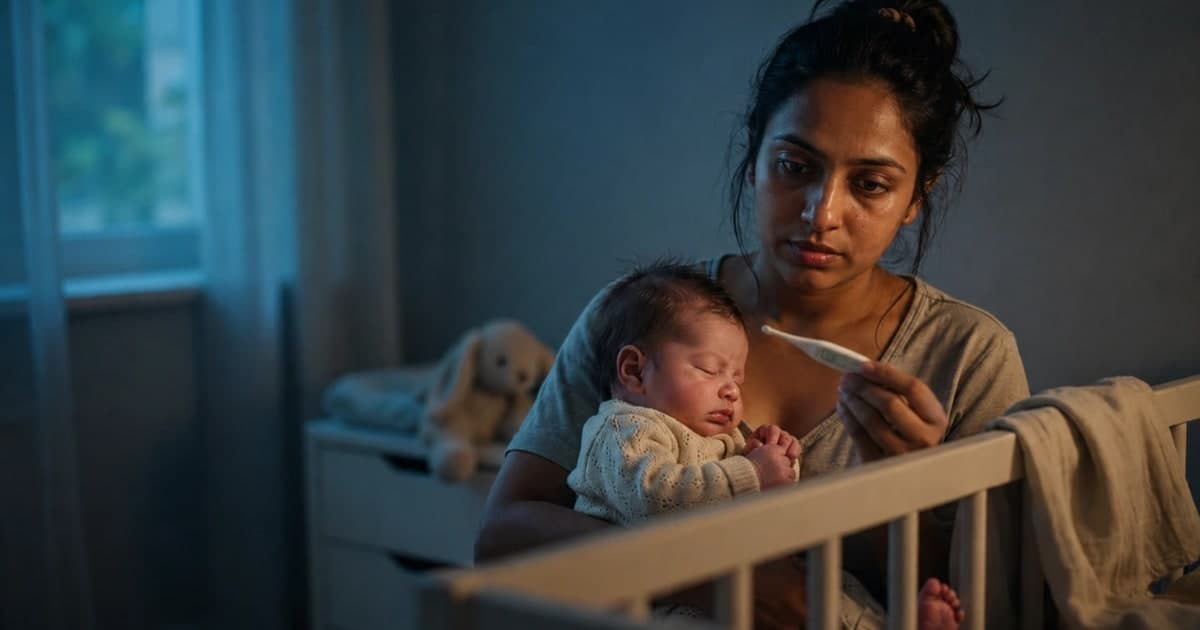
The card has been folded so many times it's soft at the creases, and the dates are handwritten. At a GP surgery in Birmingham, the nurse turns it over and asks whether your daughter has had her MMR. She had two measles jabs in Karachi, both on time. One of them won't count here. No vaccine schedule by country chart warns you about that; most are written for clinicians, and the clinician across the desk is asking you the same question.
Every country in this guide vaccinates babies against the same core diseases: polio, measles, diphtheria, tetanus, whooping cough, Hib, hepatitis B and pneumococcus. What changes is the timing, the combinations and a few local extras such as BCG or typhoid. After a move, most doses carry over. A few, predictably, don't.
Who this is for: parents moving a child between the US, UK, Pakistan, India, the UAE, Canada or Australia. Each schedule was checked against official documents on 29 September 2026.
- Polio drops given after April 2016 don't count in the US or UK. Injected polio doses do.
- A measles dose before age one won't count abroad, and the MR vaccine used in Pakistan and India has no mumps.
- Nothing restarts. Documented doses count; undocumented ones are usually treated as missing.
- The US runs on its 2025 schedule while a court case over the 2026 cuts continues.
Vaccine Schedules by Country: US, UK, Pakistan, India and the UAE
What each national programme gives a healthy child. "Selective" means only higher-risk babies get it; a dash means it isn't routine.
| Vaccine | US (CDC schedule in force) | UK (NHS) | Pakistan (EPI) | India (UIP, government) | UAE (national programme) |
|---|---|---|---|---|---|
| BCG (tuberculosis) | — | Selective, within 28 days | Birth | Birth | Birth |
| Hepatitis B birth dose | Birth | Only if mother has hepatitis B | Birth | Within 24 hours | Within 24 hours |
| Diphtheria, tetanus, whooping cough, Hib | 2, 4, 6, 15–18 months; 4–6 years | 8, 12, 16 weeks; 18 months | 6, 10, 14 weeks | 6, 10, 14 weeks; boosters 16–24 months, 5–6 years | 2, 4, 6 months; boosters 18 months, 5–6 years |
| Polio | IPV 2, 4, 6–18 months; 4–6 years | IPV in the 6-in-1 and boosters | Drops at birth, 6, 10, 14 weeks; IPV 14 weeks, 9 months | Drops at birth, 6, 10, 14 weeks, 16–24 months; fractional IPV 6, 14 weeks, 9 months | IPV at 2, 4 months; drops at 6, 18 months, 5–6 years |
| Pneumococcal (PCV) | 2, 4, 6, 12–15 months | 16 weeks, 1 year | 6, 10, 14 weeks | 6, 14 weeks; 9–12 months | 2, 4, 18 months |
| Rotavirus | 2, 4 (6) months | 8, 12 weeks | 6, 10 weeks | 6, 10, 14 weeks | 2, 4 months |
| MenB | Optional at 16–23 years | 8, 12 weeks; 1 year | — | — | — |
| Measles | MMR 12–15 months, 4–6 years | MMRV 1 year, 18 months | MR 9, 15 months | MR 9–12, 16–24 months | MMR 12, 18 months |
| Chickenpox | 12–15 months, 4–6 years | In MMRV since January 2026 | — | — | 12 months, 5–6 years |
| Hepatitis A | 2 doses, 12–23 months | Risk groups only | — | — | — |
| Typhoid conjugate | — | — | 9 months | — | — |
| MenACWY | 11–12, 16 years | 14 years | — | — | 12 months, 10–11, 16–18 years |
| Flu | Yearly from 6 months | Nasal spray yearly from 2 years | — | — | 6 months, then yearly |
| HPV | 11–12 years | 12–13 years | Girls from 9, one dose | Girls at 14, one dose | Girls and boys in school, two doses |
| RSV protection for newborns | Antibody shot, or vaccine in pregnancy | Vaccine in pregnancy from 28 weeks | — | — | Antibody at birth, September–March births |
Sources: CDC schedule, UKHSA routine schedule (September 2026), Pakistan's Federal Directorate of Immunization, India's health ministry and the Dubai Health Authority guidelines (January 2026). UK babies born before July 2024 follow an older MMR timetable.
Why Schedules Differ, and Why Counting Shots Misleads
You have probably seen a vaccine schedule by country chart claiming one nation gives "twice as many shots" as another. Almost all of them count injections instead of diseases, which is the wrong test.
The number of vaccines on a national schedule ranges from 11 to 18 across the US and Europe, according to a 32-country comparison in the European Journal of Pediatrics (2025). Nine appeared on every schedule. Disagreement sits at the edges; the core that protects a baby in year one is shared.
Local Disease Decides the Extras
Tuberculosis explains BCG better than any policy paper. WHO estimates 266 new TB cases per 100,000 people in Pakistan in 2024 and 187 in India, against 9.7 in the UK and 3.2 in the US. A newborn in Lahore and one in Houston face very different odds, so they get different vaccines. That logic also puts typhoid conjugate vaccine on Pakistan's schedule, Japanese encephalitis vaccine in parts of India, and MenB on the UK's.
Combination Vaccines Change the Count, Not the Protection
A single 6-in-1 injection at eight weeks in the UK protects against six diseases. Pakistan and India cover five of them with one pentavalent jab and add polio as drops. A US clinic may give a combination or separate shots. Same protection, different arithmetic: a chart that counts needles compares shopping habits, not immunity.
Pakistan, India and the UAE: What the Card in Your Hand Shows
Pakistan's EPI Schedule
Pakistan's Expanded Programme on Immunization packs six visits into the first 15 months and covers 12 diseases, free at government centres. Birth brings BCG, polio drops and hepatitis B. At 6 and 10 weeks come polio drops, pentavalent, pneumococcal and rotavirus vaccines; 14 weeks repeats them minus rotavirus, plus the first injected polio dose. The 9-month visit adds measles-rubella (MR), typhoid conjugate vaccine and a second injected polio dose; MR is repeated at 15 months.
HPV is newest: a national campaign in September 2025 gave girls aged 9 to 14 a single dose, with routine doses for 9-year-old girls planned.
India's Two Charts: Government Hospital vs Private Hospital
Search for a vaccination chart for babies in India and you will find two, because there are two. Government hospitals follow the free Universal Immunization Programme (UIP); most private hospitals follow the Indian Academy of Pediatrics (IAP) schedule, which keeps the UIP core and adds more.
| Vaccine | Government chart (UIP) | Private chart (IAP) |
|---|---|---|
| Measles | MR at 9–12 and 16–24 months | MMR at 9 months, 15 months and 4–6 years |
| Polio | Drops plus fractional IPV at 6 weeks, 14 weeks and 9 months | Full-dose IPV at 6, 10, 14 weeks, with boosters |
| Pneumococcal | 6, 14 weeks; booster 9–12 months | 6, 10, 14 weeks; booster 15 months |
| Typhoid, hepatitis A, chickenpox | — | Typhoid 6–9 months; hep A from 12 months; chickenpox 15 and 18–19 months |
| Flu | — | Yearly from 6 months to 5 years |
| HPV | Girls at 14, one dose (from February 2026) | From age 9; a single dose now allowed for girls |
India added a third fractional polio dose to the government chart on 1 January 2023, then HPV on 28 February 2026 with a single-dose drive for 14-year-old girls. The IAP's latest private schedule appeared in Indian Pediatrics in 2026.
The UAE National Schedule (Updated January 2026)
Dubai Health Authority guidance from 27 January 2026 sets out the national schedule to age six:
- Birth: BCG, hepatitis B, and an RSV antibody for September–March births unless the mother had RSV vaccine in pregnancy
- 2 and 4 months: 6-in-1, pneumococcal and rotavirus vaccines
- 6 months: 5-in-1, polio drops and the first flu vaccine
- 12 months: MMR, chickenpox and MenACWY
- 18 months: combined booster, polio drops, third pneumococcal dose, second MMR
- 5–6 years: boosters, polio drops and a second chickenpox dose
School years add MenACWY boosters and HPV for girls and boys. The birth RSV antibody is the kind many US babies get; see how Beyfortus compares with the maternal RSV vaccine.
The US Schedule in 2026: Which Version Is in Force
Status as of 29 September 2026. A federal appeals court hears the government's challenge on 6 October 2026; we will update this section when it rules. It's the one part of any vaccine schedule by country comparison that needs a date.
The US childhood schedule in force today is the CDC's 2025 version, because a federal court paused the January 2026 overhaul. On 5 January 2026 the CDC cut the diseases every child is vaccinated against to 11, moving others to high-risk or shared-decision categories. A federal judge in Massachusetts stayed that change on 16 March, along with a December 2025 change to the hepatitis B birth dose, and the government appealed in April.
Many pediatricians also follow the American Academy of Pediatrics, whose 2026 schedule keeps protection against 18 diseases. For a baby the two line up, from the hepatitis B birth dose to rotavirus, flu and the RSV antibody. The CDC says every vaccine it currently recommends stays covered by insurance without cost-sharing.
Arriving in the US now? Bring the records and pick a practice you trust; this walk-through on choosing a pediatrician and planning well-child visits helps.
UK vs US Childhood Immunisation Schedule: What Each Gives That the Other Doesn't
Are UK Vaccines the Same as US Vaccines?
Mostly, yes. Both countries protect babies against the same core diseases, often with the same products, but the UK gives its 6-in-1 at 8, 12 and 16 weeks while US doses fall at 2, 4 and 6 months. The real differences are a handful of vaccines that one country gives routinely and the other doesn't.
| Vaccine | United States | United Kingdom |
|---|---|---|
| Hepatitis B at birth | Every baby | Only if the mother has hepatitis B |
| MenB in infancy | No (optional for older teens) | 8 weeks, 12 weeks, 1 year |
| Hepatitis A | Two doses, 12–23 months | Risk groups only |
| Flu | Yearly from 6 months | Nasal spray yearly from 2 years |
Families moving from London to New York are often caught off guard by hepatitis A and yearly flu; going the other way, they meet MenB and the UK's new 18-month appointment, which since January 2026 brings a 6-in-1 booster and the second MMRV. Neither country is doing it wrong.
Why Isn't BCG Given in the US?
The US doesn't give BCG routinely because TB is rare there, the vaccine protects inconsistently against the lung TB adults get, and it can make the TB skin test read falsely positive. Instead, the CDC reserves BCG for a few children who can't avoid exposure to untreated or drug-resistant TB.
Britain once vaccinated every teenager in school, then stopped in 2005 as TB became concentrated in identifiable groups. Today it targets babies, and here is the part diaspora families rarely hear: a baby born in the UK with a parent or grandparent born in a country with 40 or more TB cases per 100,000 people qualifies for BCG within 28 days, once the newborn SCID screening result is back. Pakistan and India both qualify easily. Eligible but never offered it? Ask your GP.
A BCG-vaccinated child can test positive on the TB skin test without having TB, so for school, work or visa screening, ask for the TB blood test (IGRA) from the start; the CDC calls it the preferred test after BCG.
What Counts After a Move, and What Doesn't
This is where families lose weeks, and it's the part a vaccine schedule by country table can't show. The CDC and the UK Health Security Agency agree on the rules that matter most.
Polio Drops Given After April 2016
Oral polio drops given anywhere after 1 April 2016 do not count toward the US or UK polio series, because that month the world switched to a two-strain oral vaccine (bOPV) that leaves out type 2. The CDC says a child who only had bOPV needs a full three- or four-dose course of injected polio vaccine. UKHSA's catch-up algorithm discounts the drops too, but counts injected doses already given.
That includes drops from Pakistan's door-to-door polio campaigns: worth giving, but abroad they don't add to the count. Fractional IPV, the smaller dose on India's government chart, is treated differently by each country: the US counts two fractional doses as one full dose, while the UK's Green Book tops them up with full doses.
A Measles Dose Before the First Birthday
Pakistan and India give their first measles dose at nine months, because measles circulates widely there and waiting leaves babies exposed. Neither the US nor the UK counts a measles-containing dose given before 12 months; both want two doses after the first birthday, at least four weeks apart.
So a child with MR at 9 and 15 months usually has one countable measles dose, not two, and no mumps protection at all. Expect an MMR, or MMRV in the UK. The early dose wasn't wasted: it protected your child in the year they were most exposed.
The Small Print: Rotavirus and Pneumococcal
Rotavirus vaccine has hard age limits. The UK won't start it after 15 weeks or give it after 24 weeks, and the US stops at 8 months, so an older baby who missed it goes without. Pneumococcal is more fiddly: if your child had a 10-valent vaccine abroad, the UK gives one extra dose of its own.
Do I Need to Repeat Vaccines After Moving Country?
No, not the ones you can document. The CDC's catch-up schedule says a series "does not need to be restarted," however long the gap, and UKHSA and Dubai agree. What gets repeated is what can't be shown: undocumented doses count as not given, unless the UK accepts a reliable history.
How to Catch Up Vaccinations After Moving
- Collect every written, dated record: the card, hospital discharge papers, any certificate. Keep the originals.
- Translate non-English entries, at least names and dates; clinics use the multilingual vaccine terms in the CDC's Pink Book.
- Register locally: a GP in the UK, a pediatrician or county health department in the US, a primary health centre in the UAE, provincial public health in Canada, a GP in Australia. England requires no proof of address or immigration status to register for vaccines.
- Ask for a written catch-up plan built on minimum intervals. Several vaccines often go in at one visit, so know when a fever after vaccines needs a doctor.
- Expect repeat doses or blood tests for anything you can't document. The CDC notes serious reactions after extra doses are rare, and for MMR and hepatitis A a blood test can show immunity instead.
- Get foreign doses copied into the new record, so the next school or clinic sees one history.
- Check deadlines early: school registration, and in the US the green-card medical exam, which accepts only written records or blood-test proof of immunity.
Australia's national catch-up calculator plans missed doses for anyone under 20; Canada's guide for newcomers accepts written records given at comparable ages and intervals.
Pregnant and moving to the UK? You'll be offered whooping cough vaccine from 16 weeks and RSV from 28 weeks; Nurturepedia's Pregnancy Due Date Calculator shows which week you're in. And if a trip back to Pakistan lasts longer than four weeks, WHO's polio travel rules expect a polio dose between four weeks and 12 months before you fly out, recorded on an international certificate.
Three Questions to Ask at the First Appointment
Which of these doses do you count? Go through the card line by line, especially polio and measles.
What's the catch-up plan, with dates? A plan on paper beats "we'll see at the next visit."
What does school, or the visa, need, and by when? The medical answer and the paperwork deadline can differ.
One honest caveat: in this vaccine schedule by country comparison, only the US part may shift after 6 October, and we will update it if it does. The rest is settled guidance. A card from another country isn't a problem to fix; it's most of the answer already.
Sources
- CDC — Child and Adolescent Immunization Schedule by Age (2025, in force)
- CDC — Catch-up Immunization Schedule
- CDC — Update to the Childhood Immunization Schedule (5 January 2026)
- American Academy of Pediatrics — Recommended Childhood and Adolescent Immunization Schedule for 2026
- CDC — Polio Vaccine Recommendations
- CDC — General Best Practice Guidelines: Special Situations
- CDC — BCG Vaccine for Tuberculosis
- CDC — Vaccination Technical Instructions for Civil Surgeons
- CDC Pink Book — Appendix B: Vaccines (multilingual vaccine terms)
- UKHSA — Complete Routine Immunisation Schedule (September 2026)
- UKHSA — Immunisation: Migrant Health Guide (March 2026)
- UKHSA — Vaccination of Individuals With Uncertain or Incomplete Immunisation Status (June 2026)
- UKHSA Green Book — Chapter 26: Polio (June 2025)
- BMJ — Stopping Routine Vaccination for Tuberculosis in Schools (2005)
- Federal Directorate of Immunization, Pakistan — Immunization Schedule
- UNICEF Pakistan — Pakistan Introduces HPV Vaccine (2025)
- Ministry of Health and Family Welfare, India — Third Dose of fIPV in UIP (2023)
- Press Information Bureau, India — Cervical Cancer Vaccination Campaign Launched (2026)
- IAP ACVIP — Recommended Immunization Schedule 2025 (Indian Pediatrics, 2026)
- Dubai Health Authority — Clinical Guidelines for Best Practice in Immunization, Version 4 (January 2026)
- Carr & Haslam — Pediatric Immunization Schedules in the US and Europe (European Journal of Pediatrics, 2025)
- WHO — Incidence of Tuberculosis per 100,000 Population
- WHO — Statement of the 45th Polio IHR Emergency Committee (August 2026)
- Public Health Agency of Canada — Immunization of Persons New to Canada
- Australian Immunisation Handbook — National Immunisation Catch-up Calculator