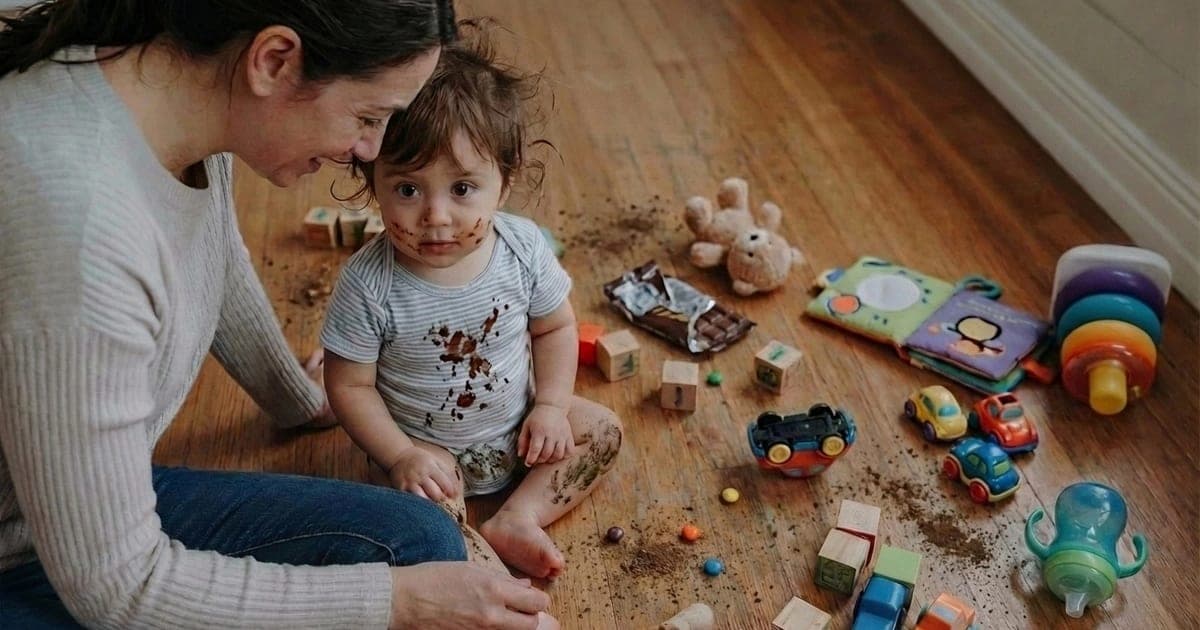
You are watching your child on a playground bench, and a quiet knot forms in your stomach. Another toddler points at a passing dog, looks back at their mother to make sure she saw it too, and laughs. Your two-year-old is kneeling by the stroller wheel, spinning it with their thumb, absorbed in the rotation. When you call their name, they keep spinning.
The American Academy of Pediatrics recommends universal screening for autism spectrum disorder at the 18-month and 24-month checkups, yet parent observation almost always predates a doctor's checklist by several months. Early identification matters because the first three years of life represent a window of rapid brain development where developmental therapies yield the greatest benefit. Most parents who search for signs of autism in toddlers are not looking for a label; they want to know whether a specific behavior is standard toddler development or an early indicator that warrants medical support.
In many families, especially immigrant or South Asian households, bringing up these concerns meets well-meaning reassurance: "Boys just speak later," or "His uncle did not say a full sentence until age four, leave him alone." While developmental pacing varies, human connection does not wait. Knowing what to watch for gives you clarity, protects your peace of mind, and ensures that if your child does need support, they receive it without delay.
- The core marker: Joint attention—the drive to share an experience by pointing or alternating eye gaze—is far more predictive of early autism than speech delay alone.
- Age-specific milestones: Babies should respond to their name by 9 months, use communicative gestures (waving, reaching) by 12 months, and point to show interest by 18 months.
- Speech delay vs. autism: Children with an isolated speech delay still use pointing, facial expressions, and eye contact to connect; autistic toddlers show differences in both spoken words and non-verbal social communication.
- Universal screening: The M-CHAT-R/F is administered at 18 and 24 months. A medium-risk score (3 to 7) requires a structured follow-up interview to rule out false positives before clinical referral.
- Skip "wait and see": Early Intervention services through state or public healthcare systems do not require an official diagnosis or a doctor's referral to begin an evaluation.
What Does Early Autism Spectrum Disorder Look Like in Young Children?
Autism spectrum disorder is a neurodevelopmental difference defined in the DSM-5-TR by two core domains: differences in social communication and interaction, alongside restricted, repetitive patterns of behavior, interests, or sensory processing. In an infant or young toddler, this does not look like adult autism. It surfaces as differences in reciprocal engagement—the subtle social "ping-pong" between a baby and their caregiver.
Many parents assume an autistic child will never make eye contact or show love. That assumption causes missed signs. Many autistic toddlers make eye contact with their parents, laugh during tickling, and seek cuddles. What pediatricians assess instead is the consistency and context of social communication across varied settings, particularly when interacting with peers or responding to bids for attention.
Beyond Labels: Understanding the Levels of Autism
Under current diagnostic guidelines, clinicians classify autism by support levels rather than outdated terms like "Asperger's syndrome." Level 1 indicates "requiring support," Level 2 indicates "requiring substantial support," and Level 3 indicates "requiring very substantial support." These levels describe support needs at a specific point in time; they are not permanent ceilings on what a child can achieve. A toddler showing Level 2 support needs at age two may shift toward Level 1 as early speech and occupational therapies develop functional communication.
The Defining Early Milestone: Understanding Joint Attention
If child development researchers could track only one behavior to evaluate autism risk before age two, they would choose joint attention. Joint attention is the shared focus of two individuals on an outside object or event, achieved through eye gaze, pointing, or gestures. It is the bedrock upon which human language and social learning are built.
Pediatric specialists divide pointing into two distinct categories, and the difference between them is illuminating:
- Proto-imperative pointing (Requesting): The child points at a cup on the high counter because they want milk. They are using their finger—and you—as a tool to get an object. Many autistic toddlers do this without difficulty.
- Proto-declarative pointing (Sharing): The child sees a bird outside the window, points at it, looks at your eyes to see if you are looking too, and smiles. The sole purpose is to share an emotional experience. This shared visual referencing is what autistic children frequently omit.
Notice also whether your toddler follows your point. If you point across the living room and say, "Look at the puppy," does your child turn their head to look at the animal, or do they simply stare at the tip of your index finger? By 14 to 18 months, typical toddlers instinctively trace the vector of your gaze.
Early Signs of Autism by Age: The 6- to 36-Month Milestone Timeline
Children reach milestones on individual schedules, but developmental surveillance guidelines from the CDC and the American Academy of Pediatrics define clear windows where the complete absence of a social skill warrants clinical attention.
6 to 9 Months: Social Smiling and Response to Sound
In early infancy, motor milestones (rolling, sitting, grasping) are almost always on time in autistic babies. The differences appear in communicative reciprocity. Watch for:
- Few or fleeting warm smiles and joyful expressions directed toward caregivers.
- Rare back-and-forth sharing of sounds, coos, or facial expressions during face-to-face interaction.
- Inconsistent response to their name by 9 months, where the baby appears not to hear familiar voices despite normal hearing on newborn screening tests.
12 to 15 Months: Signs of Autism in a 1-Year-Old
The end of the first year is defined by social gestures. Red flags in a one-year-old include:
- No reciprocal babbling that sounds like conversation with varied intonation.
- Absence of social gestures: waving goodbye, shaking the head for "no," or clapping during games like pat-a-cake.
- Not reaching up with both arms to be lifted or held.
- No single words by 15 to 16 months.
18 to 24 Months: Signs of Autism in a 2-Year-Old
Between 18 and 24 months, social expectations increase dramatically. This is the window where signs of autism in toddlers become most apparent:
- Absence of pointing to show: Not using a pointer finger to direct your attention to something interesting by 18 months.
- Fewer than 50 words or no two-word phrases: An absence of meaningful two-word combinations (like "big car" or "more juice," distinct from repeating phrases heard on television) by age two.
- Repetitive motor movements: Prolonged hand-flapping, spinning, rocking, or toe-walking that occurs when calm, not solely during moments of high excitement.
- Unusual object play: Lining up cars by color or size rather than pushing them; spinning wheels or opening and closing cabinet doors repetitively for thirty minutes or more.
- Hand-as-a-tool behavior: Taking your hand and placing it onto a doorknob or snack container without looking at your face or making eye contact.
Tracking overall physical development alongside social milestones helps paint a complete picture. While monitoring motor growth, tools like the Nurturepedia Child Height Predictor provide context for growth percentiles without obscuring behavioral observation.
24 to 36 Months: Peer Engagement, Routines, and Sensory Patterns
By age three, social play expands. Look for:
- Total disinterest in other children, preferring solitary activities or treating peers like physical obstacles.
- Extreme distress over minor routine adjustments (such as turning down a different street to daycare or changing the cup used for milk).
- Sensory processing differences: screaming in pain at everyday sounds like vacuum cleaners, or conversely, unusual sensory seeking like smelling objects or licking metal fixtures.
The Universal Red Flag: Developmental Regression
A child who had five clear words at 14 months and stops speaking them by 18 months, or who used to wave bye-bye and ceases doing so, presents a red flag that supersedes every age chart. In a multi-site prospective study published in JAMA Pediatrics (Ozonoff et al.), developmental regression in social communication or language occurred in roughly one-third of children later diagnosed with autism. Any loss of acquired speech, babbling, or social engagement warrants immediate pediatric evaluation.
Autism in Toddler Girls: Why Early Signs Are Frequently Missed
Autism spectrum disorder is diagnosed in boys roughly three to four times more often than girls, but developmental researchers at the Child Mind Institute note that this gap is partly driven by how autism presents in early childhood. Toddler girls on the spectrum frequently display stronger surface-level social mimicry. They may watch other children closely and copy their actions, smiles, or greetings, giving an appearance of social interaction even when they find spontaneous reciprocal engagement exhausting.
Their repetitive interests also tend to center on socially expected subjects—such as an intense, encyclopedic fixation on animals, dolls, or storybook characters rather than mechanical parts or vehicle wheels. Because these interests align with cultural expectations for young girls, family members and clinicians often describe the child as "exceptionally gentle," "shy," or "a daydreamer," delaying evaluation until the social complexities of preschool or kindergarten overwhelm their ability to compensate.
Speech Delay vs. Autism: How to Tell the Difference
When a toddler is not talking at age two, parents wonder whether they are dealing with an isolated speech delay or autism spectrum disorder. The distinction lies not in the words themselves, but in the child's non-verbal communication and social desire to connect.
A toddler with a speech delay wants to communicate. If they cannot say "banana," they pull your sleeve, point to the fruit bowl, nod their head, make eye contact, and show clear frustration when you misunderstand. An autistic toddler who is non-speaking or speech-delayed frequently lacks those compensatory gestures; they may not point, may not check your face, or may lead you by the wrist without looking at you.
| Developmental Feature | Isolated Speech Delay | Autism Spectrum Disorder (ASD) |
|---|---|---|
| Desire to Connect | Strong; makes frequent eye contact, smiles, and seeks shared attention. | Variable; may seem content in their own world or overlook social bids. |
| Non-Verbal Gestures | Rich and varied; points to show, waves, nods, shakes head, and mimics actions. | Sparse or idiosyncratic; rarely points to share interest; may use parent's hand as an object. |
| Response to Name | Turns promptly when called, unless absorbed in play or experiencing hearing issues. | Inconsistent; may not turn even when called multiple times in a quiet room. |
| Communication Frustration | Shows visible frustration when words fail because they want you to understand. | Less emotional frustration about communication breakdown; meltdowns often tie to sensory overload or disrupted routines. |
| Pretend and Imitative Play | Imitates chores (sweeping, wiping), feeds stuffed animals, engages in imaginative games. | Play often focuses on mechanics (spinning, lining up, sorting) rather than symbolic pretend play. |
| Sensory Responses | Typical responses to everyday sounds, textures, lights, and clothing tags. | Frequent sensory hyper- or hypo-reactivity (intense distress at noise, food texture rigidity). |
For a deeper examination of speech milestones and late-talking trajectories, read our detailed guide to 2-year-old speech delay red flags.
Echolalia and Scripting: When Talking Does Not Mean Communicating
A common reason parents hesitate to seek an evaluation is that their child is vocal. They might say, "My toddler talks constantly—how could they have autism?" In early childhood development, pediatric speech-language pathologists differentiate between analytic language (building flexible sentences from individual words) and gestalt language processing, which often includes echolalia.
Immediate echolalia occurs when a child repeats your exact question back to you. If you ask, "Do you want milk?" they reply, "Do you want milk?" with identical intonation, rather than answering "yes." Delayed echolalia, often called scripting, involves reciting entire scenes from animated movies, nursery rhymes, or audiobooks with dramatic pitch variation, but outside of an interactive communicative context. Reciting the alphabet or counting to twenty at 18 months looks impressive, but if the child cannot use words flexibly to ask for help or share excitement, that language reflects rote memory rather than functional social dialogue.
Bilingual Toddlers: Untangling Language Mixing from Developmental Delay
In immigrant households where parents speak Urdu, Hindi, Arabic, or Spanish alongside English, relatives often blame bilingualism for delayed speech. Decades of research from the American Speech-Language-Hearing Association (ASHA) confirm that learning two languages does not cause speech delay or autism. A bilingual toddler may split their vocabulary between two languages—knowing thirty words in English and twenty in their heritage tongue—giving them a total vocabulary of fifty words. Critically, bilingualism never suppresses joint attention, eye contact, pointing, or name response. If those social markers are absent, the cause is neurodevelopmental, not linguistic.
Normal Toddler Quirks vs. Autistic Behaviors: Where Context Matters
Every toddler displays unusual habits. The difference between standard behavior and a neurodevelopmental trait comes down to frequency, rigidity, and whether the behavior interferes with daily living.
Is Hand-Flapping Always Autism in Toddlers?
No. Neurotypical toddlers frequently flap their hands, bounce, or squeal when excited—watching bubbles float down or greeting a parent at the door. In developmental pediatrics, this is called motor overflow. The excitement overwhelms their motor control system, and they flap for a few seconds before returning to their game. In autism, flapping often serves as self-regulation (stimming), occurring for extended periods when bored, overwhelmed, or calm, and it persists alongside social communication differences.
Lining Up Toys vs. Toddler Schema Play
Around age two, toddlers explore positioning schemas—they enjoy lining up stuffed animals, sorting cars, or stacking blocks. In typical development, if you disrupt the line by driving a car into it, the toddler laughs or incorporates the crash. In an autistic child, lining objects up is often rigid; disturbing the order triggers intense distress, and the child may spend hours arranging items rather than engaging in pretend play.
Subtle Sensory Patterns: Visual Gazing, Auditory Filtering, and Sleep
Beyond hand-flapping, early sensory differences often show up in subtle ways that parents notice without knowing they are connected. Peripheral gazing is a frequent example: a toddler holds a toy car or block right next to their eye and looks at it from the side, or tilts their head to sight along the edge of baseboards or tables. This behavior helps their nervous system process visual motion without the overwhelm of central visual stimuli.
Another common clue is auditory filtering. A parent might call the child's name five times from three feet away with zero acknowledgment, convincing the family that the child has a hearing impairment. Yet thirty seconds later, the child perks up at the quiet crinkle of a chip bag opened in the kitchen. This is not defiance; the autistic brain processes competing auditory signals differently, frequently filtering out social human speech while remaining hyper-attuned to distinct sound patterns.
How Pediatricians Screen for Autism: The M-CHAT-R/F Scoring Guide
At the 18-month and 24-month well-child visits, the American Academy of Pediatrics directs clinicians to screen all children using a validated tool, most commonly the Modified Checklist for Autism in Toddlers, Revised with Follow-Up (M-CHAT-R/F). This is a 20-question parent-report screening tool designed for children between 16 and 30 months.
Understanding how the M-CHAT is scored prevents unnecessary panic:
| Total Score | Risk Level | Pediatrician Action Required | Parent Next Step |
|---|---|---|---|
| 0 to 2 | Low Risk | No further action unless the pediatrician or parent holds other developmental concerns. | Continue tracking milestones; rescreen at the 24-month visit if the child is under two. |
| 3 to 7 | Medium Risk | Administer the Stage 2 Follow-Up Interview on flagged items to clarify parent responses. | Provide specific examples. If the score remains 2 or higher after follow-up, proceed to evaluation. |
| 8 to 20 | High Risk | Immediate referral for diagnostic assessment and early intervention services. | Bypass the follow-up questionnaire; schedule developmental evaluation and therapy intake. |
What Does an M-CHAT Score of 3 Mean?
A score of 3 falls in the medium-risk category, and it does not mean your child has autism. The initial 20-item checklist has a deliberate false-positive rate to avoid missing children who need support. When pediatricians conduct the structured Stage 2 interview—asking for exact examples of how the child points or responds—more than half of medium-risk scores drop into the low-risk category. If your score remains elevated, it serves as a helpful roadmap for where your toddler needs developmental support.
What Actually Causes Autism? Dispelling Parental Guilt
When parents begin noticing developmental differences, guilt often follows: Did I give them too much screen time? Did I take something during pregnancy? Was I too stressed? Let the medical science put those thoughts to rest.
Autism is overwhelmingly genetic and neurobiological. Large-scale twin and sibling studies indicate that heritability accounts for 60 to 90 percent of autism spectrum conditions. Hundreds of genes influence early synaptic connectivity and brain architecture. You did not cause this through your parenting style, your diet, or your household environment.
The Facts on Acetaminophen (Tylenol) and Vaccines
Online forums frequently circulate claims regarding acetaminophen (Tylenol) use during pregnancy. The American College of Obstetricians and Gynecologists (ACOG) and the Society for Maternal-Fetal Medicine (SMFM) have affirmed that no causal link has been demonstrated between therapeutic acetaminophen use in pregnancy and autism. Large sibling-controlled studies demonstrate that previous statistical associations were driven by maternal fever, infection, or shared familial genetics—not the medication. Untreated maternal fever carries proven risks to fetal development, making appropriate fever reduction medically necessary.
Similarly, the claim linking childhood vaccines to autism remains thoroughly debunked across millions of children tracked across Denmark, Japan, and the United States. While establishing healthy media habits is valuable—as outlined in our review of AAP screen time recommendations by age—excessive screen exposure does not generate autism.
What to Do If You Notice Early Signs: A Practical Roadmap
If you recognize several signs detailed in this guide, moving from worry to structured action is the most empowering step you can take.
Step 1: Document Patterns, Not Single Incidents
A child having an off day is normal. Take two weeks to record short video clips on your phone: how they respond when their name is called in a quiet room, how they play with toys, and how they communicate when they want a snack. Having concrete video examples gives your pediatrician more actionable data in five minutes than thirty minutes of spoken description.
Step 2: Skip the "Wait and See" Approach
If a well-meaning family member or even a doctor tells you to "wait until three to see if they grow out of it," advocate for an evaluation now. Waiting costs valuable months of neuroplasticity. Starting play-based speech or occupational therapy at 18 or 24 months creates stronger developmental trajectories, and therapy can begin long before an official diagnosis is confirmed.
Step 3: Navigating Evaluations by Health System
- United States: You do not need a doctor's referral to contact your state's Early Intervention program (funded under IDEA Part C). Search your county or state name plus "Early Intervention" to request a free developmental evaluation. In parallel, ask your pediatrician for a referral to a Developmental-Behavioral Pediatrician or Child Psychologist.
- United Kingdom: Contact your Health Visitor or GP to request a referral to your local NHS Child Development Team or community pediatrician. Because NHS waiting lists can stretch past twelve months, ask about local council pre-diagnostic speech and language drop-in sessions that you can access immediately.
- Canada and Australia: In Canada, request an intake through your provincial infant development program. In Australia, access the NDIS Early Childhood Approach (ECA), which provides early support funding for children under six with developmental delays without requiring a formal medical diagnosis first.
- South Asia and the Gulf: Seek an evaluation through a multidisciplinary child development clinic led by a Pediatric Neurologist or Developmental Pediatrician. Request standardized diagnostic assessment tools such as the ADOS-2 (Autism Diagnostic Observation Schedule) rather than relying on brief observational consultations alone.
Step 4: Focus on Functional Communication
Whether your child turns out to have an isolated speech delay, sensory processing differences, or autism spectrum disorder, the foundational intervention remains identical: responsive, child-led connection. Work with speech-language pathologists (SLPs) on gesture modeling and functional communication, and consult occupational therapists (OTs) for sensory regulation. Every skill learned today builds your child's confidence and connection to the world around them.
If you worry your doctor might dismiss your observations with "he is just a boy" or "let us wait until three," use this structured 3-point framework at your checkup:
- Lead with joint attention, not vocabulary counts: "We are noticing differences in how he shares attention. He does not point across the room to show us objects, and he does not alternate eye gaze when playing with toys." (Pediatricians prioritize joint attention over word counts because it directly measures social reciprocity).
- Request the full screener in writing: "We would like to complete the full M-CHAT-R/F screening tool today and review any scored items together for our medical records."
- Secure the specialist referral without waiting: "Because waitlists for developmental pediatricians often take six to twelve months, we would like the referral submitted now. If his communication surges before the appointment, we can always cancel it."
Sources and Evidence Base
- Hyman SL, Levy SE, Myers SM; AAP Council on Children with Disabilities. Identification, Evaluation, and Management of Children with Autism Spectrum Disorder. Pediatrics (2020).
- Centers for Disease Control and Prevention (CDC). Learn the Signs. Act Early. Developmental Milestone Guidelines (2022).
- Ozonoff S, Young GS, Landa RJ, et al. Diagnostic Stability in Young Children at Risk for Autism Spectrum Disorder. JAMA Pediatrics (2015).
- Robins DL, Fein D, Barton ML. The Modified Checklist for Autism in Toddlers, Revised with Follow-Up (M-CHAT-R/F) Clinical Algorithm.
- American College of Obstetricians and Gynecologists (ACOG). Clinical Consensus on Analgesic Safety and Maternal Fever Management in Pregnancy.
- American Speech-Language-Hearing Association (ASHA). Social Communication and Milestone Guidelines in Early Childhood.