You probably didn't picture yourself standing in the formula aisle at 10 p.m., staring at seventeen cans with nearly identical labels, trying to figure out which one your baby actually needs. But here you are. And the fact that you're researching how to choose baby formula instead of just grabbing the first thing you see tells me you're already doing this right.
Here's the part most formula articles bury three paragraphs too deep: every infant formula sold in the United States must meet the same FDA nutritional standards — 30 required nutrients, strict manufacturing oversight, mandatory safety testing. Every single one. The $38 name-brand can and the $14 store-brand can sitting right next to it on the shelf. That baseline changes how you think about this entire decision.
What actually matters is matching the right type of formula to your baby's specific situation — their digestion, any sensitivities, what your pediatrician is seeing at checkups. That's what this guide is built around. Not brand rankings. Not sponsored picks. Just the framework that helps you land on the right category and stop second-guessing it.
Key Takeaways
- Most babies do well on standard cow's milk-based formula. Start there unless your pediatrician says otherwise.
- Store-brand formula meets identical FDA standards as name brands. The price difference is marketing, not nutrition.
- Switch formula types for a medical reason, not because of one fussy afternoon. Give a new formula 5–7 days before judging it.
- Always choose iron-fortified. The AAP recommends iron-fortified formula for all formula-fed infants from birth to 12 months. Formula is also fortified with vitamin D, though babies drinking under 32 ounces daily still need supplemental vitamin D drops to hit the recommended 400 IU baseline.
The Four Types of Baby Formula — and Which One Fits
Every formula on the market falls into one of four categories. The type matters far more than the brand printed on the front.
| Type | Made From | Best For | Watch For |
|---|---|---|---|
| Cow's milk-based | Modified cow's milk protein | Most healthy, full-term babies | Not suitable if diagnosed CMPA |
| Soy-based | Soy protein isolate | Galactosemia, lactose issues, vegan preference | ~10–14% of babies allergic to cow's milk also react to soy |
| Hydrolyzed | Broken-down (predigested) proteins | CMPA, sensitive stomach, allergy prevention | Partially vs. extensively — big clinical difference |
| Specialty | Amino acids, thickened, or preemie-specific blends | Severe allergy, reflux, premature infants | Pediatrician-directed only |
Cow's milk-based formula is where the vast majority of babies start, and where the vast majority stay. The protein has been heat-treated and modified to be easier on an infant's gut than straight cow's milk. If your baby was born full-term, is gaining weight, and your pediatrician hasn't flagged any concerns — this is your category. Don't overthink it.
Soy formula gets recommended less often than parents expect. It's appropriate for babies with galactosemia (a rare metabolic condition) or families who want a plant-based option for ethical reasons. But it is not the automatic swap for a baby who seems fussy on cow's milk formula — because a meaningful percentage of babies with cow's milk protein allergy react to soy protein too. Your pediatrician can guide that call.
Hydrolyzed formula — sometimes labeled "hypoallergenic" — is where the proteins have been broken into smaller pieces so the immune system is less likely to react. There's an important split here. Partially hydrolyzed (often sold as "gentle" or "sensitive") is designed for mild fussiness and gas. Extensively hydrolyzed (brands like Nutramigen or Alimentum) is the real clinical tool for diagnosed cow's milk protein allergy. Those two are not interchangeable, and the labeling makes them easy to confuse.
Specialty formulas — amino acid-based (like EleCare or Neocate), anti-reflux formulas thickened with rice starch, and preemie formulas with higher calorie density — exist for specific medical situations. Don't pick these on your own. If your baby needs one, your pediatrician or pediatric GI specialist will tell you.
How to Read a Formula Label (The Parts That Actually Matter)
Formula labels list 40+ ingredients and most parents have no idea what they're looking at. You don't need a biochemistry degree. You need to know five things.
- Protein source and ratio. Look for whey and casein — the two proteins in cow's milk. Breast milk is roughly 60:40 whey to casein in early months. Formulas vary. A higher whey ratio is generally easier to digest for younger babies, which is why most "first infant" formulas lean whey-dominant.
- Carbohydrate source. Lactose is the gold standard — it's the primary carbohydrate in breast milk. Some formulas (especially in the US) use corn syrup solids or maltodextrin instead. These are FDA-approved and nutritionally adequate, but lactose is closer to what a breastfed baby receives. European formulas tend to favor lactose more consistently.
- Fat blend. DHA and ARA are fatty acids added to support brain and eye development. Most major brands include them now. Palm oil is common but has been linked in some studies to harder stools — if your baby runs constipated, check whether palm olein is high on the fat list.
- Prebiotics and probiotics. Some formulas add GOS, FOS, or HMOs (human milk oligosaccharides) to support gut bacteria. The evidence is growing but not yet definitive. These are a reasonable bonus, not a dealbreaker.
- "Organic" and "Non-GMO" labels. These refer to how the ingredients were sourced, not to the nutritional profile of the finished formula. An organic formula and a conventional formula sitting side by side meet the same FDA nutrient requirements. Choose organic if it matters to your family — just know it isn't a safety distinction.
If you're combining formula with breastfeeding, the label matters slightly less — your baby is getting breast milk's adaptive immune and digestive benefits alongside the formula. Our combo feeding guide walks through how to balance both without the guilt spiral.
For families reviewing religious or dietary restrictions on dairy enzymes, whey processing, and emulsifiers, our detailed walkthrough on how to check if baby formula is halal shows you exactly how to verify additives like E471 and rennet across both domestic and imported cans.
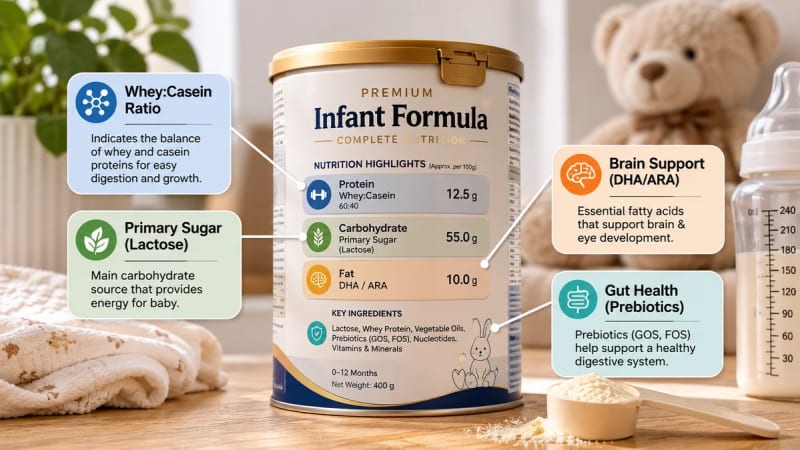
Decoding the Label: Focus on the protein ratio, carbohydrate type, and key fats rather than marketing claims.
Matching Formula to Your Baby's Symptoms
This is the section that should have existed on every formula page and mostly doesn't. Parents don't search "types of baby formula" out of academic curiosity. They search because something specific is happening — gas, spit-up, a rash, a baby who screams through feeds — and they need to know whether a different formula would fix it.
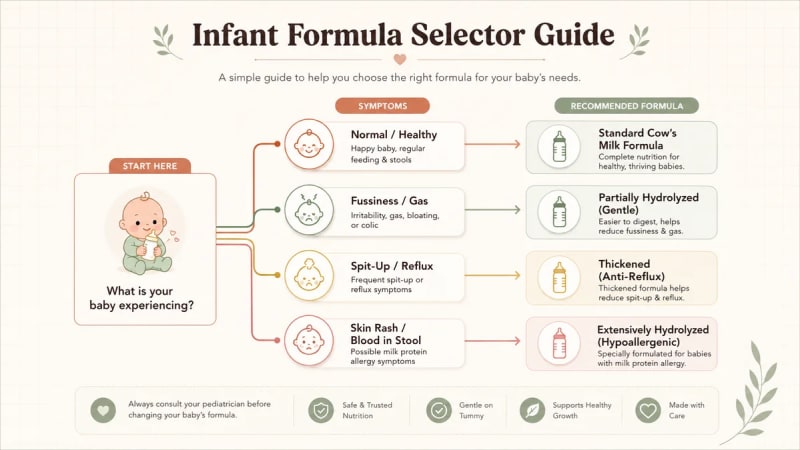
Formula Selector Flow: Match your baby's specific physical symptoms to the appropriate clinical formula category.
Gas and Fussiness
Some gas is completely normal in formula-fed babies. Their digestive systems are immature and they swallow air when they eat. Before switching formulas, try the mechanical fixes first: slower-flow nipples, paced bottle feeding, thorough burping mid-feed, and keeping baby upright for 15–20 minutes after eating. If gas persists after a solid week of these adjustments, a partially hydrolyzed ("gentle") formula is usually the first step — the smaller protein fragments are easier on the gut. Most major brands offer a gentle version at the same price point.
Reflux and Spit-Up
Spitting up is so common in the first four months that pediatricians call most of these babies "happy spitters" — they spit up, but they're gaining weight and aren't in distress. That's normal reflux and usually doesn't need a formula change. Positioning helps more: upright feeding, smaller and more frequent bottles, and not laying baby flat right after a feed. If your baby arches, refuses to eat, or isn't gaining weight, that's a different picture — and your pediatrician may suggest an anti-reflux (AR) formula thickened with rice starch, or a hydrolyzed option if they suspect the protein is the trigger. Our guide to baby reflux symptoms and treatment covers when spit-up crosses the line into something that needs clinical attention.
Suspected Allergy (CMPA)
Cow's milk protein allergy affects roughly 2–3% of infants, according to the AAP. The signs are specific: blood or mucus in stool, persistent vomiting (not normal spit-up), eczema that worsens after feeds, and significant irritability during or after eating. If your pediatrician confirms or strongly suspects CMPA, the move is to an extensively hydrolyzed formula — not a partially hydrolyzed one, and typically not soy. Amino acid-based formula is reserved for the small group that doesn't tolerate even extensively hydrolyzed options. This is a pediatrician decision, every time.
One thing worth saying clearly: mild fussiness after feeds is not an allergy. Babies are fussy. If your baby is growing well, producing enough wet diapers, and doesn't have the specific markers listed above — your current formula is probably fine. Check our signs of baby constipation and when to call a doctor guide if stool changes are the main concern.
Blood or mucus in stool, persistent vomiting, weight loss or failure to gain, severe rash after feeding, or complete feed refusal. These aren't "wait and see" symptoms — they're the ones that need a same-day call.
How to Switch Baby Formula Safely
The gradual method works for most planned switches: mix 75% old formula with 25% new for two days, then 50/50 for two days, then 25/75 for two days, then fully new. Total transition: about a week. Your baby's gut gets time to adjust instead of processing a sudden change.
That said — if your pediatrician tells you to switch immediately (for an allergy or medical concern), do it. The gradual method is for elective changes, not emergencies.
Signs Your Baby Actually Needs a Different Formula
- Persistent diarrhea or bloody stool lasting more than a few days
- Worsening eczema or hives after feeds
- Consistent vomiting (forceful, not just spit-up) after most feedings
- Flat or declining weight on the growth curve
- Extreme fussiness that doesn't respond to feeding adjustments or soothing
Signs Your Baby Is Just Adjusting (Not Reacting)
Slightly different stool color or consistency for a few days. A little extra gas. One or two fussy feeds. These are normal adjustment symptoms, not a sign the formula is wrong. The mistake most parents make — and pediatricians will tell you this consistently — is switching too quickly. Swapping formulas every three days means the gut never gets a chance to settle. Give it five to seven full days before deciding.
What Matters Less Than You Think
Brand loyalty. This is the uncomfortable truth that formula companies would rather you didn't hear: the FDA requires all US-sold infant formula to meet the same 30-nutrient standard. Store brands — Target's Up & Up, Walmart's Parent's Choice, Costco's Kirkland — are manufactured to match the name-brand nutritional profile, often by the same contract manufacturers. A 2023 comparison by the CDC's infant nutrition resources and FDA oversight data confirms the equivalence. The price difference — sometimes $500+ per year — pays for advertising, not better nutrition.
Powder vs. liquid vs. ready-to-feed. These are the same formula in different forms. Powder is cheapest. Ready-to-feed is most convenient and sterile (recommended for preemies and immunocompromised babies). Liquid concentrate falls in the middle. Pick based on your budget and lifestyle, not a belief that one form is nutritionally superior.
European imports. If you've spent time in parenting forums — or your family abroad has opinions — you've probably heard about HiPP, Holle, or Kendamil. These brands meet EU regulatory standards, which differ from FDA standards in some areas: the EU tends to restrict certain sweeteners and require organic sourcing more strictly. Some of those differences are meaningful to parents who prioritize ingredient sourcing. But importing formula that isn't FDA-registered means it wasn't manufactured under US safety oversight, and the FDA has explicitly warned against purchasing unregistered imports. If you choose this route, understand the trade-off clearly.
A note for families getting advice from abroad: your mother, aunt, or mother-in-law may swear by a specific brand from Pakistan, India, the UAE, or the UK. That recommendation comes from love and experience in a different market. The brands available where you are — including the store brands — are safe, regulated, and nutritionally complete. Formula is one of the most tightly controlled food products in the US. Trust the regulation, not the guilt.

Calm Preparation: Focus on clean measurements and water safety to support your baby's daily feeding needs.
Sources
- AAP / HealthyChildren.org — Choosing an Infant Formula
- FDA — Infant Formula Requirements and Regulation
- CDC — Choosing an Infant Formula
- American Academy of Pediatrics (HealthyChildren.org) — Choosing a Baby Formula
- NHS — Types of Formula
This article is for informational purposes and does not replace medical advice. Consult your pediatrician before starting, switching, or stopping any infant formula.