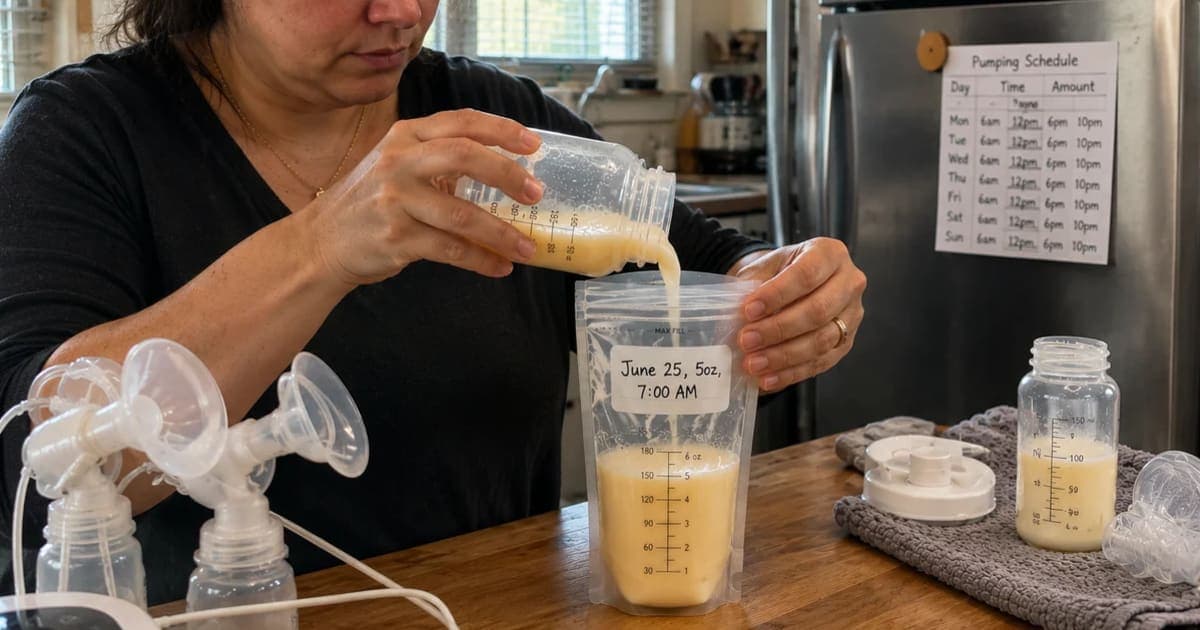
Most parents treat their stored breast milk like liquid gold. They watch every ounce, measure every pump session, and feel a sharp spike of anxiety if a bottle sits on the counter for ten minutes too long. Following the correct breast milk storage guidelines is about balancing safety with sanity. These safety rules are backed by solid pediatric research, and they were built for a world that most families actually live in — which is exactly why understanding them helps.
Expressed milk contains active white blood cells and antibodies that naturally fight off bacteria. Because of this biological armor, human milk does not spoil the instant it leaves the body. Temperature dictates how long those protective elements can hold the line. Knowing the exact limits prevents you from throwing away safe milk or feeding something that has turned.
- The 4-4-4 Rule: Keep fresh milk at room temperature for up to 4 hours, in the fridge for up to 4 days, and in the freezer for up to 6 months.
- Safe Temperature Matching: Never mix fresh warm milk directly with cold refrigerated milk. Cool the warm milk first to prevent bacterial growth.
- The Slushy Exception: If thawed milk still has visible ice crystals, you can safely refreeze it. Fully defrosted milk cannot be refrozen.
- Lipase vs. Spoilage: Soapy or metallic smelling milk is safe high lipase milk. Sour, clumpy, or curdled milk is spoiled and must be discarded.
Official Breast Milk Storage Guidelines: Room Temp, Fridge, and Freezer
Storing human milk depends on the location and temperature. Storing containers in the correct spots prevents temperature swings that accelerate spoiling. Always place your milk at the back of the shelf. Avoid storing it in the refrigerator door where warm air rushes in every time you reach for a snack.
| Storage Location | Ideal Temperature | Safe Duration Limit |
|---|---|---|
| Countertop (Room Temp) | Up to 77°F (25°C) | Up to 4 hours best (6 hours if very clean) |
| Refrigerator | 40°F (4°C) or colder | Up to 4 days best (8 days under clean study conditions) |
| Standard Freezer | 0°F (-18°C) or colder | 6 months ideal (up to 12 months acceptable) |
| Thawed Milk (In Fridge) | 40°F (4°C) or colder | Up to 24 hours after full thaw |
| Leftover Milk (From Feed) | Any | Must use or discard within 2 hours |

Keep this quick storage chart handy: prioritize using the oldest milk first and store containers in the coldest part of your refrigerator.
How Long is Breast Milk Good at Room Temperature?
Freshly expressed breast milk is good at room temperature (77°F or 25°C) for up to 4 hours. While the Academy of Breastfeeding Medicine notes that milk can remain safe for up to 6 to 8 hours under exceptionally clean conditions, the CDC enforces a strict 4-hour limit to minimize bacterial growth.
The MedlinePlus recommends keeping freshly expressed breast milk at room temperature for no longer than 4 hours. This rule exists because human milk contains active anti-infective properties that temporarily suppress bacterial growth, but this protective shield begins to weaken after the four-hour mark. A 2016 study in the *Journal of Human Lactation* analyzed 50 samples and showed that bacterial colonies remained within safe parameters for up to 6 hours at 77°F, confirming that the 4-hour limit provides a generous safety buffer for families. If the room is warmer than 77°F, you should refrigerate the milk immediately to prevent rapid spoilage.
Refrigerator Guidelines: How to Store Expressed Breast Milk
The American Academy of Pediatrics states that refrigerated breast milk should be used within 4 days of expression. Storing milk in the refrigerator preserves its nutritional composition while slow-cooling prevents the expansion of any environmental bacteria introduced during pumping. Clinical testing published in *Breastfeeding Medicine* (2020) demonstrated that milk stored at 40°F (4°C) maintained its antioxidant activity and fat content with minimal degradation for 96 hours, after which key vitamin levels began to drop. You should use a dedicated refrigerator thermometer to verify the temperature stays below the required threshold.
When placing milk in the fridge, push the bottles or bags to the very back of the bottom shelf. That location is the coldest part of the unit and experiences the least temperature fluctuation when the door opens. Do not store milk in the door pockets. The constant exposure to room-temperature air weakens the milk's defensive proteins and speeds up bacterial growth.
Refrigerated Breast Milk Left Out at Room Temperature
Parents often pull a bottle from the fridge to prepare for a feed, only for the baby to fall asleep before eating. If you have refrigerated breast milk left out at room temperature, the safety window is shorter than it is for freshly expressed milk. Once milk has been chilled and then brought to room temperature, you must use it within 2 hours. The previous refrigeration slows down bacterial activity, but warming it back up wakes up any environmental micro-organisms.
When moving breast milk from fridge to room temperature, plan your feeding timeline carefully. The 2-hour countdown starts the moment the container leaves the refrigerator, even if you did not warm it in water. If the bottle remains untouched and the 2 hours expire, you must discard the milk to prevent bacterial colonization. Placing refrigerated breast milk brought to room temperature back into the fridge is generally discouraged because repeated temperature fluctuations degrade the protective antibodies.
Freezer Best Practices: Preserving Your Freezer Stash
Freezing is the best way to preserve breast milk for long-term use. The CDC notes that milk can be kept in a standard freezer for up to 12 months, although using it within 6 months is recommended for optimal nutrient quality. Connective lipids and vitamin C degrade slowly over time, meaning older milk has slightly fewer active immune elements than freshly frozen milk. Always leave about an inch of space at the top of your storage bags because milk expands as it freezes, which can burst the seals.
Use specialized breast milk storage bags rather than regular zip-top sandwich bags. Sandwich bags are thin, prone to tearing during expansion, and lack the double-zipper safety seals required to prevent freezer burn. Labeling every bag with the date and time of pumping helps you rotate your stock. Using the oldest milk first ensures that no bottle expires at the bottom of the chest freezer.
Mnemonic Rules: The 3-3-3, 4-4-4, and 5-5-5 Rules Explained
Parents love simple memory tricks to manage the transition into newborn care. Over the years, lactation counselors have shared various number patterns to make storage rules easy to remember. The older 3-3-3 rule suggested 3 hours at room temperature, 3 days in the fridge, and 3 months in the freezer. While safe, this framework is unnecessarily conservative for healthy, full-term infants.
The newer 4-4-4 rule matches current pediatric standards closely: 4 hours on the counter, 4 days in the refrigerator, and 4 months in the freezer. Some communities also talk about the 5-5-5 rule (5 hours, 5 days, 5 months) or the 6-6-6 rule (6 hours, 6 days, 6 months). These higher numbers push the boundary of safety guidelines and increase the risk of milk spoiling if your kitchen is warm or the refrigerator is opened frequently. We recommend sticking to the 4-4-4 rule as your primary everyday reference.
Can You Refreeze Breast Milk? The Ice Crystal Rule
A common scenario: you pull a bag of frozen milk to thaw in the refrigerator, but your plans change and you do not feed it to the baby. Parents want to know if they can return this milk to the freezer. The official safety answer is that you cannot refreeze breast milk once it has fully thawed. Thawing allows the natural bacteria in the milk to wake up and multiply. If you freeze this milk again, you trap a much higher bacterial load, which can upset a baby's stomach or cause foodborne illness.
Why You Cannot Refreeze Fully Thawed Milk
Fully thawed milk has sat in a liquid state without any ice crystals. The protective enzymes in the milk have slowed down, and the environment is ripe for microorganic growth. Once 24 hours have passed in the refrigerator after complete thawing, the milk must be consumed or discarded. Refreezing it at this point is a hazard because the second thaw will double the bacterial growth rate. If you have excess thawed milk that cannot be consumed, consider adding it to your baby's bathwater instead of pouring it down the drain.
The Ice Crystal Exception: When Refreezing is Safe
There is an important exception to the refreezing rule that saves a lot of milk. If you check the thawing bag and still see ice crystals in the milk — even if it is partially slushy — it is safe to put back in the freezer. The presence of ice crystals means the milk has remained at a temperature that prevents bacterial replication. A 2012 clinical study published in *Pediatrics* involving 120 breast milk containers confirmed that milk refrozen with remaining ice crystals did not show significant increases in bacterial count or loss of nutrients. This slushy state is your green light to save the batch.
Safe Thawing and Warming: Step-by-Step Guidelines
Thawing frozen milk requires a gentle touch to preserve the protective proteins. Rapid temperature shifts can destroy the immunoglobulins that make breast milk so beneficial. The method you choose depends on how quickly you need the bottle ready. Ensuring you follow safe steps protects your hard-earned milk from spoiling.

Always thaw breast milk in a warm water bath or the refrigerator. Avoid the microwave, which destroys nutrients and creates hot spots.
How Do You Thaw Frozen Breast Milk?
- Select the oldest milk bag from your freezer stash based on the date label to maintain proper rotation.
- Thaw the bag in the refrigerator overnight, allowing roughly 12 hours for the milk to return to a liquid state.
- Warm the sealed bag by placing it in a bowl of lukewarm water if you need the milk quickly.
- Hold the bag under cool running water first, then gradually warm the water flow to defrost small frozen portions.
- Check the temperature of the thawed milk on the inside of your wrist before offering the bottle to your baby.
Once you have defrosted the milk, do not leave it on the counter. Defrosted milk can sit at room temperature for up to 2 hours before the risk of contamination becomes too high. If the milk has been warmed, any leftovers must be consumed within 2 hours of the start of the feed. Discarding leftovers is necessary because the baby's saliva introduces bacteria that multiply rapidly in warm milk.
Warming and Temperature: Can Babies Drink Cold Breast Milk?
Many parents are surprised to learn that warming breast milk is entirely optional. Babies can drink cold breast milk straight from the refrigerator without any physical harm or digestive issues. Some babies have a personal preference for warm milk because it mimics the temperature of direct nursing, but this is a habit rather than a biological necessity. Feeding cold milk saves you hours of prep time and makes nighttime feeds much easier.
If you choose to warm the milk, use a dedicated bottle warmer or place the bottle in a container of warm water for a few minutes. Avoid boiling the milk. Heating milk beyond body temperature denatures the protective immunoglobulins and alters the fat composition, reducing its overall nutritional value. Keep the warming time under 15 minutes to limit bacterial colonization.
Why Microwaving is Strictly Banned
You must never use a microwave to thaw or heat breast milk. Microwaves heat liquids unevenly, creating localized pockets of boiling-hot milk that can burn your baby's mouth and throat. These hot spots can exist even if the outside of the bottle feels cool to the touch. The high-heat waves also destroy the delicate immunoglobulins and antibodies that support your baby's developing immune system.
Is My Breast Milk Spoiled? Lipase vs Sour Milk
A common source of panic for pumping parents is opening a bottle of stored milk and finding that it smells soapy, metallic, or chemical. Many assume the milk has spoiled and throw it away immediately. In most cases, this scent change is caused by high lipase activity, not spoilage. Lipase is a natural enzyme present in human milk that breaks down fats so your baby can digest them easily.
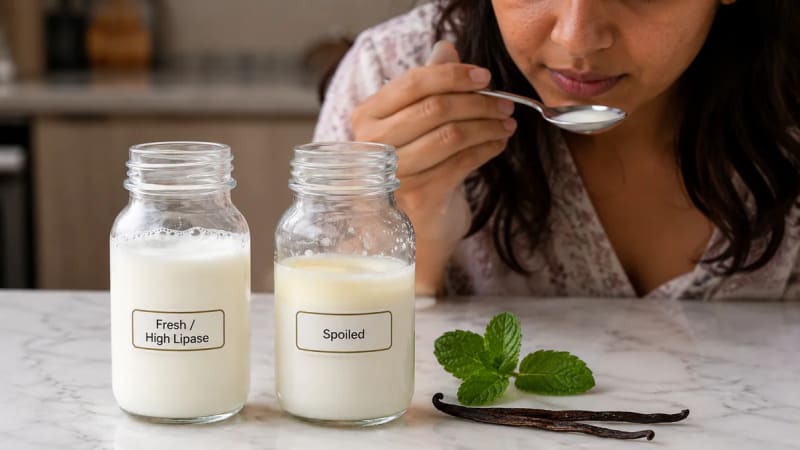
A simple sensory check can help you identify if milk has spoiled or simply has high lipase activity, which smells soapy but remains safe.
The Soapy or Metallic Smell: Understanding High Lipase
When human milk has high levels of active lipase, the fat breakdown occurs faster than usual during storage. This process releases free fatty acids that create a soapy or metallic taste and smell. While it is completely safe for your baby to drink, some infants reject the bottle due to the strong flavor. If your baby refuses high lipase milk, you can scald the milk (heating it to about 180°F until small bubbles form around the edge of the pan) immediately after pumping and before freezing. This heating step deactivates the lipase enzyme and preserves the sweet flavor of the milk.
The Sniff and Sip Test: Identifying Truly Spoiled Milk
Spoiled breast milk smells and tastes distinctly sour, very similar to spoiled cow's milk. If the milk has gone bad, it will also curdle or show thick clumps that do not dissolve when you swirl the bottle. High lipase milk, on the other hand, smells soapy but tastes sweet or neutral. Rancid or sour milk must be discarded immediately to prevent digestive infections. Trust your senses. If the taste makes you grimace, do not offer it to your baby.
Combining and Pooling Breast Milk: The Rules of Mixing
Pumping parents often end up with several half-filled bottles from different sessions throughout the day. Combining these portions into a single container is a common practice known as pooling. Pooling milk is a great way to save bag space and make feeding sessions simpler. However, you must follow a few safety guidelines to prevent bacterial contamination during the process.
The Golden Rule of Temperature Matching
You must never mix freshly pumped warm milk with already chilled milk in the refrigerator. Adding warm milk to a cold container raises the overall temperature of the chilled milk, which triggers bacterial activity. Cool the freshly expressed milk in the refrigerator first before combining it with the older chilled portion. Once both containers have reached the same temperature, they can be safely pooled together.
Can You Mix Milk from Different Days?
You can combine breast milk pumped on different days, provided you follow the expiration date of the oldest portion. If you mix milk pumped on Monday with milk pumped on Wednesday, the entire combined batch must be used or discarded within 4 days of Monday's pumping time. Mark the container with the earliest date to prevent using expired milk. This date tracking is particularly important when sending bottles to a daycare facility.
Cultural Context: Traditional Practices and Elder Advice
For many diaspora families, managing breast milk storage involves coordinating modern safety rules with traditional wisdom. In South Asian and Middle Eastern households, elders often hold strong beliefs about the temperatures of baby food. There is a common cultural concern that feeding a baby cold milk causes chest congestion or *sardi* (cold). Relatives may urge you to boil the milk or warm it repeatedly to protect the baby from illness.
You can handle these conversations with empathy and scientific reasoning. Explain that breast milk contains live antibodies that are destroyed by boiling or microwaving, which makes the milk less protective. Share that babies can digest cold milk safely because the milk warms up naturally in their stomach. Pointing to your pediatrician's instructions helps shift the focus from a family debate to medical advice.
Sources
- MedlinePlus (U.S. National Library of Medicine) — Breastfeeding
- American Academy of Pediatrics (AAP) — Storing and Preparing Expressed Breast Milk
- Mayo Clinic — Breast Milk Storage: Do's and Don'ts
- Academy of Breastfeeding Medicine (ABM) — Protocol #8: Human Milk Storage for Home Use
This article is for informational purposes and does not replace medical advice. Talk to your pediatrician or a certified lactation consultant about specific storage questions, premature infant needs, high lipase options, or infant feeding concerns.